
Desserts
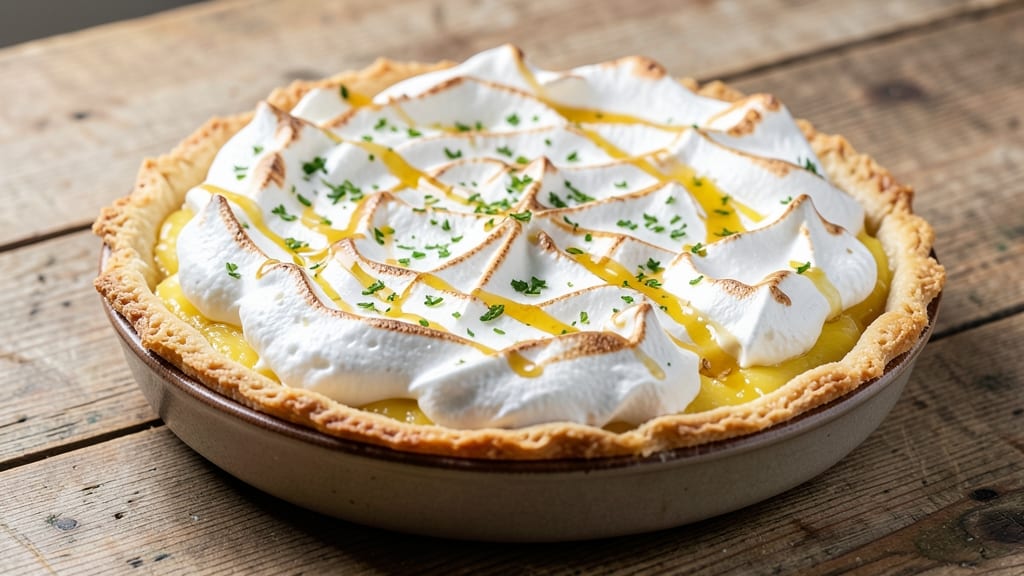
This 5-star lemon meringue pie recipe delivers the perfect balance of tangy lemon curd and velvety Swiss meringue—every slice is a masterpiece. 🌟 The secret lies in a crisp golden crust, a silky lemon filling, and a toasted meringue that crackles with each bite.
After years of perfecting this classic, I’ve cracked the code for a pie so impressive it could win dessert competitions.
The foundation starts with a buttery, flaky crust baked to golden perfection, then filled with a rich lemon curd that’s smooth yet vibrant. The Swiss meringue topping, cooked to a glossy finish, develops that signature toasted flavor and crackly texture.
Each step requires precision, but the result is worth every minute of effort—bright, balanced, and absolutely show-stopping.
What makes this recipe stand out is the attention to detail: from tempering the egg whites for the meringue to baking the pie at the right temperature to avoid soggy layers.
The lemon curd is cooked just enough to thicken without curdling, and the meringue is baked until golden but still tender. The final product? A pie that’s light, tangy, and so visually stunning it’ll have everyone asking for the recipe.
Whether you’re baking for a holiday gathering or treating yourself to a special dessert, this pie delivers restaurant-quality results at home. The combination of tart lemon and sweet meringue creates a flavor harmony that’s impossible to resist. Let’s get started on creating your own 5-star masterpiece.
Ingredients for 5 star lemon meringue pie
Buttery crust meets silky lemon curd and toasted meringue—this pie's secret lies in precision and quality ingredients.
| Ingredient | Amount | Notes |
|---|---|---|
| All-Purpose Flour 🌾 | 2 ½ cups | Sifted for light crust |
| Unsalted Butter 🧈 | 1 cup | Cold, cubed for crust |
| Granulated Sugar 🍚 | ½ cup | Plus 1 tbsp for crust |
| Kosher Salt 🧂 | ½ tsp | For crust and filling |
| Large Eggs 🥚 | 1 whole | Cold for crust |
| Ice Water 💧 | ⅓ cup | For dough consistency |
| Fresh Lemons 🍋 | 4 whole | Juiced and zested |
| Granulated Sugar (for curd) 🍚 | 1 ½ cups | Fine granulated preferred |
| Large Egg Yolks 🥚 | 4 whole | Room temperature |
| Cornstarch 🌾 | 2 tbsp | For thickening curd |
| Large Egg Whites 🥚 | 5 whole | Room temperature, aged |
| Superfine Sugar 🍚 | 1 cup | For meringue |
| Cream of Tartar 🧂 | ¼ tsp | Stabilizes meringue |
The crust starts with cold butter—never melted—and King Arthur flour if you want to splurge. Trader Joe's has great pre-cubed butter that saves time, but grab the European-style if you can. For the lemons, organic Meyer lemons have that perfect balance of sweet and tart, but regular lemons work too. Zest the outer layer only—it's more aromatic. The sugar matters here: Domino's fine granulated dissolves smoothly in the curd. Keep everything chilled until ready to use; warm ingredients make for a tough crust.
No Meyer lemons? Regular lemons plus a pinch of sugar in the curd bridges the flavor gap. The meringue is finicky—room-temperature egg whites are non-negotiable. If yours won't hold stiff peaks, add a splash of cream of tartar (or a pinch of lemon juice) to stabilize. For the crust, if you don't have ice water, chilled vodka works in a pinch—it evaporates cleanly. The cornstarch in the curd is key: Bob's Red Mill is my go-to, but any brand works. Pro tip: Temper the egg yolks with hot lemon mixture slowly to avoid scrambling.
The crust dough can be chilled for up to 48 hours, wrapped tightly in plastic. Lemon curd keeps 5 days refrigerated or 3 months frozen in a sealed container. Meringue is best used fresh but can be stored 1 day covered at room temperature. For serving, slice with a hot knife—it stays crisp longer. Leftovers? Reheat gently in the oven to restore that crackly meringue texture. Every bite should sing with tart-sweet harmony.
Why You'll Love This Recipe
- No-Fuss Crust: I swear by this butter crust—just flour, butter, and a pinch of salt. No rolling pins or fancy tricks; you can mix it in a bowl and press it in with your fingers. (Yes, even if they’re flour-dusted.)
- Citrus Euphoria: That bright, tangy lemon filling cuts through the richness like a summer breeze. The meringue? Silky peaks that toast just enough to caramelize—crispy outside, pillowy inside. Honestly, it’s the kind of pie that makes you pause mid-slice and sigh.
- Party in a Pie: Serve it warm or cold, at brunch or dessert, and it’s always the star. My in-laws request it for Thanksgiving, and my kid’s soccer team begs for seconds at birthday parties. (Between us, I’ve even packed it in lunches—no judgment.)
- Leftovers Win: One pie lasts my family three days, and the best part? The second slice is even better. The meringue softens just enough to soak up the lemon curd, and the crust stays sturdy. Plus, it’s cheap to make—sugar and eggs stretch far, and you’ll never regret the extra egg whites for that meringue.
Step-by-step instructions for lemon meringue pie
Here's the method for a restaurant-quality lemon meringue pie with a buttery crust and perfect balance of tart filling and cloud-like meringue.
👨🍳 Step 1: Prepare the Perfect Pie Crust
In a large bowl, combine the 2.5 cups all-purpose flour, 0.5 tsp kosher salt, and 0.5 cup granulated sugar (plus 1 tbsp). Cut in the 1 cup cold cubed unsalted butter using a pastry cutter or your fingers until the mixture resembles coarse crumbs with some pea-sized butter pieces remaining.
Add the 1 cold large egg and mix just until the dough comes together. Sprinkle in the 0.33 cup ice water and gently stir with a fork until the dough forms a shaggy mass. Turn the dough out onto a lightly floured surface and knead gently just until smooth—about 5-6 strokes. Wrap in plastic and refrigerate for 30 minutes to firm up.
Roll out the chilled dough between two sheets of parchment paper to a 12-inch circle, about ⅛-inch thick. Transfer carefully to a 9-inch pie dish, trim the edges, and crimp decoratively. Prick the bottom all over with a fork, line with parchment, fill with pie weights or dried beans, and blind-bake at 375°F for 15 minutes. Remove weights and bake 5-7 more minutes until lightly golden. Cool completely on a wire rack.
🍳 Step 2: Make the Lemon Curd Filling
In a medium saucepan, combine the juice and zest of 4 whole fresh lemons, 1.5 cups granulated sugar (for curd), and 4 whole large egg yolks. Whisk vigorously to dissolve the sugar completely. Cook over medium heat, stirring constantly with a wooden spoon, until the mixture thickens enough to coat the back of the spoon—about 8-10 minutes. It should reach 170-175°F on an instant-read thermometer.
Immediately stir in the 2 tbsp cornstarch mixed with 2 tbsp cold water to remove any remaining starch. Pour the hot curd through a fine-mesh sieve into a clean bowl to remove any zest bits. Press plastic wrap directly onto the surface to prevent a skin from forming, and cool to room temperature.
🥘 Step 3: Assemble the Pie
Pour the cooled lemon curd into the baked crust, spreading it evenly. The filling should reach just below the crust's top edge. Chill the pie uncovered in the refrigerator for at least 2 hours or until the curd is completely set and the crust is firm.
Preheat your oven to 350°F. In a clean, grease-free bowl, beat the 5 whole large egg whites with the 0.25 tsp cream of tartar on medium speed until soft peaks form. Gradually add the 1 cup superfine sugar and beat on high speed until the meringue is glossy and holds stiff peaks that stand straight up when the beaters are lifted.
🔥 Step 4: Create the Signature Meringue Topping
Spread the meringue over the lemon curd, sealing it completely to the crust by gently pressing around the edges with a spatula. Use the back of a spoon to create decorative swirls or peaks on top. Bake at 350°F for 12-15 minutes until the meringue is golden brown and the pie is heated through.
Turn off the oven, crack the door open, and let the pie cool inside for 5 minutes to prevent the meringue from collapsing. Transfer to a wire rack and cool completely before slicing. The pie will keep in the refrigerator for up to 4 days, though it's best enjoyed within 2 days for peak meringue texture.
Pro Tips For Making 5 Star Lemon Meringue Pie
- Chill the Butter First: I learned this the hard way—trying to mix cold butter into flour with warm hands makes the crust greasy and tough. Cut the butter into ¼-inch cubes, then pop it in the freezer for 15 minutes before starting. Your crust will thank you with a flaky, melt-in-your-mouth texture that actually holds together when baking.
- Bake the Crust Blind: Skipping this step is how you end up with a soggy bottom. Weigh down that crust with pie weights or dried beans, then bake it at 375°F (190°C) for 15 minutes—no filling yet. The par-baked crust stays sturdy and won’t absorb moisture from the lemon curd later. (Yes, even if you’re impatient like me.)
- Whisk Egg Whites Cold: Room-temperature egg whites? Big mistake. Whisk them straight from the fridge in a spotless, grease-free bowl—any trace of fat will keep them from peaking. Start slow, then ramp up to stiff peaks, but don’t overmix. The meringue should hold its shape when you flip the bowl upside down.
- Strain the Curd: I used to skip this, and my filling always looked cloudy. Strain the lemon curd through a fine-mesh sieve right after cooking—it removes those pesky cooked egg bits and gives you a silky-smooth texture. Trust me, your pie will look (and taste) like it came from a bakery.
Troubleshooting great 5 star lemon meringue pie
Soggy Crust Fix
If your crust turns soggy, it’s usually from steam during baking. Prevent it by blind-baking the crust longer—20-25 minutes at 375°F with pie weights until it’s fully set.
For a quick fix, brush the bottom with egg wash before adding the filling, then chill the pie 4+ hours to firm up the curd before meringue. 💫
Curd Too Thin?
A runny curd means it wasn’t cooked long enough. Next time, cook until it reaches 175°F on an instant-read thermometer and thickens enough to coat the back of a spoon. If it’s already too thin, stir in 1 tsp cornstarch mixed with 1 tsp cold water to thicken.
For immediate results, chill the pie extra long (overnight) to help the curd set.
Meringue Collapsing
Meringue collapses from moisture or overmixing. Prevent it by ensuring the curd is completely cooled before adding meringue, and sealing the edges tightly. If it’s already happening, try the "oven trick": Crack the oven door open 5 minutes after baking to let steam escape gradually.
For a last-ditch fix, reheat the pie at 300°F for 10 minutes to re-crisp the meringue.
Lemon Flavor Weak
If your lemon flavor feels muted, boost it by using Meyer lemons (sweeter, more aromatic) or adding 1 tsp lemon extract to the curd.
For extra zing, sprinkle fresh lemon zest on top of the meringue before baking. Pro tip: Simmer the lemon juice with the sugar for 2 minutes before adding yolks to deepen the flavor. 🍋
Meringue Too Sweet
Superfine sugar makes meringue sweet, but you can balance it by reducing sugar by 2 tbsp and adding 1 tsp lemon juice to the meringue. For a tangier pie, increase lemon zest in the curd or add a pinch of salt to the meringue.
Always taste the curd before assembling—adjust sweetness with extra lemon juice if needed.
Uneven Baking
If the meringue bakes unevenly (dark spots or pale patches), rotate the pie halfway through baking. For a more consistent color, tent the meringue loosely with foil 5 minutes before the target bake time, then uncover to toast. Avoid peeking during baking—temperature fluctuations cause uneven cooking.
Use a light-colored pie dish (like ceramic) for even heat distribution.
Nutrition facts
Frequently asked questions
Can I make this lemon meringue pie without a food processor?
The crust can be made by hand using a pastry cutter or your fingers to cut the cold butter into the flour until it resembles coarse crumbs. For the meringue, use a whisk and your arm strength—just whip the egg whites vigorously until stiff peaks form before gradually adding the sugar. The key is patience and elbow grease!
How do I store leftovers to keep the meringue crisp?
Store the pie in an airtight container in the refrigerator for up to 4 days. To refresh the meringue, reheat slices at 300°F for 5-7 minutes until lightly toasted. For a quick fix, sprinkle a few drops of water on the meringue and broil for 1-2 minutes—just watch closely to avoid burning!
Can I use store-bought pie crust instead of homemade?
Yes, but for the best results, choose a high-quality pre-made crust (like Pillsbury's "Crisps" or a refrigerated pie crust with butter). Blind-bake it for 15-20 minutes at 375°F to ensure it’s fully set before adding the filling. Avoid frozen crusts—they often contain oils that can make the crust soggy.
Why does my meringue look dull instead of glossy?
A dull meringue usually means it wasn’t whipped enough or the bowl had grease. Always use a grease-free bowl and beat the egg whites to stiff peaks before adding sugar. For extra shine, add 1 tsp lemon juice to the meringue mixture—it helps stabilize and brighten the color. Whip on high speed for 2-3 minutes longer if needed.
What’s the best way to serve this pie?
Slice with a hot knife (dip it in hot water and wipe dry) for clean cuts and a crisp edge. Serve at room temperature with a dollop of whipped cream or a scoop of vanilla ice cream. For a showstopper presentation, garnish with fresh lemon zest or a sprinkle of powdered sugar. Pair with tea or coffee for the perfect dessert experience!