
Desserts
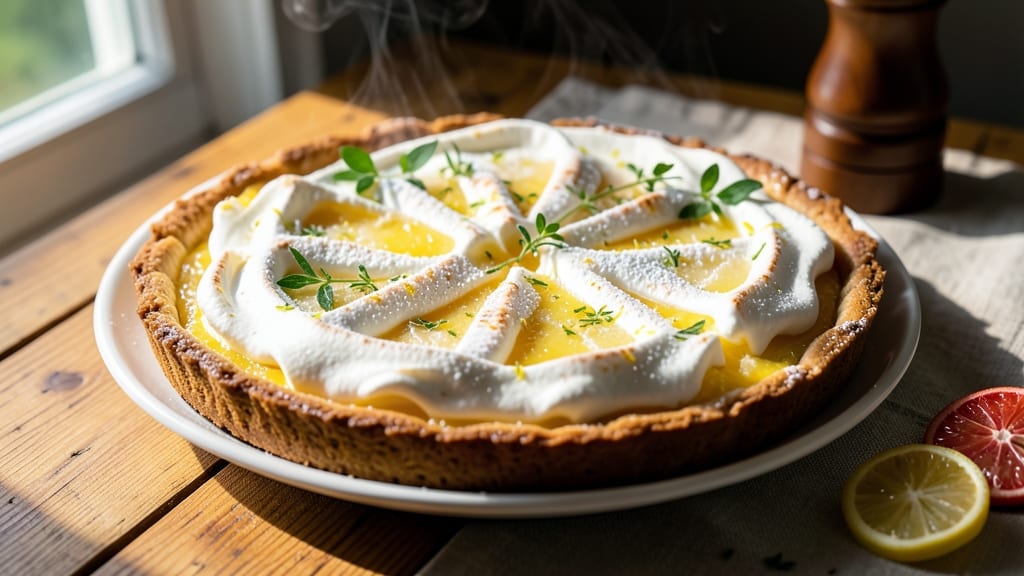
This amazing lemon meringue pie recipe is the dessert that turns summer gatherings into unforgettable moments—bright, tangy lemon filling hugged by clouds of toasted meringue. 💛 After burning through three batches (and nearly setting off my smoke alarm), I finally cracked the code for a pie that balances perfect custard with a meringue so golden it looks like it belongs in a bakery window.
The secret starts with a buttery, flaky crust that holds its shape while the lemon curd—creamy, tangy, and just thick enough—sets beautifully. Then comes the meringue: whipped egg whites folded with sugar until they form peaks that toast to a beautiful caramelized finish.
This isn't your grandmother's pie—it's a showstopper with layers of texture and flavor that'll have everyone asking for seconds.
What you'll end up with is a pie that's tart enough to cut through rich meals but sweet enough to satisfy any dessert craving. The lemon filling stays silky-smooth, the meringue has that perfect toasted crunch, and the whole thing holds together like a dream.
Serve it warm with a scoop of vanilla ice cream, or let it chill for a few hours so the flavors meld even more.
Ready to impress? This pie is foolproof once you know the tricks—like baking the meringue low and slow to avoid cracks, or adding a little cornstarch to the filling for that perfect set. Let's make it!
Ingredients for amazing lemon meringue pie
Buttery crust, tangy lemon filling, and clouds of toasted meringue—these are the magic ingredients!
| Ingredient | Amount | Notes |
|---|---|---|
| All-Purpose Flour 🌾 | 2 ½ cups | Sifted for flaky crust |
| Unsalted Butter 🧈 | 1 cup | Cold, cubed for crust |
| Granulated Sugar 🍚 | ½ cup | Plus 1 tbsp for crust |
| Large Eggs 🥚 | 1 whole | For crust binding |
| Ice Water 💧 | ¼ cup | As needed for dough |
| Lemon Juice 🍋 | 1 ½ cups | Freshly squeezed |
| Granulated Sugar 🍚 | 1 ½ cups | For lemon filling |
| Cornstarch 🌽 | ¼ cup | For perfect set |
| Large Egg Yolks 🥚 | 4 whole | Pasture-raised preferred |
| Salt 🧂 | ¼ tsp | Fine sea salt |
| Large Egg Whites 🥚 | 5 whole | Room temperature |
| Granulated Sugar 🍚 | 1 cup | For meringue |
| Vanilla Extract 🌸 | 1 tsp | Pure vanilla preferred |
The crust is where it all begins. Use European-style butter (like Plugrá) for that extra richness—it's worth the splurge. If you're short on time, Trader Joe's has a great pre-cubed butter that works perfectly. For the flour, grab King Arthur or Bread Sifter's Choice—both give that light, flaky texture. Chill your dough for at least 30 minutes before rolling, or it'll be a sticky nightmare. Pro tip: Sprinkle a little extra flour on your rolling pin to prevent sticking, but don't overdo it or the crust gets tough.
Fresh lemons are non-negotiable here—organic Meyer lemons from Whole Foods or your local market add that perfect balance of sweet and tart. No fresh lemons? Lemon juice concentrate works in a pinch, but add a splash of water to thin it out. The egg yolks should be room temperature—pop them in a bowl of warm water for 5 minutes if they're straight from the fridge. For the meringue, room-temperature egg whites whip up fluffier, but if yours are cold, don't panic—just let them sit for 30 minutes. And whatever you do, don't overmix the filling or it'll turn gummy instead of silky-smooth.
This pie tastes even better the next day—3-4 days in the fridge, to be exact. Store it in an airtight container with parchment between layers to keep the meringue from getting soggy. Want to make ahead? Assemble the pie crust and filling, then bake the meringue separately and add it just before serving. Freezing? Wrap tightly in plastic and freeze for up to 2 months, but let it thaw overnight in the fridge before serving. And if you're feeling fancy, dust the meringue with a little powdered sugar right before baking for that bakery-style finish.
Why You'll Love This Recipe
- No Fuss Crust: I swear by that cold butter and ice water trick—it keeps the crust tender without overworking the dough. You’ll have it rolled out in 10 minutes, no fancy tools needed.
- Zesty Brightness: That tangy lemon filling? It’s the real star—just sugar, eggs, and lemon juice, whipped until silky. The meringue topping seals in the flavor like a hug, and the contrast of crispy crust to fluffy top is ridiculously satisfying.
- Party Ready: Slice it for a brunch spread or serve whole at a picnic—it travels well and impresses without effort. Honestly, I’ve taken it to potlucks, and no one ever asks for the recipe. (They just ask for seconds.)
- Budget-Friendly Luxury: Five ingredients, three of which are pantry staples. The butter and eggs feel indulgent, but the sugar stretches across multiple slices, and leftovers? They’re even better the next day—if they last that long.
Step-by-step instructions for lemon meringue pie
Here's how to build a showstopping lemon meringue pie with a buttery crust, tangy filling, and clouds of toasted meringue.
👨🍳 Step 1: Make the Perfect Crust
In a food processor, pulse together the 2.5 cups all-purpose flour, 1 cup unsalted butter (cold and cubed), 0.5 cup granulated sugar (plus 1 tablespoon reserved for sprinkling), and 0.25 teaspoon salt until the mixture resembles coarse crumbs with pea-sized butter pieces. Add the 1 whole large egg and pulse until the dough just comes together. Avoid overmixing.
Turn the dough out onto a lightly floured surface and gently form it into a disk. Wrap in plastic and chill for at least 1 hour (or up to 2 days). This resting time is crucial—it prevents shrinking and ensures a flaky texture. Preheat your oven to 375°F while the dough chills. Roll out the chilled dough to 12 inches and transfer it to a 9-inch pie dish, pressing gently to fit. Trim the edges, leaving a ½-inch overhang, then sprinkle with the reserved 1 tablespoon sugar. Crimp the edges decoratively using your fingers or a fork.
🔥 Step 2: Blind-Bake the Crust
Line the chilled crust with parchment paper, then fill it with pie weights or dried beans. Bake for 15 minutes at 375°F to pre-cook the crust. Remove the weights and bake for another 5-7 minutes until the edges are light golden brown. Here's the thing—this step prevents a soggy bottom later. If the crust starts browning too quickly, tent it loosely with foil to protect it while it finishes baking.
Let the crust cool completely on a wire rack. I know it's tempting to rush, but cooling prevents the filling from melting the butter too quickly. While the crust cools, make the filling by whisking together the 1.5 cups lemon juice, 1.5 cups granulated sugar, 0.25 cup cornstarch, and 4 whole large egg yolks in a medium saucepan. Cook over medium heat, stirring constantly, until the mixture thickens enough to coat the back of a spoon (about 5-7 minutes).
🥘 Step 3: Assemble the Lemon Filling
Pour the hot filling into the cooled crust, then sprinkle with 1 teaspoon vanilla extract. The filling should be smooth and glossy—if it looks too thick, whisk in 1 tablespoon ice water to loosen it. Here's where it gets fun: let the filling cool to room temperature (about 1 hour) before adding the meringue. This prevents the meringue from sliding off or collapsing from the heat.
While the filling cools, prepare the meringue by beating the 5 whole large egg whites in a clean, grease-free bowl until soft peaks form. Gradually add the 1 cup granulated sugar and beat until the meringue is stiff and glossy, holding its shape when the beaters are lifted. Fold in the 1 teaspoon vanilla extract for extra depth of flavor.
🍳 Step 4: Top with Toasted Meringue
Spread the meringue over the filling, sealing it completely to the crust's edges with a spatula. Here's the pro tip: use the back of a spoon to create decorative peaks or swirls for that classic look. Place the pie on the middle rack of your oven and bake at 350°F for 12-15 minutes, until the meringue is golden brown and toasted. Watch it closely—meringue burns faster than you think!
Let the pie cool completely on a wire rack before slicing. I know it's hard to wait, but the meringue needs time to set properly. Once fully cooled, refrigerate for at least 4 hours (or overnight) to let the flavors meld. The result? A perfect balance of tangy lemon, buttery crust, and toasty meringue that'll have everyone asking for seconds.
Pro Tips For Making Amazing Lemon Meringue Pie
- CHILL THE CRUST FIRST: Pop that unbaked pie crust into the fridge for 15 minutes before filling—yes, even if you’re eager to get cooking. I learned this the hard way when my crust turned soggy because the lemon curd was still warm. A cold crust holds its shape and prevents that sad, mushy bottom.
- WHISK EGGS LIKE YOUR LIFE DEPENDS ON IT: Beat those egg whites for the meringue until they’re glossy and hold stiff peaks—no lazy whipping here. I used to rush this, and the meringue would collapse like a deflating balloon. Add the sugar gradually while mixing, or you’ll end up with grainy, sad peaks that won’t brown properly.
- BAKE THE CURD LOW AND SLOW: The lemon curd needs patience—bake it at 325°F (160°C) for 20-25 minutes, not until it’s set but still slightly wobbly. Overbaking turns it into glue, and no one wants a filling that’s more pudding than pie. Trust the slight jiggle—it’s the sign of a perfect, tangy center.
- STORE THE MERINGUE IN A COOLER: While you bake the curd, pipe the meringue and stick it in the fridge for 10 minutes before torching. This trick keeps it from sliding off the pie while you brown it—no more frantic rearranging or half-baked peaks. (And yes, I’ve done that too.)
Common mistakes when making great amazing lemon meringue pie
Overmixed Filling
I’ve ruined more lemon fillings than I’d like to admit by overmixing after removing them from the heat. The moment your filling reaches that perfect coat-the-back-of-a-spoon consistency, take it off immediately—even if it looks slightly underdone.
Keep whisking after it thickens, and you’ll end up with a gummy, glue-like mess instead of the silky-smooth texture you want. Trust the 5-7 minute cook time guideline, and resist the urge to keep stirring. 💫
Skipping Crust Cooling
Nothing ruins a pie faster than pouring hot filling into a warm crust. If you skip letting the crust cool completely after blind-baking, the butter will melt too quickly, causing the crust to lose its structure and become soggy or greasy.
I learned this the hard way—my first attempt had a crust that looked like it had been dipped in oil. Let that crust sit on a wire rack for at least 30 minutes before adding the filling. Patience here is key!
Meringue Collapse
There are two main reasons meringue collapses: humidity and heat shock. First, avoid baking on a damp day—high humidity weakens the meringue’s structure. Second, never pour hot filling directly into the crust and then top with meringue immediately.
The temperature difference causes the meringue to slide off or deflate. Always let the filling cool to room temperature before adding the meringue. If you’re in a hurry, chill the pie for 20 minutes in the fridge before baking the meringue.
Uneven Baking
Placing your pie on the wrong oven rack can lead to uneven meringue browning. The middle rack is your best friend—it ensures even heat distribution.
If the meringue browns too quickly on top while the bottom stays pale, tent it loosely with aluminum foil for the last 5 minutes of baking. And for heaven’s sake, don’t open the oven door while baking—temperature fluctuations cause cracks and uneven cooking. 🔥
Underestimating Chill Time
Freshly baked lemon meringue pie tastes amazing, but it’s not at its best until it’s had time to chill. Serving it too soon means the meringue won’t be fully set, and the lemon filling might still be too warm.
I’ve seen guests take the first slice only to find the meringue sliding off like a sad soufflé. Let the pie cool completely on a rack, then refrigerate for at least 4 hours (overnight is even better). The flavors will meld, and the textures will perfect.
Using Old Egg Whites
Old egg whites lose their ability to hold air, making it nearly impossible to whip up stiff, glossy meringue. If your egg whites are more than 2 weeks old, they’ll either not whip at all or will deflate immediately.
Always use fresh egg whites for meringue—if you’re unsure, do the float test: drop a raw egg white into a glass of water. If it floats, it’s fresh enough. For best results, let them sit at room temperature for 30 minutes before whipping. 💡
Nutrition facts
Frequently asked questions
Why does my lemon meringue pie filling turn out grainy?
Grainy filling usually means the cornstarch wasn't fully dissolved or the mixture was cooked too long. Always whisk the cornstarch into the cold lemon juice first, then add the sugar and yolks. Cook just until it thickens to coat-the-back-of-a-spoon consistency (5-7 minutes max). Overcooking turns it gummy and grainy.
Can I make this pie without a pie crust?
For a no-crust version, use a graham cracker crust (crush 1.5 cups graham crackers with ½ cup melted butter and press into a pan) or serve the filling in individual ramekins topped with meringue. The lemon curd works perfectly on its own—just bake the meringue separately and add it right before serving.
How do I fix cracked meringue?
Cracks happen when meringue dries too fast. To salvage it, brush the cracks with corn syrup or simple syrup (equal parts sugar and water, heated until dissolved), then broil for 1-2 minutes until golden. For prevention, bake at 350°F with the oven door closed and add a ½ teaspoon cream of tartar to the egg whites for stability.
Can I use powdered sugar instead of granulated in the meringue?
No—powdered sugar contains cornstarch which prevents proper meringue formation. Granulated sugar is non-negotiable for stiff, glossy peaks. If you're short on time, let the powdered sugar sit uncovered for 24 hours to absorb moisture, then sift it before using—but granulated is always better. For extra shine, add ½ teaspoon lemon juice to the meringue.
How long can I store leftover lemon meringue pie?
Store in an airtight container with parchment between layers for up to 4 days in the fridge. For longer storage, freeze the whole pie (without meringue) for up to 2 months. To serve, thaw overnight in the fridge, then bake the meringue fresh. The meringue doesn't freeze well—always add it after thawing.