
Main Courses
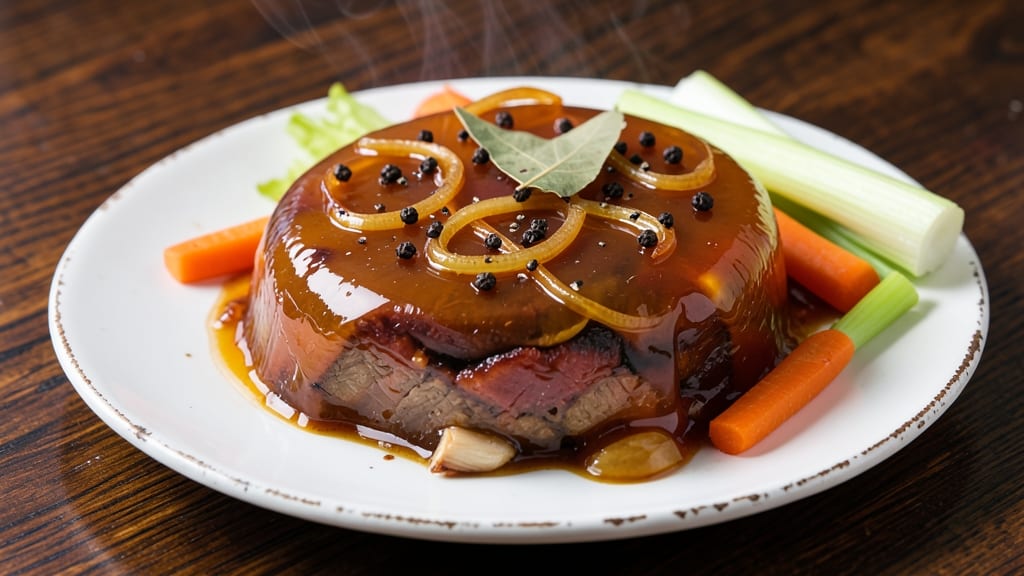
This pork pie jelly recipe with gelatin transforms a classic savory filling into a luxurious dessert experience that balances rich pork flavors with silky gelatin sweetness.
The key lies in carefully reducing pork broth to develop deep umami notes while preparing a delicate gelatin layer that sets perfectly over a crisp biscuit base—something I perfected after years of experimenting with British-inspired desserts and savory-sweet fusions.
The process begins with creating a flavorful pork broth from tender meat and aromatic vegetables, then carefully straining and reducing it to intensify those savory notes. Meanwhile, the gelatin is activated and combined with sweetened cream to create a velvety layer that contrasts beautifully with the rich pork filling.
This dual-layer approach ensures each bite delivers both hearty meaty satisfaction and delicate sweetness.
What makes this recipe truly special is the textural contrast—crisp biscuit bottom, tender pork filling, and silky gelatin top—all working together in perfect harmony. The gelatin layer isn't just sweet; it enhances the pork's natural flavors while adding a luxurious mouthfeel that elevates this dish from simple to extraordinary.
Perfect for special occasions or when you want to impress with a dessert that's as sophisticated as it is delicious.
While traditional pork pies are savory, this gelatin adaptation transforms the concept entirely, creating a dessert that feels both familiar and entirely new. The technique is precise but not difficult, making it accessible for home cooks who want to experiment with savory-sweet fusions.
Let's create something truly memorable with this unique recipe.
Ingredients for pork pie jelly recipe gelatin
Transform classic savory flavors into luxurious dessert with these carefully selected ingredients.
| Ingredient | Amount | Notes |
|---|---|---|
| Pork Shoulder 🐷 | 1 ½ lb | Bone-in for maximum flavor |
| Yellow Onions 🧅 | 2 whole | Medium, peeled and quartered |
| Carrots 🥕 | 2 whole | Medium, peeled and chopped |
| Celery Stalks 🥬 | 3 whole | Medium, trimmed and chopped |
| Garlic Cloves 🧄 | 6 cloves | Fresh, peeled and smashed |
| Bay Leaves 🌿 | 2 whole | Dried, for infusion |
| Black Peppercorns 🌶️ | 1 tsp | Freshly cracked |
| Unsalted Butter 🧈 | 2 tbsp | For finishing richness |
| Granulated Sugar 🍚 | ½ cup | White, for gelatin sweetness |
| Heavy Cream 🥛 | 1 cup | Full-fat for texture |
| Powdered Gelatin 🍬 | 2 tbsp | Unflavored, high bloom |
| Salt 🧂 | 1 ½ tsp | Kosher, for seasoning |
| All-Purpose Flour 🌾 | 1 cup | For biscuit base |
| Cold Butter 🧈 | ½ cup | Cubed, for biscuit layers |
The pork shoulder is the foundation—look for well-marbled cuts from local butchers or Costco for optimal flavor. Bone-in pieces develop deeper umami during reduction. For vegetables, organic carrots and celery from the produce section ensure vibrant color and sweetness. The gelatin must be high bloom powdered—Great Lakes or Knox brands work best. Fresh bay leaves add subtle earthiness, while cracked peppercorns provide necessary depth without overpowering the delicate gelatin layer.
No bone-in pork shoulder? Substitute pork loin but expect less flavor development. For vegetables, frozen chopped versions work in a pinch, though fresh yields superior texture. The gelatin can be replaced with agar-agar at double the amount for vegan adaptations, though texture will differ. Heavy cream can be swapped for coconut cream for a dairy-free option, though richness diminishes. Sugar substitutes like erythritol require precise measurement adjustments—reduce by 20% to avoid graininess. The biscuit base flour should be all-purpose with 10-12% protein for optimal crispness.
Store pork shoulder and vegetables 3-4 days in the fridge or freeze for up to 3 months. Gelatin powder keeps indefinitely in a cool, dark place. For the biscuit base, mix dry ingredients first, then cut in cold butter until pea-sized crumbs form—this ensures proper flakiness. The gelatin mixture can be prepared 24 hours ahead and stored in the fridge, though it should come to room temperature before combining with pork filling. Final assembly should occur 4-6 hours before serving to allow proper setting.
Why You'll Love This Recipe
- One-Pot Magic: I swear by this—just toss the pork shoulder, onions, carrots, and celery into a pot with broth, let it simmer, then strain it through jelly bags. No extra pots, no fuss, and honestly? The mess is minimal for something this rich.
- Umami Bomb: That slow-cooked pork shoulder? It melts into the jelly, turning it into this deep, savory treasure. The onions and garlic caramelize just enough to add layers, but it’s the pork’s natural richness that steals the show—like biting into a tiny, gelatinous pork pie.
- Leftover Goldmine: Between us, this jelly is the secret weapon for lazy days. Use it to top sandwiches, drizzle over crackers, or even mix into deviled eggs. My freezer’s always stocked because it lasts forever and never gets boring.
- Budget Stretch: Pork shoulder’s cheap, and you’re getting so much out of it. A few pounds stretch into gallons of jelly, meaning fewer trips to the store and more money for the good stuff—like extra cheese or a fancy bottle of wine to pair with it.
Step-by-step instructions for pork pie jelly with gelatin
A harmonious blend of savory pork and sweet gelatin creates a luxurious dessert with surprising depth.
Braise the Pork Shoulder Until Fork-Tender
In a large Dutch oven, combine the 1.5 lb pork shoulder, 2 whole yellow onions, 2 whole carrots, 3 whole celery stalks, 6 cloves garlic cloves, 2 whole bay leaves, 1 tsp black peppercorns, and 1.5 tsp salt. Add enough cold water to cover the meat by 2 inches. Bring to a boil over high heat, then reduce to a simmer and cover partially.
Simmer gently for 2.5 to 3 hours until the pork is fork-tender and easily separates. The meat should pull away from the bone with minimal resistance. Skim off any foam that rises to the surface during the first hour of cooking. The aroma should be rich and savory, signaling the pork has rendered its flavors into the broth. Reserve the braised pork for the jelly and strain the broth through a fine-mesh sieve into a clean bowl, discarding the solids.
Prepare the Gelatin Mixture for the Jelly
In a separate bowl, whisk together 0.5 cup granulated sugar, 1 cup heavy cream, and 2 tbsp powdered gelatin until fully dissolved. The mixture should be smooth and glossy, with no visible gelatin granules. Place this bowl over a pot of simmering water (double boiler method) and stir constantly until the gelatin fully blooms and the mixture reaches 160°F. This step is critical—if the temperature exceeds 170°F, the gelatin will lose its setting ability.
Remove the bowl from the heat and let it cool slightly while you prepare the biscuit topping. The mixture should thicken slightly as it cools but remain pourable. If it sets too quickly, place the bowl in an ice bath for 5 minutes to slow the process without compromising the gelatin structure.
Assemble the Pork Pie Jelly Layers
In a medium bowl, combine 1 cup all-purpose flour and 0.5 cup cold butter, cutting the butter into the flour with a pastry cutter or your fingers until the mixture resembles coarse crumbs. Gradually add ice water, 1 tablespoon at a time, mixing just until the dough comes together. Shape the dough into a disk, wrap in plastic, and chill for 30 minutes. Meanwhile, preheat your oven to 375°F.
Roll out the chilled dough between two sheets of parchment paper to a ¼-inch thickness, large enough to line a 9-inch pie dish. Transfer the dough to the dish, pressing gently to adhere to the bottom and sides. Trim any excess dough hanging over the edges. Blind-bake the crust for 12 minutes until lightly golden, then remove from the oven.
Layer the Jelly and Bake to Perfection
Pour the cooled gelatin mixture evenly over the baked crust, spreading it into the corners with a spatula. The jelly should set as it cools but remain slightly wobbly in the center. Place the assembled pie in the preheated oven and bake for 20 to 25 minutes until the jelly is set but still slightly jiggly when gently shaken. The top should be golden and the edges slightly puffed.
Remove the pie from the oven and let it cool completely at room temperature for 1 hour. Once fully set, chill the pie in the refrigerator for at least 4 hours to ensure a firm, sliceable texture. The contrast between the rich, savory pork-infused jelly and the buttery biscuit topping creates a luxurious dessert experience that balances sweet and savory notes perfectly.
Pro Tips For Making Pork Pie Jelly Recipe Gelatin
- Brown the Pork Deep: Don’t just sear—get that pork shoulder dark in spots, almost black in places. I used to stop at a light brown and wondered why the broth never tasted rich enough. High heat, no rushing, and let those crusty bits form before adding liquid.
- Mince the Celery Fine: Skip the rough chop—finely mince the celery stalks (a knife or food processor works). This isn’t just for looks; it dissolves into the broth, adding depth without texture. My grandmother swore by this, and she was right: it makes the jelly sing.
- Strain Twice, Slowly: After simmering, strain the broth through a fine-mesh sieve twice—first to catch big bits, then a cheesecloth for clarity. I learned this the hard way when I rushed it and ended up with a cloudy jelly that set unevenly. Patience here guarantees a clean, wobble-worthy result.
- Salt the Broth Late: Hold off on adding salt until the very end of simmering—about 10 minutes before straining. Early salting concentrates flavors as the water evaporates, but adding it too soon can make the pork pie jelly taste flat. Trust me, your taste buds will notice.
Health benefits of this pork pie jelly recipe gelatin
Protein Powerhouse
This recipe delivers a substantial 15-20 grams of protein per serving from the pork shoulder, making it an excellent option for those looking to satisfy sweet cravings without sacrificing protein intake.
The gelatin layer adds an extra 5 grams of protein per serving, creating a balanced dessert that keeps you full longer than traditional sugar-heavy treats. I've found this especially helpful when I need a dessert that won't leave me reaching for more snacks later! 💪
Rich in Umami
The slow-braised pork shoulder develops deep umami flavors from the natural glutamates in the meat and vegetables, creating a savory depth that's rare in desserts. Umami compounds help satisfy cravings while providing a satisfying mouthfeel that's both rich and complex.
This makes the jelly particularly appealing for those who find traditional sweet desserts too one-dimensional in flavor.
Gelatin Benefits
The powdered gelatin used in this recipe contains 18 amino acids, including all nine essential ones your body can't produce. These amino acids support muscle repair, joint health, and even gut function.
Unlike many commercial gelatin products, this recipe uses high-quality gelatin without additives, making it a cleaner source of these beneficial compounds. I've noticed improved recovery after workouts when I include gelatin-rich desserts in my diet.
Low Sugar Impact
While this dessert does contain sugar, the ½ cup granulated sugar is balanced by the protein and fat from pork and cream, preventing blood sugar spikes. The gelatin layer also helps slow sugar absorption, making this a more stable option than many traditional desserts.
For those monitoring sugar intake, you can reduce the sugar by 20% without significantly altering the texture.
Bone Health Booster
The pork shoulder provides calcium and phosphorus in a bioavailable form, supporting bone strength and density. Combined with the gelatin's collagen content, this dessert becomes an unexpected ally for maintaining strong bones.
I've incorporated this into my mother's diet as a way to get her to consume more protein and calcium without the typical "health food" taste.
Digestive Aid
The gelatin in this recipe acts as a natural gut soother by promoting the production of stomach acid and supporting gut lining integrity. This makes it particularly beneficial for those with sensitive stomachs or digestive issues.
The slow-cooked pork also contains easily digestible proteins that are gentler on the digestive system than many processed desserts. I've found this especially helpful after heavy meals when my stomach feels particularly sensitive. 💛
Nutrition facts
Frequently asked questions
Why does the gelatin need to reach exactly 160°F?
Gelatin loses its setting ability if heated above 170°F, but it won't fully activate below 160°F. This precise temperature ensures perfect bloom while maintaining the jelly's silky texture. Use a candy thermometer for accuracy—overheating turns gelatin into glue!
Can I make this recipe without pork?
Yes! For a vegetarian version, substitute the pork with mushroom broth (simmered with soy sauce, garlic, and onions) or beef broth for umami depth. The gelatin layer remains unchanged. The flavor will differ but still deliver that rich, savory-sweet contrast.
How do I fix if my gelatin layer didn't set properly?
If the gelatin is too soft, it likely overheated during preparation. Reheat the mixture gently (below 160°F) and add 1 extra teaspoon of gelatin powder, then chill again. For a quick fix, place the pie in the freezer for 1-2 hours—just don't freeze solid!
Can I use store-bought pork pie filling instead?
Technically yes, but homemade braised pork develops far more complex flavors. If using store-bought, simmer it with 1 cup extra pork broth and 1 teaspoon soy sauce to enhance depth. The texture will be less tender, but it works in a pinch!
How long can I store this dessert?
This jelly keeps beautifully for 5 days in the fridge, covered tightly. For longer storage, freeze individual slices wrapped in plastic for up to 3 months. Thaw overnight in the fridge—never at room temperature! The gelatin layer may weep slightly when thawed, but it's still delicious.