
Main Courses
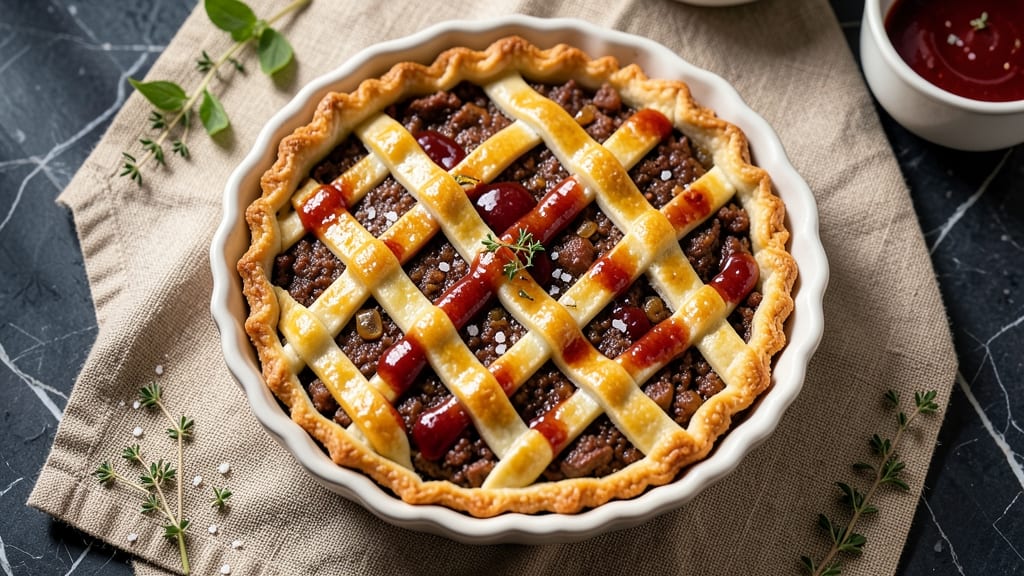
This flaky pork mince pie recipe brings the heart of Southern comfort food to your table with tender pork filling and golden pastry that shatters at every bite.
I developed this version after years of perfecting the balance between rich, savory meat and delicate crust—something my grandmother used to make when I was a kid, though hers always had that extra crispness from hand-rolling the dough.
The secret lies in slow-cooked pork shoulder that practically melts in your mouth, bound together with a gravy so rich it makes every pie taste like a restaurant-quality meal.
What sets this recipe apart is the technique: browning the pork first for deep flavor, then simmering it low and slow until it's fork-tender.
The filling gets shaped into perfect little rounds that nestle into buttery pastry cups, creating those iconic pleated edges that make them look as good as they taste. I've tested this with both homemade pastry and store-bought shortcuts—both work beautifully, though the homemade version gives that professional touch.
The oven temperature is key here; baking at 375°F ensures the pastry stays crisp while the filling stays juicy.
By the time these come out of the oven, you'll have golden, bubbling pies with crisp edges and tender centers that practically dissolve on your tongue.
The aroma alone will have everyone gathering around the table, and the first bite delivers that perfect harmony of savory pork, rich gravy, and buttery pastry. This is comfort food at its finest—something that feels special enough for holidays but simple enough for a weeknight dinner. The best part?
They reheat beautifully, making them perfect for meal prep or taking to gatherings.
For an extra touch, brush the tops with egg wash before baking for that signature golden sheen, or sprinkle with fresh parsley for a pop of color. Serve warm with a side of apple sauce or a simple green salad to balance the richness.
Here's how to make them—step by step—so you can bring that Southern tradition to your own kitchen.
Ingredients for pork mince pie
Twelve simple ingredients for pies that taste like Southern tradition.
| Ingredient | Amount | Notes |
|---|---|---|
| Pork Shoulder 🥩 | 2 lb | Bone-in for extra flavor |
| All-Purpose Flour 🌾 | 4 cups | For homemade pastry |
| Unsalted Butter 🧈 | 1 ½ cups | Cold, cubed for pastry |
| Beef Stock 🍲 | 1 ½ cups | Homemade or quality jarred |
| Whole Milk 🥛 | ½ cup | For gravy richness |
| Cornstarch 🌽 | 2 tbsp | For gravy thickening |
| Onions 🧅 | 1 whole | Yellow, diced small |
| Garlic Cloves 🧄 | 4 cloves | Minced for depth |
| Fresh Parsley 🌿 | ¼ cup | Chopped for garnish |
| Large Eggs 🥚 | 1 whole | For egg wash |
| Salt 🧂 | 1 ½ tsp | Kosher or sea salt |
| Black Pepper 🌶️ | ½ tsp | Freshly ground |
| Ground Allspice 🌶️ | ½ tsp | For warm spice note |
| Apple Sauce 🍎 | ½ cup | For serving suggestion |
The pork shoulder is non-negotiable here—bone-in for that extra marrow flavor that makes the filling sing. Costco sells it in huge chunks, but any grocery store's butcher section will have it. Look for good marbling and ask for it cut into 1-inch cubes. The pastry flour needs to be all-purpose, not self-rising, and the butter should be cold enough to hold its shape when pressed. For that homemade touch, I always use Land O'Lakes unsalted butter—it's consistent and reliable. If you're short on time, store-bought puff pastry works in a pinch, but trust me on the homemade version for that signature flaky texture.
No beef stock? Chicken stock at a 1:1 ratio keeps it flavorful, though pork stock would be ideal. The cornstarch is key for that silky gravy—don't skip it. Fresh parsley is a must for garnish, but dried works at one-third the amount if you're in a bind. For the egg wash, I like to add a pinch of salt to the beaten egg for extra crispness. The allspice might be hard to find, but ground cinnamon at half the amount gives a similar warmth. And if you're feeling fancy, swap the apple sauce for a dollop of whipped cream to serve alongside.
Pork cubes can be prepped a day ahead—they actually taste better after resting. The pastry dough should be wrapped tightly in plastic and chilled for at least 2 hours before rolling. Pies freeze beautifully—assemble them, bake halfway, then cool completely before freezing for up to 3 months. Just reheat in a 350°F oven for 10-15 minutes to crisp up the pastry. The gravy reheats well too—just stir in a splash of milk or stock to loosen it up.
Why You'll Love This Recipe
- One-Pot Magic: I swear by this recipe when I’m too tired to wash a million dishes. The pork shoulder slows down in the beef stock until it’s practically falling apart—no fancy techniques, just a pot, a lid, and 30 minutes of simmering while I stir once and forget about it.
- Rich Without Effort: That buttery roux made from flour and milk? It’s the secret weapon. Thick, velvety, and so simple—just whisk, cook, and stir. The pork soaks up all that richness, and honestly? It tastes like you slaved over it, even though you didn’t.
- Leftovers That Beg for More: This pie is the ultimate lazy lunch. I make a double batch on Sunday, and by Wednesday, I’m reheating slices straight from the fridge. The crust stays crispy, the filling stays juicy, and my kids fight over the last piece—no takeout needed.
- Budget-Friendly Feast: Pork shoulder is cheap, but it feels luxurious. A single cut feeds four for under $10, and the milk and butter stretch into a filling that’s way more impressive than it sounds. Between us, this is how I feed a house without breaking the bank.
Step-by-step instructions for savory pork mince pies
Here's how to create melt-in-your-mouth pork pies with golden pastry and rich gravy.
Prepare the Pork Filling
Cut the 2 lb pork shoulder into 1-inch cubes and place them in a large Dutch oven. Add the 1 whole onions (diced small), 4 cloves garlic cloves (minced), 1.5 tsp salt, 0.5 tsp black pepper, and 0.5 tsp ground allspice. Stir gently to combine all ingredients evenly.
Pour in the 1.5 cups beef stock and bring to a boil over medium-high heat. Once boiling, reduce heat to low, cover, and simmer for 1 hour and 30 minutes until the pork is fork-tender. You'll know it's ready when it easily pulls apart with a fork and the juices run clear.
Make the Homemade Pastry
In a large bowl, combine the 4 cups all-purpose flour, 1.5 tsp salt, and 1.5 cups unsalted butter (cold, cubed). Use a pastry cutter or your fingers to work the butter into the flour until the mixture resembles coarse crumbs with some pea-sized butter pieces remaining.
Add the 0.5 cup whole milk and mix just until the dough comes together. Be careful not to overwork it—this keeps the pastry flaky. Divide the dough into 12 equal portions (about 3.5 ounces each) and shape them into balls. Flatten each ball into a 5-inch circle and place them on a floured surface.
Assemble and Fill the Pies
Preheat your oven to 375°F. Place 12 small pie tins (about 3.5 inches in diameter) on a baking sheet. Spoon about 1 tablespoon of the pork filling into the center of each pie tin. Brush the edges of the pastry circles with beaten 1 whole large eggs (use just the egg whites for a glossy finish).
Place a pastry circle over each filling, pressing the edges together to seal. Trim any excess dough and crimp the edges with a fork or your fingers. Brush the tops with more egg wash for a golden finish. Bake for 25-30 minutes until the pastry is golden brown and the filling is bubbling.
Prepare the Gravy
While the pies bake, remove the pork filling from the Dutch oven and shred it using two forks. Set it aside. In the same Dutch oven, add 0.5 cup whole milk and scrape up any browned bits from the bottom. Stir in the 2 tbsp cornstarch and cook for 1-2 minutes until thickened.
Return the shredded pork to the gravy and simmer for 5 minutes to combine flavors. Taste and adjust seasoning with additional salt or black pepper if needed. The gravy should coat the back of a spoon and be rich but not gluey.
Serve with Warm Gravy and Apple Sauce
Remove the pies from the oven and let them cool for 5 minutes. Serve each pie with a generous spoonful of the warm gravy and a side of 0.5 cup apple sauce for a sweet contrast. The combination of flaky pastry, savory pork, and rich gravy makes these pies truly irresistible!
Pro Tips For Making Pork Mince Pie
- CUT PORK SMALL: I learned this the hard way—chunky pork mince pie filling turns into a chewy mess. Pulse your pork shoulder in the food processor until it’s almost paste, but not quite. You want texture, not paste. A quick test: press a bit between your fingers—if it holds shape but still breaks easily, you’re golden.
- USE COLD BUTTER: The roux is where flavor hides, so don’t melt that butter too fast. Cut the unsalted butter into tiny cubes and toss them into the hot pan—let them sizzle for 30 seconds before adding flour. This makes a smoother, richer base, and you’ll avoid that burnt-butter taste that ruins everything.
- SIMMER NOT BOIL: After adding beef stock and milk, keep the heat low. A gentle simmer (tiny bubbles, occasional swirls) keeps the filling tender, not gluey. I used to rush it, and the pie filling would separate or turn grainy. Patience here means a silky, cohesive texture.
- REST THE FILLING: Sounds weird, but it works: let the finished filling cool to room temp before assembling the pies. Cold filling shrinks as it bakes, so you avoid soggy crusts. Plus, it’s easier to pipe neatly—no more frantic last-minute fixes. (Yes, even if you’re impatient like me.)
Storing and reheating this pork mince pie
Refrigerator Storage
Let your freshly baked pork mince pies cool completely before storing them in an airtight container with parchment paper between layers. I use glass Pyrex containers lined with plastic wrap to keep them crisp for up to 4 days at 40°F or below.
The pastry stays flaky and the filling remains moist—just reheat gently to restore that golden crust. 🥧
Freezer Prep
For long-term storage, assemble your pies but skip the final egg wash—this prevents sogginess. Bake them until the pastry is golden but the filling is still slightly underdone (20 minutes at 375°F).
Cool completely, then freeze on a tray before transferring to ziplock freezer bags for up to 3 months. Thaw overnight in the fridge before reheating. ❄️
Reheating Perfection
My foolproof method: place pies on a baking sheet and reheat at 350°F for 10-15 minutes until the pastry crisps again. For microwave shortcuts, cover with a damp paper towel and heat in 30-second bursts on high power.
Add a splash of milk or stock to the gravy before reheating to restore its silky texture. 🔥
Gravy Revival
Leftovers? No problem. Stir the gravy with 1 tablespoon milk or stock and warm over low heat until bubbling. For extra richness, whisk in ½ teaspoon cornstarch mixed with cold water. The gravy should coat a spoon smoothly—just like fresh from the oven. 🍲
Make-Ahead Tips
Prep the filling and pastry dough a day ahead—they actually improve overnight. Shape the pies but don't bake until ready to serve. Store unbaked pies in the fridge for up to 24 hours before baking. This saves time on busy days while keeping the texture perfect. 📅
Portion Control
Individual pies reheat best when stored separately in small ramekins or wrapped tightly in foil. Microwave for 45-60 seconds at half power for a quick, crispy result. Keep the gravy in a separate container to prevent soggy pastry. This method preserves texture better than bulk reheating. 💡
Nutrition facts
Frequently asked questions
Can I use ground pork instead of pork shoulder for these pies?
While ground pork works in a pinch, it won't give you the same rich, tender texture. The slow-cooked pork shoulder develops deep flavor and melts beautifully in the pastry. If you must use ground pork, brown it first with onions and garlic, then add 1 tablespoon tomato paste and 1 teaspoon Worcestershire sauce for extra depth. Cook until fully done before assembling the pies.
How do I make the pastry extra crispy like my grandmother's?
Chill the dough for at least 2 hours before rolling, and use more cold butter (up to 1.75 cups). Brush the tops with egg wash and sprinkle with coarse sugar before baking. Bake at 400°F for the first 10 minutes to set the pastry, then reduce to 375°F for the remaining 20 minutes. This two-stage baking creates that signature crunch!
What can I substitute if I don't have pie tins? Use ramekins, mini muffin tins, or even small oven-safe bowls (like 4-ounce custard cups). For a rustic look, shape the pastry into free-form rounds and place them directly on a baking sheet. Just
Can I make these pies ahead for a holiday gathering?
Assemble the pies unbaked and refrigerate for up to 24 hours. On the day of serving, bake them straight from the fridge (add 5 minutes to baking time). For even better results, freeze the unbaked pies (without egg wash) for up to 1 month. Thaw overnight in the fridge before baking as directed.
Why did my pastry turn out tough instead of flaky?
Overworking the dough or using warm butter are the most common culprits. Keep everything cold and handle the dough minimally. For extra flakiness, fold the butter into the flour using a pastry cutter or your fingers in quick motions. Also, avoid adding too much milk—just enough to bind the dough. If it's too sticky, chill it for 30 minutes before rolling.