
Desserts
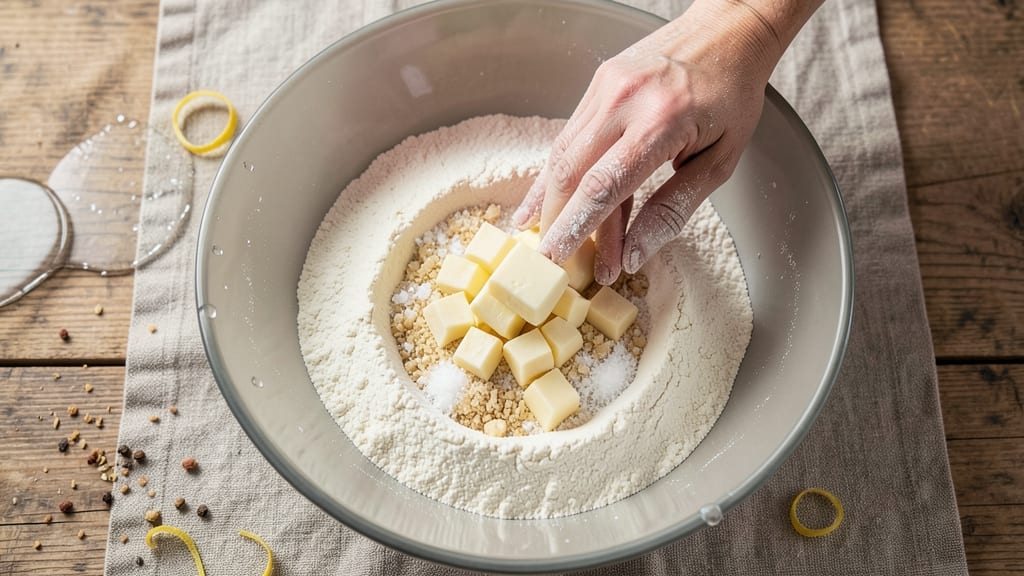
This apple pie crust recipe with margarine delivers flaky, golden layers without requiring any chill time—perfect for when you need dessert on demand. The secret lies in cold margarine cut into flour using a pastry cutter, creating pockets of fat that melt into steam during baking.
I developed this method after years of struggling with overly shortcrust or tough pastry, and it consistently yields results that rival homemade pie crusts using butter.
The process is simpler than you might think: combine all-purpose flour, a pinch of salt, and cold margarine in a food processor until the mixture resembles coarse crumbs. Shape into a disk, wrap in plastic, and refrigerate for just 20 minutes before rolling.
This brief rest ensures the dough holds together while you roll it out to fit your 9-inch pie dish. The margarine creates those signature flaky layers without the need for butter's longer chilling requirements.
What you'll achieve is a crisp, golden crust with perfectly flaky layers that hold up beautifully to both baked and unbaked apple fillings. The crust maintains its structure even when filled, preventing soggy bottoms while delivering that satisfying crunch.
This recipe has become my go-to for both classic apple pies and free-form hand pies—no special equipment required beyond a rolling pin and pie dish.
For best results, keep the dough as cold as possible throughout the process, and avoid overworking it once shaped. The margarine's lower melting point compared to butter actually works in our favor here, creating more reliable flakiness without the risk of melting during handling.
Once you try this method, you'll wonder why you ever used anything else for your apple pie crusts.
Ingredients for apple pie crust recipe with margarine
Four simple ingredients transform into a flaky crust without any chill time needed.
| Ingredient | Amount | Notes |
|---|---|---|
| All-Purpose Flour 🌾 | 2 ½ cups | Sprayed with flour duster for easy measuring |
| Margarine 🧈 | 1 cup | Cold, unsalted, cut into small cubes |
| Ice Water 💧 | ¼ cup | Very cold, for binding |
| Salt 🧂 | ½ tsp | Fine sea salt for even distribution |
| Granulated Sugar 🍚 | 1 tbsp | For subtle sweetness in crust |
The margarine is the star here—cold and unsalted is non-negotiable. Parkay or Crisco are my go-tos since they're consistently cold from the store. If you're using a tub of margarine, let it sit in the fridge for 30 minutes before measuring. The flour? King Arthur or Gold Medal brands work best—they're finely milled and give that perfect texture. Pro tip: keep everything cold while working—even your hands. Wet them under cold water if the dough gets too sticky.
No margarine? Coconut oil or vegetable shortening works in a pinch, but the flavor won't be identical. Short on flour? Add 1 tbsp cornstarch to the 2.5 cups for better flakiness. The ice water is crucial—if it's not cold enough, the dough won't hold together properly. For a sweeter crust, add 2 tbsp brown sugar instead of the granulated. And if you're worried about the crust being too rich, reduce the margarine to 0.75 cup—it'll still be flaky, just slightly less tender.
This dough keeps for 3 days in the fridge wrapped tightly in plastic. For longer storage, freeze it for up to 3 months—just thaw in the fridge overnight before using. The crust reheats beautifully, so make extras for future pies. I always roll out two crusts at once and freeze one while I assemble the pie. No soggy bottoms guaranteed if you blind-bake for 5 minutes before adding filling.
Why You'll Love This Recipe
- No-Fuss Dough: I swear by this crust because it’s just flour, margarine, ice water, and a pinch of salt—no butter battles, no waiting for it to chill. Mix it, roll it, bake it: that’s the whole process.
- Sweet Butter Crunch: That little sugar in the dough? It’s not just for looks—it gives the edges this irresistible caramelized crunch when baked. Honestly, it’s the secret weapon.
- Pie Pan or Party: Use it for apple pie, of course, but I’ve also turned it into hand pies, pot pies, or even a quick galette when I’m in a rush. It’s my go-to for anything that needs a sturdy, flaky base.
- Budget-Friendly Staples: Margarine keeps costs low while still delivering that flaky texture, and the ingredients are things I always have on hand. No fancy shopping trips needed—just open the pantry.
Step-by-step instructions for apple pie crust with margarine
Here's how to create a flaky, golden crust without any chill time—just margarine magic.
Cut the Cold Margarine Into the Flour
First, I like to work with cold margarine because it creates those beautiful flaky layers. Place the 1 cup margarine (cut into small cubes) in the center of the 2.5 cups all-purpose flour in a large mixing bowl. Using a pastry cutter or your fingers (I prefer fingers for better control), cut the margarine into the flour until you have pea-sized pieces evenly distributed.
Here's the thing—don't overwork the mixture. You want the margarine to stay cold and in small chunks. If the dough starts to look like wet sand, it means the margarine is melting too quickly. If that happens, pop the bowl in the freezer for 5 minutes to firm it back up before continuing.
Add Sugar, Salt, and Ice Water
Next, sprinkle the 1 tablespoon granulated sugar and ½ teaspoon salt over the flour mixture. These ingredients aren't just for flavor—the sugar adds a subtle sweetness to the crust, while the salt enhances the overall taste. Give everything a quick stir with a fork to distribute them evenly.
Now, pour in the ¼ cup ice water (this is crucial—room temperature water won't give you the same flaky result). Use a fork to gently mix the water into the flour until just combined. You'll know it's ready when the dough clumps together when pressed, but doesn't stick to your fingers. If it's too dry, add 1 teaspoon more ice water at a time until it comes together.
Form and Shape the Dough
Turn the dough out onto a lightly floured surface and gently shape it into a disk about 1-inch thick. Here's where patience pays off—wrap the dough in plastic wrap and let it rest at room temperature for 10 minutes. This brief rest helps relax the gluten, making it easier to roll out without tearing.
After resting, divide the dough in half and roll each half into a 12-inch circle, about ⅛-inch thick. I like to use a rolling pin, but if you're feeling fancy, you can also use a wine bottle or even a heavy pan. The key is to keep the dough moving as you roll to prevent it from sticking. If it does stick, just dust with a little more flour.
Blind-Bake the Crust (Optional for Pre-Baking)
If you're making a double-crust pie and want to pre-bake the bottom crust to prevent sogginess, line the crust with parchment paper and fill it with pie weights or dried beans. Bake at 375°F for 15 minutes, then remove the weights and bake for another 5-7 minutes until the edges are golden brown. Prick the bottom all over with a fork to prevent puffing when you add the filling.
For a no-chill, single-crust pie, you can skip pre-baking and simply line the crust with parchment paper, fill it with your apple mixture, and bake as directed. The margarine will create enough steam to puff the crust beautifully during baking. Just make sure to vent the top crust if you're using one by cutting a few slits before baking.
Bake to Golden Perfection
Transfer your assembled pie (with or without pre-baked crust) to a baking sheet to catch any drips. Bake at 375°F for 45-55 minutes, until the crust is deep golden brown and the filling is bubbly. If the edges start to brown too quickly, cover them loosely with foil to prevent burning while the center cooks.
The crust is done when it sounds hollow when tapped on the bottom. Let it cool for at least 2 hours before slicing—this gives the filling time to set and the crust time to firm up. Trust me, the wait is worth it for that perfect flaky texture in every bite.
Pro Tips For Making Apple Pie Crust Recipe With Margarine
- Chill the Margarine First: Margarine softens faster than butter, so take it out of the fridge 10 minutes before mixing—but don’t let it get greasy. Cold margarine cuts into flour more evenly, and you’ll end up with flakier layers instead of a tough, dense crust.
- Cut in Dry: Use a pastry cutter or two knives to work the margarine into the flour until it looks like coarse crumbs, not pea-sized bits. Overmixing turns the dough greasy and gummy, which means a soggy bottom when baking. Stop when the mixture resembles wet sand.
- Skip the Over-Kneading: This dough doesn’t need much handling—just press it together lightly until it holds. The moment it starts pulling away from the bowl, you’ve gone too far. Overworked margarine crusts shrink and lose flakiness, so resist the urge to "fix" it by kneading more.
- Use Ice Water Sparingly: Margarine crusts need less water than butter ones, but if your dough cracks when rolling, add just 1 teaspoon at a time. Too much water makes the crust tough and chewy, especially with margarine, which doesn’t hold moisture as well as butter. Test with a pinch—it should clump when squeezed, not stick to your fingers.
Storing and reheating this dish
Refrigerator Storage
Your freshly made apple pie crust keeps beautifully in the fridge for up to 3 days when stored properly. Wrap the shaped dough disk tightly in plastic wrap or place it in an airtight container—I use a glass Pyrex dish with a snap-on lid for best results. The margarine stays firm and cold this way, preserving that flaky texture. Just
Freezer Storage
For longer storage, freeze the dough for up to 3 months—this is my go-to for making multiple pies. Wrap the disk tightly in plastic wrap, then place it in a freezer bag with all the air squeezed out. When ready to use, thaw overnight in the fridge. The margarine may soften slightly, but don’t worry—just chill the dough for 15 minutes before rolling. I always make extra crusts and freeze them for future pies. ❄️
Reheating Leftover Crust
If you’ve already baked your crust and want to reheat it, the oven is your best friend. Place slices on a baking sheet and warm at 350°F for 5-7 minutes until crisp again.
For a quick fix, pop slices in the microwave for 10-15 seconds on high power—just watch closely to avoid sogginess. I’ve even revived leftover crust by brushing with a little melted margarine and baking for 3 minutes at 375°F for a fresh, golden finish. 🔥
Reviving Dough After Thawing
If your frozen dough feels too soft after thawing, pop it back in the fridge for 30 minutes to firm up. For extra insurance, chill the rolling surface too—place your rolling pin in the freezer for 5 minutes before use.
This trick keeps the dough from sticking and makes rolling much easier. The margarine’s lower melting point means it’s more forgiving than butter, so don’t stress if it feels slightly warm. Just work quickly and keep everything cold! ⚡
Blind-Baked Crust Storage
Pre-baked crusts (like those for quiches or pot pies) store well in the fridge for 2 days or freeze for 2 months. Wrap tightly in foil and keep them in an airtight container. To reheat, bake at 375°F for 5-10 minutes until crisp.
I love using these for quick hand pies—just fill, fold, and bake. The margarine keeps the crust tender even after reheating, so you won’t get that dry, brittle texture. 💛
Preventing Sogginess
If your crust feels soggy after reheating, it’s likely because the filling released too much moisture. To fix this, brush the crust with a light egg wash (1 egg yolk + 1 tbsp water) before reheating—this creates a barrier.
For extra crispiness, bake at a slightly higher temp (400°F) for 3-5 minutes after reheating. I also recommend pre-baking crusts for 5 minutes** before adding filling to lock in that perfect texture. 🍏
Nutrition facts
Frequently asked questions
Why does this crust use margarine instead of butter?
Margarine creates flaky layers without requiring the long chill time butter needs. It stays cold longer during handling and melts into steam during baking, giving that signature flakiness. Plus, it's more forgiving if your kitchen isn't perfectly chilled!
Can I make this crust without a food processor?
Use your fingers or a pastry cutter to cut the cold margarine into the flour until you get pea-sized pieces. Just work quickly to keep everything cold. The key is even distribution—no need for a food processor for perfect results.
How do I prevent the crust from shrinking in the pie dish?
Chill the rolled crust for 10 minutes before transferring it to the pie dish. This helps it hold its shape. For extra insurance, use a 9-inch pie dish and press the edges gently but firmly to create a slight lip. The margarine's lower melting point helps maintain structure during baking.
What's the best way to handle sticky dough?
Keep everything cold! Wet your hands with ice water before handling, and dust your surface with flour as needed. The dough should only be slightly sticky—if it's too wet, add 1 tablespoon more flour. Margarine-based dough is more forgiving than butter dough when it comes to stickiness.
Can I use this crust for savory pies too?
Yes! This crust works beautifully for quiches, pot pies, or even savory hand pies. Just omit the sugar and increase the salt slightly (1 teaspoon**). The margarine gives a neutral flavor that won't compete with savory fillings. For extra crispiness, brush with melted margarine before baking.