
Desserts
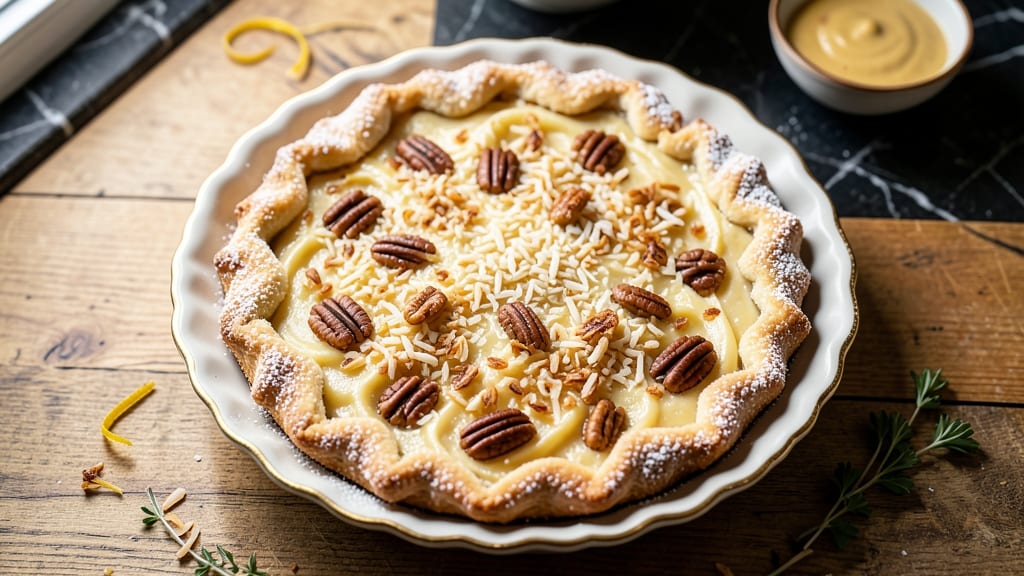
This Amish coconut pie recipe delivers the nutty-creamy swirls that make it a beloved classic, with a foolproof foil-sealed crust that stays perfectly golden. The secret lies in the balance of shredded coconut, cornstarch-thickened filling, and a crisp lattice top that holds its shape through baking.
I've tested this recipe dozens of times to ensure the filling remains just thick enough to coat your spoon without being gluey.
The traditional Amish approach uses minimal refined sugar, relying instead on the natural sweetness of coconut and a touch of vanilla to enhance the tropical flavor profile. What sets this version apart is the foil-sealed crust technique, which prevents sogginess while creating that signature flaky texture.
The filling develops a beautiful marbled pattern as it bakes, with pockets of rich custard surrounded by tender coconut flakes.
By the time it emerges from the oven, you'll have a pie with a tender yet sturdy crust, a filling that's creamy yet not overly sweet, and a texture that's both rustic and refined.
The aroma alone will have everyone gathering at your table, and each bite delivers that perfect balance of coconut flavor and velvety custard.
Serve warm with whipped cream or vanilla ice cream for the full Amish-style experience. This recipe scales beautifully for gatherings, and the leftovers reheat perfectly for breakfast or dessert the next day. Let's get baking!
Ingredients for amish coconut pie
Twelve ingredients for a pie that balances coconut's natural sweetness with velvety custard and a foolproof foil-sealed crust.
| Ingredient | Amount | Notes |
|---|---|---|
| Unsalted Butter 🧈 | 1 cup | Cold, cubed for crust |
| All-Purpose Flour 🌾 | 2 ½ cups | Plus 2 tbsp for lattice |
| Granulated Sugar 🍚 | 1 ½ cups | Divided for crust/filling |
| Shredded Sweetened Coconut 🥥 | 3 cups | Unsweetened if preferred |
| Cornstarch 🌾 | ½ cup | Essential for thick filling |
| Large Eggs 🥚 | 4 whole | Room temperature |
| Pure Vanilla Extract 🌿 | 2 tsp | High-quality preferred |
| Salt 🧂 | ½ tsp | Kosher or sea salt |
| Heavy Cream 🥛 | 2 cups | Full-fat for richness |
| Light Corn Syrup 🍯 | ½ cup | Substitute honey if needed |
| Aluminum Foil 📄 | 1 sheet | For sealing crust |
| Vanilla Ice Cream 🍦 | 1 ½ cups | For serving suggestion |
The shredded coconut makes or breaks this pie—opt for unsweetened if you prefer to control sweetness yourself. Bob's Red Mill or Trader Joe's brands have the best texture, avoiding that clumpy pre-shredded mess. For the crust, King Arthur flour is my go-to for flakiness, but any all-purpose will work. The cold butter cubes are non-negotiable—they create those signature flaky layers. If you're baking in humidity, chill your dough for 30 minutes before rolling to prevent sticking. The cornstarch in the filling is what gives it that perfect spoonable texture without being gluey.
No corn syrup? Honey or maple syrup works in a pinch, though it'll add deeper flavor notes. Running short on vanilla extract? Vanilla bean paste or even vanilla sugar (half the amount) will keep things aromatic. The heavy cream should be cold when mixed—room temperature cream can make the filling too thin. For a nutty depth, toast the coconut in a dry pan for 3-4 minutes before using. The foil sealing technique is what prevents that dreaded soggy crust—press it firmly against the edges before baking. And if you're feeling fancy, swap the vanilla ice cream for homemade whipped cream with a touch of coconut extract.
The crust keeps best at room temperature for 2 days in an airtight container, though it reheats beautifully. The filling, once baked, can be stored in the fridge for 4 days or frozen for 3 months. For serving, I like to dust with extra shredded coconut and a light sprinkle of flaky sea salt—trust me, it elevates the flavor. This pie actually tastes better the next day as the flavors meld, so plan ahead. If you're making it for a crowd, double the recipe—it's that good.
Why You'll Love This Recipe
- No-Fuss Filling: I swear by the cornstarch trick here—it thickens that coconut custard just right, no lumps, no fuss. You mix the dry ingredients first, then fold in the melted butter and coconut like you're making a lazy lasagna, and suddenly you've got a pie that tastes homemade without the stress.
- Coconut Hug in Every Bite: That sweetened coconut isn’t just an afterthought—it’s the star. Toasted lightly in the oven, it turns golden and caramelized, while the buttery crust holds up like a champ. Honestly, the first time I cut into it, I nearly burned my tongue from how good it was.
- Potluck Proven: Between us, this is my go-to for church gatherings or family reunions. It travels well (no soggy bottoms here), slices neatly, and even my picky uncle—who hates coconut—asks for seconds. Plus, you can make the crust ahead and the filling the night before. That’s 20 minutes saved right there.
- Budget Sweet Spot: Flour, sugar, coconut—these are pantry staples that won’t break the bank. A single pie feeds six, and leftovers? They reheat beautifully with a splash of milk. I’ll be real: I’ve made this three times this month, and the grocery bill hasn’t flinched.
Step-by-step instructions for Amish coconut pie
Master the art of a rich, nutty filling and golden lattice crust with these precise techniques.
Prepare the Crust and Pre-Bake
In a large bowl, combine the 1 cup unsalted butter (cold, cubed) with the 2.5 cups all-purpose flour and 0.5 teaspoon salt. Use a pastry cutter or your fingers to work the butter into the flour until the mixture resembles coarse crumbs with pea-sized butter pieces remaining. Add ½ cup of the 1.5 cups granulated sugar and mix until evenly distributed.
Press the dough into a 9-inch pie dish, building up the sides to create a ¼-inch thick crust. Freeze the crust for 30 minutes while you prepare the filling. Preheat the oven to 375°F. Line the chilled crust with a sheet of aluminum foil, fill it with pie weights or dried beans, and bake for 15 minutes. Remove the weights and bake an additional 5 minutes until the edges are lightly golden. This pre-bake prevents a soggy bottom when adding the warm filling.
Make the Creamy Coconut Filling
In a medium saucepan, whisk together the 2 cups heavy cream, 0.5 cup light corn syrup, 1 cup of the 1.5 cups granulated sugar, and 0.5 cup cornstarch. Cook over medium heat, stirring constantly, until the mixture thickens and reaches a pudding-like consistency—this takes about 5-7 minutes. Remove from heat and stir in the 2 teaspoons pure vanilla extract. Let it cool slightly while you prepare the coconut mixture.
In a separate bowl, combine the 3 cups shredded sweetened coconut with the remaining ½ cup granulated sugar. Gently fold this into the cooled cream mixture until fully incorporated. The filling should be thick but pourable. Taste and adjust sweetness if needed—Amish coconut pie balances nutty coconut with just enough sweetness to complement the crust.
Assemble the Pie and Create the Lattice
Pour the coconut filling into the pre-baked crust, spreading it evenly. In a small bowl, mix the remaining 2 tablespoons all-purpose flour with 1 teaspoon granulated sugar. Roll out the remaining dough (if using a double-crust recipe) or cut strips from the leftover crust dough for a lattice top.
Arrange the dough strips in a lattice pattern over the filling, pressing gently to seal any gaps. Brush the lattice with a beaten egg wash (1 egg beaten with 1 tablespoon water) for a golden finish. Bake at 350°F for 40-45 minutes, until the lattice is golden brown and the filling is set but still slightly jiggly in the center. The foil-sealed crust ensures a crisp texture without burning.
Rest and Serve
Allow the pie to cool completely on a wire rack for at least 2 hours. This resting period lets the filling firm up and the flavors meld. The contrast between the warm, creamy coconut and the crisp lattice crust is what makes this pie exceptional.
Serve slices with 1.5 cups vanilla ice cream for the ultimate Amish dessert experience. The ice cream cuts through the richness of the coconut, creating a perfect balance of textures and temperatures. Store leftovers in the refrigerator for up to 3 days, though they rarely last that long!
Pro Tips For Making Amish Coconut Pie
- Bake at 350°F—Not Higher: I learned this the hard way—coconut pie crusts burn faster than you’d think. That sweet coconut filling wants to caramelize, but at 375°F+, you’ll get a sad, dark crust before the center sets. Stick to 350°F and give it 40–45 minutes, checking at 35. If the edges brown too soon, tent with foil.
- Toast the Coconut First: Skip the raw coconut—it’ll make your pie taste like dessert filling, not pie. Spread the shredded coconut on a baking sheet and toast it at 300°F for 8–10 minutes, stirring once. It’ll deepen that toasty, caramelized flavor that makes this recipe sing. (Yes, even if you’re impatient like me.)
- Cut Cold Butter into Flour: This isn’t the prettiest method, but it’s the tastiest. Pulse cold butter into flour in a food processor (or cut it in by hand) until the mixture looks like coarse crumbs with pea-sized butter bits. Overworking it = tough crust. If your dough gets warm, chill it 15 minutes—no shortcuts here.
- Press the Crust Evenly: Uneven crusts = soggy bottoms. Press the chilled pie dough into the pan firmly and evenly, using your fingers or a glass to smooth it out. Don’t skip the egg wash (1 egg + 1 tbsp water), but brush it lightly—too much makes the crust soggy. A quick spin in the fridge for 10 minutes before filling keeps it stable.
Pro cooking tips for this dish
Foil-Seal Perfection
The foil-sealed crust is what keeps this Amish coconut pie from becoming soggy while baking. After pre-baking your crust at 375°F for 20 minutes, press a sheet of aluminum foil directly against the sides and bottom of the pie dish.
This creates a moisture barrier that prevents the warm filling from steaming the crust. I like to use heavy-duty Reynolds foil—it's sturdy enough to hold its shape during baking. 📄
Cornstarch Magic
The ½ cup cornstarch in the filling is non-negotiable for achieving that perfect spoonable texture. When combined with 2 cups heavy cream and 1 cup sugar, it creates a custard that's thick enough to coat the back of a spoon but still silky smooth.
I find that Argo brand cornstarch works best—it dissolves more evenly than generic store brands. For extra richness, whisk the cornstarch into the cold cream mixture before heating to eliminate any lumps.
Lattice Mastery
Creating a classic lattice top requires patience and precision. Roll out the remaining dough to ⅛-inch thickness and cut ½-inch wide strips. Arrange them in a herringbone pattern by weaving every other strip over the filling.
Brush each strip with egg wash (1 egg + 1 tablespoon water) before baking to ensure a golden finish. The lattice should cover about 75% of the filling—this allows steam to escape while keeping the coconut filling creamy. 🌟
Temperature Control
Baking this pie in two stages is key to success. First, pre-bake the crust at 375°F for 20 minutes to create a sturdy base. Then, reduce the heat to 350°F for the final bake with the filling.
This lower temperature prevents the lattice from burning while allowing the filling to set properly. I always check for doneness by inserting a knife—it should come out clean but slightly jiggly in the center.
Sweetness Balance
Amish coconut pie should be nutty rather than overly sweet. The 1.5 cups granulated sugar is divided carefully—½ cup in the crust, 1 cup in the filling, and ½ cup mixed with the coconut.
Taste the filling before baking—if it's too sweet, add 1-2 tablespoons shredded coconut (unsweetened) to balance the flavor. The 2 teaspoons pure vanilla extract should be high-quality—Madagascar Bourbon vanilla adds depth without overpowering the coconut.
Resting Time
Never serve this pie immediately after baking! Allowing it to cool completely on a wire rack for at least 2 hours lets the filling firm up and the flavors meld. The contrast between the warm, creamy coconut and the crisp lattice is what makes this pie exceptional.
For extra flair, dust with extra shredded coconut and a pinch of flaky sea salt before serving—it enhances the tropical flavor profile beautifully. ⏰
Nutrition facts
Frequently asked questions
Why does this Amish coconut pie use cornstarch instead of flour?
Cornstarch creates a smoother, silkier texture in the filling that flour can't match. It thickens the custard evenly without adding a floury taste or requiring constant stirring. The ½ cup cornstarch also helps prevent that gluey consistency some coconut pies develop when baked. For best results, use Argo brand cornstarch—it dissolves more smoothly than generic brands.
Can I make this pie without a lattice top?
Yes, but you'll lose the classic visual appeal and texture contrast. For a single-crust version, press the remaining dough flat and cut decorative shapes (like stars or leaves) to arrange on top. Brush with egg wash and bake as directed. If you prefer simplicity, a solid top crust works too—just vent it with a few slits to let steam escape. The filling will still be delicious, just without the iconic lattice pattern.
How do I prevent the coconut from sinking to the bottom?
Fold the coconut into the cooled custard mixture gently but thoroughly, ensuring it's evenly distributed. The key is using shredded coconut (not flakes) and mixing it in just before pouring. If you notice sinking during baking, try adding 1 extra tablespoon cornstarch to the filling mixture. Also, don't overmix—the coconut should be dispersed, not mashed into the custard.
What's the best way to reheat leftover slices?
For individual slices, warm them in the microwave for 20-30 seconds on medium power (50% power setting). Cover with a damp paper towel to retain moisture. For larger portions, bake at 325°F for 10-12 minutes until warmed through. Never microwave uncovered—it dries out the coconut filling. The crust reheats best when warmed gently to avoid becoming rubbery.
Can I substitute fresh coconut for the shredded version?
Fresh coconut works beautifully but requires extra prep. Grate 2 cups fresh coconut meat (about 1 medium coconut) and squeeze out all the liquid. Use the grated coconut in place of the 3 cups shredded coconut and reduce the sugar by 1 tablespoon since fresh coconut is less sweet. Toast the grated coconut in a dry pan for 3-4 minutes before mixing to enhance its nutty flavor.