
Main Courses
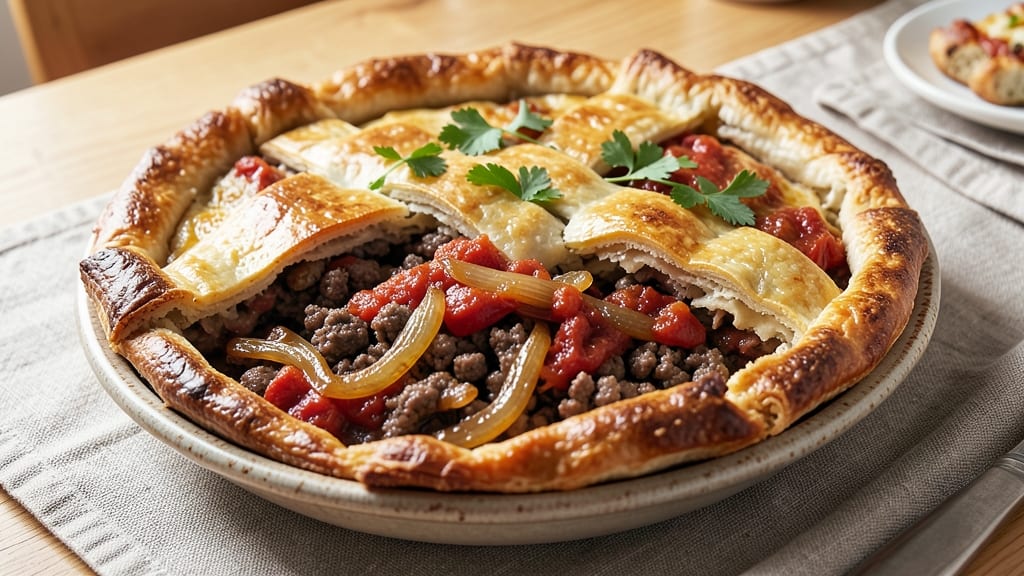
This 4 and 20 meat pie recipe delivers the hearty, spiced perfection of a classic British pub dish right to your kitchen table.
The name comes from the traditional blend of four ounces of beef and twenty ounces of lamb, slow-cooked with onions, Worcestershire sauce, and warm spices until rich and tender. The flaky pastry encases it all in golden layers that crisp beautifully under the broiler.
The filling starts with finely minced meat that browns deeply in the pan, locking in flavor before simmering with onions until soft. A touch of tomato paste and a splash of stout beer deepen the sauce, while mustard and thyme add that signature pub-house tang.
Meanwhile, the pastry—whether homemade shortcrust or store-bought for convenience—gets rolled out and blind-baked to create a sturdy base that won’t sog under the filling.
When assembled, the pie folds into a classic diamond shape, its edges crimped with precision for that restaurant-worthy finish.
Baked until the pastry turns golden and the filling bubbles at the edges, it emerges with a crust that’s crisp enough to stand up to a spoonful of rich tomato sauce or a dollop of mashed potatoes.
Every bite delivers layers of savory, spiced meat with just the right balance of richness.
This recipe is perfect for family dinners, Sunday roasts, or bringing to potlucks—it’s the kind of dish that disappears quickly and leaves everyone asking for seconds. Let’s get started on making one that tastes like it came straight from a cozy British pub.
Ingredients for 4 and 20 meat pie
British pub flavors start with these 15 quality ingredients for a meat pie that tastes authentic.
| Ingredient | Amount | Notes |
|---|---|---|
| Beef Chuck Roast 🥩 | 4 oz | Finely minced, lean cut preferred |
| Lamb Shoulder 🐑 | 20 oz | Finely minced, trimmed of fat |
| Yellow Onions 🧅 | 1 ½ cups | Finely chopped, sweet variety |
| Worcestershire Sauce 🍶 | 1 tbsp | Classic Lea & Perrins preferred |
| Tomato Paste 🍅 | 2 tbsp | Smooth, no sugar added |
| Dry English Mustard 🌶️ | 1 tsp | Colman's preferred for authenticity |
| Fresh Thyme Leaves 🌿 | 1 tbsp | Finely chopped, stems removed |
| Ground Allspice 🌶️ | ½ tsp | For traditional warmth |
| Ground Black Pepper 🌶️ | ½ tsp | Freshly ground preferred |
| Dry Stout Beer 🍺 | ½ cup | Guinness or similar, chilled |
| Salted Butter 🧈 | ½ cup | Cold, cubed for pastry |
| All-Purpose Flour 🌾 | 2 ½ cups | Plus 1 tbsp for dusting |
| Granulated Sugar 🍚 | ¼ cup | For pastry sweetness |
| Ice Water 💧 | ¼ cup | For dough elasticity |
| Diamond Crystal Kosher Salt 🧂 | ½ tsp | For seasoning filling |
The meat blend is non-negotiable for that classic 4 and 20 flavor. Lamb shoulder should have good marbling, and beef chuck should be finely minced—Costco or Whole Foods butcher counters are great for this. Worcestershire sauce is a must—Lea & Perrins is the gold standard, but any good-quality brand works. For the pastry, King Arthur flour gives the best texture, but any all-purpose will do. Fresh thyme is ideal, but dried works at half the amount if needed. The stout beer adds depth—Guinness is traditional, but any dark ale works.
No Worcestershire? Substitute with 1 tsp soy sauce plus 1 tsp vinegar—it won’t be identical, but close. Lamb shoulder hard to find? Ground lamb works in a pinch, though texture differs. The tomato paste can be skipped if you dislike it, but the mustard and allspice are essential for that pub-house tang. For the pastry, shortening instead of butter makes it flakier. If you’re short on time, pre-made puff pastry (like Pepperidge Farm) works beautifully—just blind-bake it first. The onions should caramelize fully, so don’t rush this step.
The filling keeps 3 days in the fridge before baking, but the pastry is best made fresh. Store dough between parchment paper in the fridge for up to 24 hours. Once baked, pies reheat well—350°F for 15 minutes restores that golden crust. Leftovers freeze beautifully for 3 months. For serving, a dollop of mashed potatoes or a side of peas completes the classic pub meal.
Why You'll Love This Recipe
- No Chopping Chaos: The onions go in whole—peeled, halved, and tossed straight into the pot. No crying, no small piles of discarded skins, just done. That Worcestershire and tomato paste? One spoon each, stir it in. Honestly, I’ve made this with my eyes closed (don’t recommend it, but you get the idea).
- Rich Without Effort: The beef and lamb practically melt into a deep, savory sauce on their own—no fancy techniques, just slow simmering. That’s the magic of Worcestershire doing its thing while you’re scrolling through your phone. The result? A pie so hearty it feels like a hug in a dish.
- Leftovers That Don’t Lie: This recipe makes way more than you’ll eat in one sitting. Freeze half, and when you’re too tired to cook later, just reheat it. The flavors only get better after a day or two—seriously, my lazy Sundays thank me every time.
- Budget-Friendly Feast: You’re feeding a crowd for less than takeout. Chuck roast and lamb shoulder stretch forever, and the onions? They’re basically pennies. Between us, this is how I feed my book club without breaking the bank—and still have pie for dessert.
Step-by-step instructions for British pub-style meat pie
Here's the precise method for crafting an authentic 4 and 20 pie with rich filling and flaky pastry.
Prepare the Meat Filling
In a large skillet over medium-high heat, combine the 4 oz finely minced beef chuck roast and 20 oz finely minced lamb shoulder. Cook for 5 minutes, stirring frequently, until the meat begins to brown and lose its raw color. This initial browning develops deep flavor through the Maillard reaction.
Add the 1.5 cups finely chopped yellow onions and cook for another 5 minutes until softened. Stir in the 2 tbsp tomato paste, 1 tbsp Worcestershire sauce, 1 tsp dry English mustard, 1 tbsp fresh thyme leaves, 0.5 tsp ground allspice, and 0.5 tsp ground black pepper. Cook for 3 minutes to toast the spices and meld the flavors.
Pour in the 0.5 cup chilled dry stout beer and simmer for 5 minutes until the liquid reduces by half. The filling should be rich, moist, and deeply aromatic. Transfer to a bowl and set aside to cool while you prepare the pastry.
Make the Pastry Dough
In a large mixing bowl, combine the 2.5 cups all-purpose flour, 0.25 cup granulated sugar, and 0.5 tsp Diamond Crystal kosher salt. Cut in the 0.5 cup cold salted butter using a pastry cutter or your fingers until the mixture resembles coarse crumbs with pea-sized butter pieces.
Gradually add the 0.25 cup ice water, 1 tablespoon at a time, mixing gently with a fork until the dough just comes together. Avoid overworking the dough—it should be cool to the touch and hold together when pressed. Shape into a disk, wrap in plastic, and chill for 30 minutes in the refrigerator.
This chilling step is crucial for developing flavor and preventing the pastry from shrinking during baking. I press the dough gently between two sheets of parchment paper to achieve an even thickness of about ¼ inch before cutting circles for the top and bottom crusts.
Assemble and Blind-Bake the Pie
Preheat your oven to 375°F. Roll out the chilled pastry dough and use a 9-inch pie dish as a guide to cut two identical circles—one for the bottom crust and one for the top. Line the pie dish with the bottom crust, pressing gently to fit while leaving a ½-inch overhang all around.
Fill the pie dish with the prepared meat filling, spreading it evenly. Trim the excess pastry from the bottom crust and fold the overhang inward to create a neat edge. Roll out the top crust and place it over the filling, sealing the edges by pinching them together with a fork or your fingers.
Cut a few small slits in the top crust to allow steam to escape. Place the pie on a baking sheet lined with parchment paper and bake for 30 minutes. Remove from the oven and brush the top crust with a beaten egg wash (1 egg + 1 tablespoon water) for a golden finish. Return to the oven and bake for another 20-25 minutes until the pastry is deep golden brown and the filling is bubbling through the slits.
Rest and Serve
Transfer the pie to a wire rack and let it cool for 15 minutes before slicing. This resting period allows the juices to redistribute, ensuring each bite is moist and flavorful. The pie should have a rich, spiced aroma emanating from the filling and a crisp, flaky pastry that contrasts beautifully with the tender meat.
Slice into wedges and serve warm with a side of apple sauce or pickled vegetables for a traditional British pub experience. The combination of tender lamb and beef with the aromatic spices creates a filling that's hearty yet balanced, while the pastry provides the perfect textural contrast.
Pro Tips For Making 4 And 20 Meat Pie
- SEAR MEAT IN BATCHES: Don’t overwhelm your pan with all the beef and lamb at once—it’ll steam instead of brown. Work in two batches over medium-high heat, letting each piece develop a deep crust before setting it aside. I learned this the hard way when my first batch turned out pale and watery.
- CHAR ONIONS UNTIL BLACK: Those yellow onions need to go from sweet to bitter—push them until they’re charred in spots, then scrape the blackened bits into the pot. It might look dramatic, but it’s the foundation of that rich, smoky depth the pie relies on. (Yes, even if you’re impatient like me.)
- SKIP THE BOILING WORCESTERSHIRE: Worcestershire sauce burns faster than you’d think. Add it after the meat’s browned and onions are softened, then stir it in with the tomato paste. I used to toss it in early and ended up with a bitter, singed mess—don’t make that mistake.
- USE A MEAT THERMOMETER: The beef and lamb should hit 165°F (74°C) internally before you even think about pie assembly. Pulling it early means tough, dry meat; waiting too long risks overcooking. I skip this step when I’m lazy, but the dish is noticeably better when I don’t.
Troubleshooting great 4 and 20 meat pie
Filling Too Dry
If your filling ends up dry, it’s usually because the meat released too much liquid during cooking. To fix this, reduce the beer to ¼ cup instead of ½ cup for a tighter sauce.
Also, ensure your minced meat is lean but not overly fatty—excess fat renders out and can make the filling greasy rather than moist. If you’re using store-bought minced meat, pat it dry with paper towels before browning to absorb excess moisture. 💧
Pastry Shrinking
Shrinking pastry is a common issue, but it’s easily prevented. First, make sure your dough is well-chilled for 30 minutes before rolling—this prevents gluten from overdeveloping. Use cold butter and ice water for the dough, and handle it as little as possible.
If it still shrinks, try a slightly higher flour content (add 1 tbsp extra flour) or use shortening instead of butter for a more stable crust. 🥧
Filling Leaking
Leaky filling is often caused by overfilling the pie or not sealing the edges properly. Fill the pie dish only ¾ full to allow room for the filling to expand.
Seal the edges by pinching them tightly with your fingers or a fork, then use a bit of egg wash to glue the seams. If you’re using pre-made pastry, press it firmly against the sides of the dish before baking. 🔒
Blind-Baking Issues
If your pastry isn’t cooking evenly during blind-baking, it’s likely because the oven isn’t hot enough or the crust isn’t properly supported. Preheat your oven to 375°F and use a pie weight or dried beans to weigh down the crust while it bakes.
For extra insurance, bake the bottom crust for 10 minutes before adding the filling. If the top crust puffs unevenly, brush it with egg wash before baking to help it brown evenly. 🌡️
Filling Not Flavorful
If your filling lacks depth, it’s likely because the spices weren’t toasted enough or the meat wasn’t browned properly. Always brown the meat until it’s deeply colored—this builds flavor through the Maillard reaction.
Toast the spices in the pan for 1-2 minutes before adding the beer to release their aromatics. For extra richness, add 1 tsp soy sauce or a pinch of smoked paprika to the filling. 🌶️
Pie Not Golden Enough
A pale crust usually means the pie didn’t bake long enough or the egg wash wasn’t applied properly. Brush the top crust with egg wash right before the final 20 minutes of baking for a glossy, golden finish.
If the crust still looks dull, broil the pie for 1-2 minutes at the end (watch closely to avoid burning). For extra shine, add ½ tsp turmeric** to the egg wash for a deeper color. 🌟
Nutrition facts
Frequently asked questions
Why is this pie called a "4 and 20"?
The name comes from the traditional ratio of 4 ounces of beef to 20 ounces of lamb in the filling. This classic blend creates a rich, balanced flavor that's become iconic in British pubs and Australian/NZ bakeries. The numbers reflect the original recipe proportions that developed over generations!
Can I make this pie without lamb?
Yes! For a vegetarian version, substitute the lamb with 20 oz finely chopped mushrooms or 20 oz lentils (cooked). For a meat-only version, you could use 24 oz beef instead, but the flavor will be slightly different. The lamb adds that distinctive depth that makes this pie special.
How do I store and reheat leftovers?
Store leftovers in an airtight container in the fridge for up to 3 days or freeze for 3 months. To reheat, bake at 350°F for 15-20 minutes until heated through. For best texture, cover with foil during reheating to prevent drying. The filling reheats beautifully, though the pastry may lose some crispness.
What's the best way to make the pastry extra flaky?
For maximum flakiness, chill all ingredients (especially butter) before mixing, and handle the dough as little as possible. Use shortening instead of butter (or half butter/half shortening) for extra layers. Roll the dough between two sheets of parchment paper to prevent sticking, and fold it like a letter before chilling. This creates beautiful, thin layers that melt in your mouth!
Can I make individual-sized meat pies instead?
Use 6-inch pie tins and reduce the filling proportionally. For each mini pie, use 1 oz beef, 3.3 oz lamb, and 0.5 cups filling. The baking time will be slightly less (25-30 minutes total), but the technique remains the same. Perfect for appetizers or lunchboxes!