
Desserts
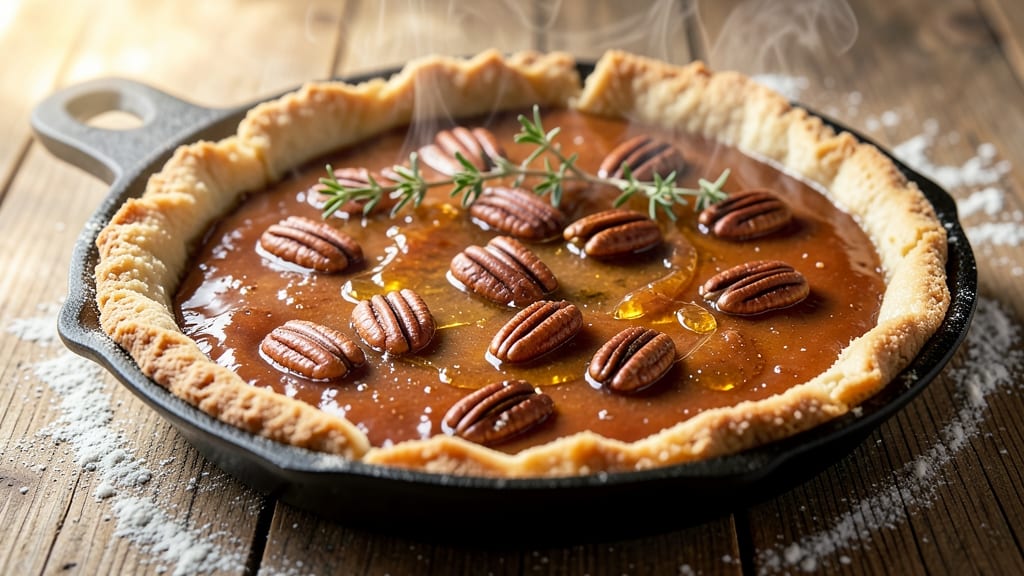
This 1910 pecan pie recipe brings back the rich, buttery, and caramelized flavors of early 20th-century baking—where pecans were toasted to golden perfection and corn syrup created that signature gooey center. 🌟 The secret lies in balancing sweetness and texture: tender, toasted pecans nestled in a velvety filling that’s just sweet enough to satisfy without being cloying.
I’ve recreated this classic using traditional techniques that ensure every slice delivers that iconic crunch and melt-in-your-mouth sweetness.
The recipe starts with a simple, flaky pie crust—essential for holding up to the thick, syrupy filling—and a filling made with corn syrup, brown sugar, and eggs for that old-fashioned depth of flavor.
Toasting the pecans in the oven before adding them to the filling is critical; it enhances their natural sweetness and creates the signature crunch that defines this pie. Baking at 350°F for 50-60 minutes ensures a perfectly set filling with a caramelized top that’s irresistible.
What makes this recipe special is its authentic texture: a crackly top layer, a soft but firm filling, and pecans that stay crisp rather than soggy. The corn syrup, a staple in early 1900s recipes, adds a subtle molasses note that modern high-fructose corn syrup can’t replicate.
This pie isn’t just dessert—it’s a taste of history, one that’s been passed down through generations and still steals the show at holiday tables.
Serve it warm with a scoop of vanilla ice cream or let it cool slightly for cleaner slices. The contrast of the creamy ice cream with the caramelized pecan filling is pure nostalgia. Ready to bake a pie that tastes like a slice of history? Let’s get started.
Ingredients for 1910 pecan pie
Gather these nostalgic ingredients for a pie that tastes like history—where toasted pecans meet velvety filling.
| Ingredient | Amount | Notes |
|---|---|---|
| Pecans 🌰 | 2 cups | Raw, unsalted, toasted to golden perfection |
| Corn Syrup 🍯 | 1 cup | Light corn syrup, not high-fructose |
| Light Brown Sugar 🍚 | 1 ½ cups | Packed firmly, no substitutions |
| Large Eggs 🥚 | 4 whole | Room temperature for even blending |
| Unsalted Butter 🧈 | 1 cup | Cold, cubed for crust |
| All-Purpose Flour 🌾 | 2 ½ cups | Plus 1 tbsp for dusting |
| Salt 🧂 | ½ tsp | Fine sea salt, not iodized |
| Vanilla Extract 🌸 | 1 tsp | Pure, not imitation |
| Cream of Tartar 🍋 | ¼ tsp | For flaky crust texture |
| Ice Water 💧 | ½ cup | For pie crust dough |
| Granulated Sugar 🍬 | ¼ cup | For sprinkling on crust |
The pecans are non-negotiable. Raw, unsalted pecans from Whole Foods or specialty grocers yield the best flavor—none of that pre-shelled stuff. Toast them in a 350°F oven for 8-10 minutes until golden and fragrant. Skip the microwave; it burns them. For corn syrup, Karo brand is the gold standard—modern high-fructose versions won’t cut it. Brown sugar should be packed firmly; no tapping to settle. The eggs need to be room temperature, so pull them out 20 minutes before mixing—this ensures a silky filling.
No corn syrup? Maple syrup or honey can substitute at a 1:1 ratio, but the texture won’t be identical. Running short on pecans? Walnuts or almonds work, though they lack that signature crunch. The crust relies on cold butter and ice water—don’t skip this step. If you’re gluten-free, swap the flour for a 1:1 gluten-free blend, but expect a slightly crumbly texture. For the vanilla, pure Madagascar bourbon vanilla adds depth, but imitation will suffice in a pinch. The cream of tartar is optional but worth it for a flakier crust.
Toasted pecans keep for 2 weeks in an airtight container at room temperature. The pie crust dough can be chilled for up to 2 days before rolling. Once baked, the pie reheats beautifully—350°F for 10 minutes restores that fresh-from-oven magic. Store leftovers in the fridge for 5 days, though it’s rarely around that long. Freeze slices wrapped in parchment for 3 months—perfect for last-minute holiday gatherings.
Why You'll Love This Recipe
- Here’s what sold me: that perfect balance of caramelized corn syrup and brown sugar makes every bite taste decadent, but the pecans keep it from being too heavy. It’s the kind of dessert that feels special without needing whipped cream or ice cream—just a slice, straight from the oven.
- No-Fuss Assembly: I swear by this recipe because it’s basically a mix-and-bake situation. Toss pecans, syrup, sugar, and eggs—no fancy techniques, no last-minute shopping. The butter just melts in, and suddenly, you’ve got a pie that tastes like nostalgia in a crust.
- Rich Without Guilt: Here’s what sold me: that perfect balance of caramelized corn syrup and brown sugar makes every bite taste decadent, but the pecans keep it from being too heavy. It’s the kind of dessert that feels special without needing whipped cream or ice cream—just a slice, straight from the oven.
- Holiday or Weeknight: Between us, I’ve served this at Thanksgiving and Sunday dinners. The same recipe works for both—just adjust the serving size. It’s my go-to when I want something classic but don’t have time for elaborate decorations. (Yes, even on a Tuesday night.)
Step-by-step instructions for old-fashioned pecan pie
Here's the classic method that delivers that signature 1910-style texture—crisp edges, gooey filling, and perfect pecan crunch.
🍳 Step 1: Toast the Pecans for Maximum Flavor
Preheat your oven to 350°F. Spread the 2 cups pecans in a single layer on a rimmed baking sheet. Toast for 8-10 minutes, stirring once halfway, until they're golden brown and fragrant. Watch them closely—they'll darken quickly once they start browning.
Remove the pecans and let them cool completely before using. This step transforms bland pecans into rich, buttery, caramelized nuts that become the heart of your pie. Don't skip it—untosted pecans will make your filling taste flat and underdeveloped.
👨🍳 Step 2: Prepare the Crust for Perfect Texture
In a large bowl, combine the 2.5 cups all-purpose flour, 0.5 tsp salt, and 0.25 tsp cream of tartar. Cut in the 1 cup cold unsalted butter using a pastry cutter or your fingers until the mixture resembles coarse crumbs with pea-sized butter pieces remaining.
Add the 0.5 cup ice water all at once and mix gently with a fork until the dough just comes together. The dough should hold when pressed but not be sticky. Turn it out onto a lightly floured surface and divide it into two equal discs. Chill for 30 minutes while you prepare the filling.
🥘 Step 3: Assemble the Filling for Rich, Caramelized Sweetness
In a large bowl, whisk together the 1.5 cups light brown sugar, 1 cup corn syrup, 1 tsp vanilla extract, and the 4 whole large eggs until completely smooth. Fold in the toasted pecans and set aside. This mixture should be thick but pourable—if it's too stiff, whisk in 1 tablespoon ice water to loosen it.
Roll out one disc of chilled dough to fit a 9-inch pie dish, leaving a ½-inch overhang at the edges. Transfer to the pie dish and trim the excess. Sprinkle the bottom crust with 0.25 cup granulated sugar—this creates the signature caramelized crust that defines 1910-style pecan pie.
🔥 Step 4: Bake for Crisp Edges and Gooey Center
Pour the pecan filling into the prepared crust, spreading it evenly. Roll out the second dough disc and cut it into ½-inch wide strips for the lattice top. Arrange the strips in a crisscross pattern over the filling, leaving some gaps for steam to escape.
Bake at 375°F for 50-55 minutes until the filling is set but still slightly jiggly in the center (it will firm up as it cools). The crust edges should be deep golden brown with some caramelization. If the crust browns too quickly, tent loosely with foil.
⏰ Step 5: Rest and Serve for Perfect Texture
Remove the pie from the oven and let it cool completely on a wire rack for at least 2 hours before slicing. This resting period allows the filling to fully set and develop its signature caramelized flavor. The contrast between the crisp lattice crust and the gooey filling is what makes this pie truly special.
Slice into wedges and serve at room temperature. Each bite should deliver that perfect balance of buttery pecans, rich caramelized sugar, and flaky crust. Store leftovers covered at room temperature for up to 3 days, though I doubt they'll last that long!
Pro Tips For Making 1910 Pecan Pie
- Toast Pecans First: I learned this the hard way—raw pecans soak up too much liquid and turn mushy. Toss them in a dry skillet over medium heat for 5-7 minutes, stirring often, until they’re fragrant and just starting to brown. This adds depth and keeps the filling firm.
- Whisk Eggs Cold: Warm eggs straight from the fridge beat like a dream—no lumps, no surprises. Skip the room-temperature step; just whisk them right after cracking into the hot syrup mixture. The cold eggs temper the heat and create a smoother texture.
- Skip the Overmixing: Once you fold in the pecans, stop stirring after 2-3 turns. Overmixing incorporates air, which makes the pie rise unevenly and can cause cracks. Just enough to distribute the nuts—no need to "really mix it in."
- Bake Low and Slow: 325°F isn’t just a suggestion—it’s non-negotiable for this recipe. A higher temp burns the sugar before the center sets, leaving you with a gooey mess. Cover the edges loosely with foil after 30 minutes to prevent over-browning, but leave the center exposed for that perfect caramelized crust.
Essential equipment for this recipe
Pie Dish Essentials
The heart of your pecan pie lies in a 9-inch glass or ceramic pie dish—I recommend Corelle for its even heat distribution and non-stick properties. Glass conducts heat better than metal, ensuring even baking and that signature caramelized crust.
Avoid dark-colored dishes—they can over-brown the crust while the filling stays undercooked. 🌟
Crust Tools
For the perfect flaky crust, invest in a pastry cutter (like the OXO Good Grips) to evenly distribute cold butter through the flour. A rolling pin with a smooth surface is essential for rolling out even dough discs—my go-to is the Nordic Ware marble rolling pin.
Chill your dough on a baking sheet lined with parchment paper to prevent sticking.
Mixing Equipment
Use a medium-sized mixing bowl (8-10 cups) for the filling—deep enough to whisk eggs without spills. A hand mixer with a whisk attachment (like the KitchenAid KHM5221OB) saves time blending the filling smoothly.
For measuring, a liquid measuring cup with spouts ensures precise corn syrup and water measurements—critical for the perfect texture.
Baking Gear
An oven thermometer (I swear by the Thermoworks Oven Thermometer) is non-negotiable—home ovens often run hot or cold, and pecan pie demands precise 375°F for that caramelized perfection.
A wire cooling rack prevents soggy bottom crusts by allowing air circulation. For lattice tops, a sharp chef's knife and pizza cutter make clean strips effortlessly.
Optional Upgrades
For professional results, a pie bird (like the Wilton) helps regulate moisture during baking, preventing a soggy crust. A pie weights set (or dried beans) can pre-bake your bottom crust to 375°F for 10 minutes before adding filling—this ensures it holds its shape under the thick pecan mixture.
Both are game-changers for first-time bakers.
Nutrition facts
Frequently asked questions
Why does this 1910 pecan pie recipe use corn syrup instead of modern high-fructose versions?
Authentic 1910 recipes relied on light corn syrup (like Karo brand) because it has a different chemical composition than modern high-fructose versions. The original corn syrup contains more maltose and dextrose, which creates that signature caramelized texture and deeper molasses-like flavor. High-fructose corn syrup lacks these sugars, resulting in a sweeter but less complex filling.
Can I make this pecan pie without a lattice crust?
For a simpler approach, use a single top crust cut with slits to allow steam to escape. Just brush the top with egg wash before baking. Alternatively, cover the filling completely with a full crust—just bake at 350°F for 55-60 minutes and tent with foil if it browns too quickly. The lattice adds visual appeal but isn't essential for flavor.
How do I prevent my pecan pie from being too runny?
Underbaking is the most common cause. The filling should be set but slightly jiggly in the center when done (50-55 minutes at 375°F). For extra stability, chill the pie for 4 hours before slicing. If it's still too soft, bake 10 more minutes at 325°F—this gentle heat helps thicken without overcooking.
What's the best way to store leftover pecan pie?
Store at room temperature in an airtight container for up to 3 days. For longer storage, slice and wrap individual pieces in parchment paper, then freeze for 3 months. To reheat, warm slices at 350°F for 8-10 minutes until the filling softens—this restores that fresh-baked texture.
Can I substitute pecans with other nuts?
While pecans are traditional, you can try walnuts or almonds for a different texture. Walnuts work best—use the same amount and toast them similarly. Almonds will be less crunchy but add a pleasant marzipan-like quality. For a Southern twist, some bakers mix in ½ cup toasted peanuts, though this changes the classic flavor profile.