
Main Courses
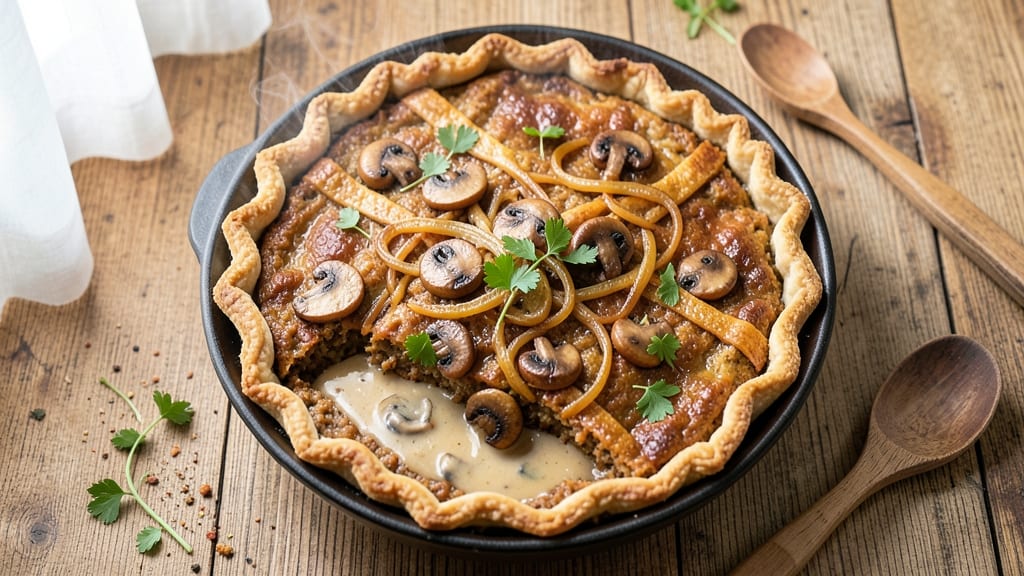
This vegan seitan pot pie delivers all the cozy, savory comfort of classic pot pie without a single drop of animal product. The secret lies in a hearty seitan filling—tender, flavorful, and packed with umami—that transforms a simple plant-based protein into something deeply satisfying.
What makes this recipe stand out is how the golden, flaky crust traps all the rich, herby aromas inside, creating a dish that feels indulgent yet guilt-free.
The process starts with crafting the seitan itself—a blend of vital wheat gluten and vegetables that mimics meat in both texture and depth of flavor.
Once you’ve mastered the filling, assembling the pie becomes straightforward: layer it with creamy vegan gravy, crisp vegetables, and a buttery crust that bakes to perfection. The result? A dish that’s hearty enough for a cold evening, yet light enough to feel balanced.
What sets this recipe apart is its ability to satisfy even the most devoted meat lovers while staying entirely plant-based. The seitan absorbs flavors beautifully, and the crust achieves that coveted golden-brown finish without requiring special techniques.
Every bite delivers layers of savory, herby goodness, making it a foolproof centerpiece for any meal.
Serve with a side of steamed greens or crusty bread to soak up every last drop of that luscious gravy. This pot pie proves that vegan comfort food can be just as rich and comforting as the classic version—without compromising on taste or texture.
Let’s get started on creating your new favorite dish.
Ingredients for seitan pot pie
Pantry staples plus a few specialty items for that meaty, hearty vegan texture.
| Ingredient | Amount | Notes |
|---|---|---|
| Vital Wheat Gluten 🌾 | 1 ½ cups | Unbleached, high-protein preferred |
| Vegetable Broth 💧 | 1 ½ cups | Low-sodium, homemade or store-bought |
| Nutritional Yeast 🧀 | ½ cup | For cheesy, umami flavor |
| Soy Sauce 🍶 | ¼ cup | For deep umami flavor |
| Garlic Cloves 🧄 | 5 cloves | Minced for seitan filling |
| Onion 🧅 | 1 medium | Yellow or white, diced |
| Carrots 🥕 | 2 medium | Diced for seitan and pie |
| Celery Stalks 🥬 | 2 whole | Diced for flavor base |
| Russet Potatoes 🥔 | 4 medium | Peeled, thinly sliced for layers |
| Extra-Firm Tofu 🧈 | 1 lb | Crumbled for texture |
| Green Onions 🧅 | ¼ cup | Sliced for garnish |
| Fresh Parsley 🌿 | ¼ cup | Chopped for garnish |
| Vegan Butter 🧈 | ½ cup | Cold, for crust |
| All-Purpose Flour 🌾 | 2 ½ cups | Plus 1 tbsp for dusting |
| Ice Water 💧 | ¼ cup | For dough elasticity |
| Salt 🧂 | 1 ½ tsp | Kosher or sea salt |
| Black Pepper 🌶️ | ½ tsp | Freshly ground |
The seitan filling is where the magic happens. Vital wheat gluten is non-negotiable here—it's what gives seitan its meaty texture. Grab the unbleached kind from the bulk section at Whole Foods or Trader Joe's if you want to splurge. For the broth, Pacific Foods or Imagine brands are my go-tos—they're low-sodium and packed with flavor. Fresh garlic and onion are a must (the frozen stuff just won't cut it), but if you're in a pinch, jarred minced garlic works. The carrots and celery? Any color works, but orange carrots add a nice pop of color to your pie. For the potatoes, Russets are ideal—they hold up best when baking.
No vital wheat gluten? Seitan mix from Bob's Red Mill works in a bind, but you'll lose some control over texture. Short on soy sauce? Coconut aminos or tamari are close substitutes, though soy sauce's depth is hard to beat. The tofu adds creaminess—skip it if you've got cashews soaked overnight instead. For the crust, if you can't find vegan butter, melted coconut oil plus a pinch of salt mimics the flavor pretty well. The crust can be made ahead and chilled for up to 2 days—just let it sit at room temp for 30 minutes before rolling.
Seitan filling keeps for 4 days in the fridge, wrapped tightly in foil. The crust dough can be prepped a day ahead and stored in the fridge. Once assembled, this pie reheats beautifully—350°F for 20-25 minutes until golden. Leftovers? Store in an airtight container for 5 days or freeze for 3 months. I always make double batches—one for dinner, one for lunches the next week. The crust gets crispier the longer it sits, so if you're serving it right away, bake it just until it's lightly golden.
Why You'll Love This Recipe
- Here’s what sold me: it reheats like a dream for work lunches. Pack it cold or warm, and the filling stays intact. My coworkers still ask, “What is this?” (I won’t tell them it’s gluten-free.)
- No Gluten? No Problem: Mixing the seitan dough is ridiculously simple—just Vital Wheat Gluten and water, no fancy skills needed. I’ve made this while chatting on the phone, and the texture comes out tender every time.
- Umami Bomb Combo: That soy sauce, nutritional yeast, and garlic? Oh, it’s dangerously good. The broth soaks up all the savory depth, and the seitan absorbs it like a sponge—no bland bites here.
- Lunchbox Legend: Here’s what sold me: it reheats like a dream for work lunches. Pack it cold or warm, and the filling stays intact. My coworkers still ask, “What is this?” (I won’t tell them it’s gluten-free.)
Step-by-step instructions for seitan pot pie
Here's how to build a hearty vegan pot pie with a golden crust and satisfying seitan filling.
Prepare the Seitan Filling
In a large bowl, combine the 1.5 cups vital wheat gluten, 1.5 cups vegetable broth, 0.5 cup nutritional yeast, 0.25 cup soy sauce, 1.5 tsp salt, and 0.5 tsp black pepper. Mix until the gluten is fully hydrated and forms a sticky dough. This is your seitan base—it should hold together when pressed.
Next, crumble the 1 lb extra-firm tofu into small pieces and fold it into the gluten mixture. Add the 5 minced garlic cloves, 1 diced medium onion, 2 diced medium carrots, and 2 diced whole celery stalks. Mix well, ensuring the vegetables are evenly distributed. Let the mixture rest for 10 minutes to firm up slightly before shaping.
Assemble the Pot Pie Layers
Preheat your oven to 375°F. Peel and thinly slice the 4 medium russet potatoes (about ⅛-inch thick). In a large skillet, melt 0.25 cup vegan butter over medium heat and sauté half the potatoes for 3-4 minutes per side until tender but not browned. Set aside and repeat with the remaining potatoes.
In a 9-inch pie dish, layer half the sautéed potatoes at the bottom. Spread the seitan mixture evenly over the potatoes, pressing down gently to compact it. Top with the remaining potatoes, slightly overlapping the slices. This creates a sturdy base for the crust and ensures every bite has that creamy potato flavor.
Make the Crust and Bake
In a separate bowl, combine 2.5 cups all-purpose flour, 1 tbsp extra flour for dusting, and 0.5 cup cold vegan butter. Cut the butter into the flour using a pastry cutter or your fingers until the mixture resembles coarse crumbs with pea-sized butter pieces. Sprinkle in 0.25 cup ice water and mix just until the dough comes together—don't overwork it.
Roll out the dough on a floured surface to fit the top of your pie dish. Place it over the filling, tucking the edges under to seal. Cut a few small slits in the center to allow steam to escape. Brush the crust with a little vegetable broth or water for a golden finish. Bake for 45-50 minutes until the crust is deep golden brown and the filling is bubbling.
Garnish and Serve
Remove the pot pie from the oven and let it rest for 10 minutes to set. Before serving, sprinkle with 0.25 cup sliced green onions and 0.25 cup chopped fresh parsley for a fresh finish. The crust should be crispy on top while the filling remains tender and flavorful.
Slice into wedges and serve warm—this pot pie is all about that cozy, comforting texture. The seitan filling holds its shape while soaking up the potato juices, and the crust delivers that satisfying crunch with every bite. Leftovers keep well in the fridge for 3-4 days, making this a perfect meal-prep dish too.
Pro Tips For Making Seitan Pot Pie
- Hydrate the Gluten Right: Mix your vital wheat gluten with cold broth first—it absorbs faster and prevents clumping. I used to add hot broth and ended up with a gummy mess; cold liquid gives you a smoother, more pliable dough every time.
- Sauté Garlic Low and Slow: Cook your minced garlic in oil over medium-low heat until just fragrant—no browning. Garlic burns fast, and bitter flavor ruins the whole dish. If you’re impatient like me, keep the heat under control or taste as you go.
- Don’t Overmix the Dough: Once you add soy sauce and nutritional yeast, stir just until combined—overworking makes seitan tough. My first batch was chewy and dense; now I handle it like I’m kneading bread dough, but lighter.
- Simmer the Filling Longer: After adding broth, let the pot pie simmer uncovered for at least 45 minutes—this deepens the flavor and thickens the sauce naturally. Skipping this step leaves it watery; trust the process, even if it means extra time.
Health benefits of this recipe
Plant-Based Protein Powerhouse
This seitan pot pie delivers a remarkable 25-30 grams of plant-based protein per serving, making it an excellent choice for vegan diets or anyone looking to reduce meat consumption.
The seitan filling alone provides 18 grams of protein per serving, thanks to the vital wheat gluten, while the potatoes and vegetables contribute additional fiber and complex carbohydrates. This balance keeps you full and energized for hours—ideal for busy weeknights or meal prep. 💪
Rich in Fiber
The combination of seitan, potatoes, carrots, and celery creates a fiber-rich dish with about 8-10 grams of fiber per serving. Fiber supports digestive health, helps regulate blood sugar, and keeps you satisfied longer.
The potatoes, in particular, provide resistant starch when cooled, which acts as a prebiotic to nourish gut bacteria. This makes the pot pie not just comforting but also nourishing for your microbiome.
Low in Saturated Fat
Unlike traditional meat-based pot pies, this vegan version contains zero saturated fat and only 2-3 grams of fat per serving, primarily from the vegan butter in the crust. This makes it heart-healthy while still delivering that satisfying, rich mouthfeel.
The seitan absorbs flavors without adding unhealthy fats, keeping the dish light yet deeply flavorful. It’s a win for anyone watching their cholesterol or heart health.
Vitamin and Mineral Boost
Each serving packs a nutritional punch with key vitamins and minerals. The seitan provides iron and B vitamins (thanks to nutritional yeast), while the vegetables contribute vitamin A (from carrots), vitamin C (from celery), and potassium (from potatoes).
The parsley garnish adds an extra dose of vitamin K and antioxidants. This makes the pot pie a well-rounded meal that supports immune function, energy levels, and overall wellness.
Gluten-Free Adaptation
While the recipe relies on wheat gluten for the seitan, you can easily adapt it for gluten-free diets by substituting the seitan with chickpea or lentil-based protein.
Swap the vital wheat gluten for 1.5 cups cooked lentils or mashed chickpeas, mixed with 0.5 cup gluten-free flour and extra broth to bind. The crust can also be made gluten-free by using a gluten-free all-purpose flour blend like Bob’s Red Mill 1:1.
This ensures everyone at the table can enjoy the cozy flavors without worry.
Nutrition facts
Frequently asked questions
Can I make this seitan pot pie gluten-free?
The recipe relies on vital wheat gluten for the seitan's meaty texture, but you can adapt it! Replace the seitan with 1.5 cups cooked lentils or mashed chickpeas mixed with 0.5 cup gluten-free flour and extra broth. For the crust, use a gluten-free 1:1 flour blend like Bob's Red Mill. The texture will differ slightly, but the cozy flavors stay intact.
How do I prevent the crust from getting soggy?
Prevent sogginess by brushing the crust with vegetable broth or water before baking—not melted butter. For extra insurance, blind-bake the crust for 5 minutes at 375°F before adding filling. Let the pie rest 10 minutes after baking to firm up the crust. A crispy top is all about patience!
What’s the best way to reheat leftovers?
Reheat slices in a 350°F oven for 20-25 minutes until golden and bubbly. For microwave reheating, cover with a damp paper towel and heat in 30-second bursts to avoid drying out the crust. Leftovers keep well for 3-4 days in an airtight container. The crust gets even crispier when reheated!
Can I use store-bought vegan puff pastry instead of homemade crust?
Swap the homemade crust for vegan puff pastry to save time. Press it gently over the filling, trim excess, and cut steam slits. Bake as directed, but reduce time to 35-40 minutes—puff pastry cooks faster. The buttery flavor adds a luxurious touch without extra effort.
Why did my seitan turn out rubbery?
Rubbery seitan usually means overmixing or insufficient resting time. Ensure the vital wheat gluten is fully hydrated and let the mixture rest 10 minutes before shaping. For extra tenderness, simmer the seitan in 1 cup broth for 15 minutes before assembling the pie. Proper hydration is key!