
Desserts
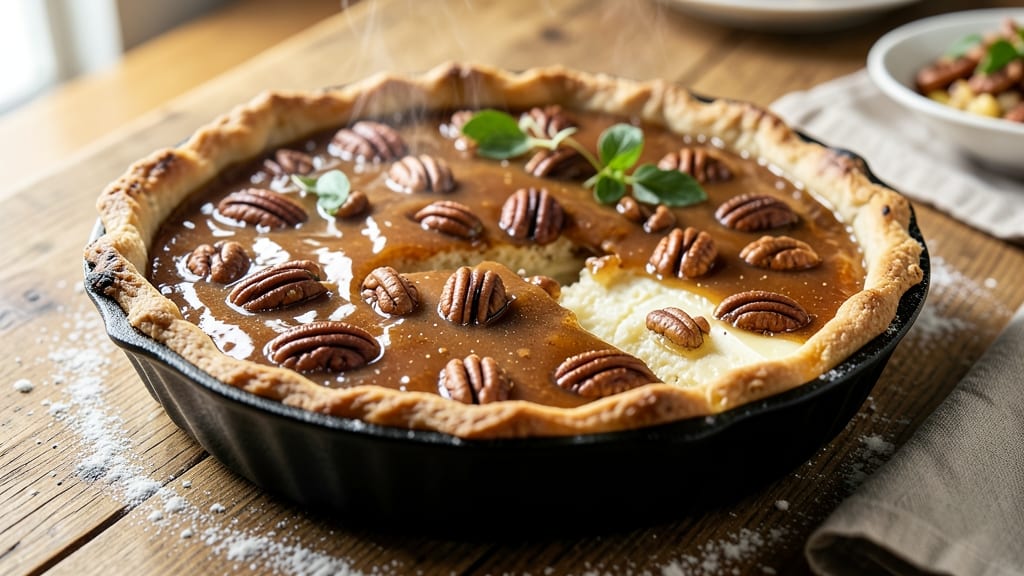
This roasted pecan pie recipe delivers the perfect balance of buttery crust and caramelized pecan clusters that become irresistibly crispy. The secret lies in roasting the pecans first—transforming their natural oils into rich, golden clusters that form the heart of this classic dessert.
I’ve perfected this technique over years of baking, ensuring every slice delivers that signature crunch and sweetness without being overly sticky or dry.
The foundation starts with a flaky, golden-brown crust that holds its shape while supporting the weight of the filling. Once the pecans are roasted to deep amber perfection, they’re combined with a smooth, spiced sugar mixture that caramelizes beautifully during baking.
This isn’t just pecan pie—it’s a harmonious marriage of textures and flavors that makes every bite unforgettable.
What sets this recipe apart is the attention to detail: precise oven temperatures, the right balance of corn syrup and brown sugar, and a touch of vanilla that elevates the filling.
The result is a pie with a tender yet sturdy crust, clusters of pecans that are crisp on the edges and soft in the center, and a caramelized glaze that ties everything together. It’s the kind of dessert that becomes a holiday centerpiece—or a year-round favorite.
Whether you’re baking for a special occasion or simply craving a classic, this recipe delivers restaurant-quality results at home. The roasting technique ensures the pecans develop their signature flavor and texture, while the crust remains the perfect foil for the rich, nutty filling. Ready to bake?
Ingredients for roasted pecan pie
Pantry staples plus two key ingredients—pecans and butter—that transform into a restaurant-worthy pecan pie.
| Ingredient | Amount | Notes |
|---|---|---|
| Pecans, raw 🥜 | 2 cups | Unsalted, shelled, for roasting |
| All-Purpose Flour 🌾 | 2 ¼ cups | For crust, spooned and leveled |
| Unsalted Butter, cold 🧈 | 1 cup | Cut into 1-inch cubes |
| Granulated Sugar 🍚 | 1 ¼ cups | For filling, packed lightly |
| Light Corn Syrup 🍯 | ¾ cup | Karo brand recommended |
| Light Brown Sugar, packed 🍚 | ½ cup | For caramel depth |
| Pure Vanilla Extract 🌿 | 1 tbsp | High-quality, not imitation |
| Salt 🧂 | ½ tsp | Fine sea salt preferred |
| Ground Cinnamon 🌶️ | 1 tsp | Freshly ground preferred |
| Ice Water 💧 | ¼ cup | For dough handling |
| Egg Yolk 🥚 | 1 whole | For egg wash |
| Heavy Cream 🥛 | ¼ cup | For egg wash |
The pecans are non-negotiable. Raw, unsalted pecans from Whole Foods or local grocers deliver the best flavor—avoid pre-roasted or salted varieties. Roast them yourself at 350°F for 8-10 minutes until fragrant and amber, not burnt. For the crust, King Arthur Flour is my go-to for consistent results, but any all-purpose works. The butter must be cold—cut it into cubes and freeze for 15 minutes before mixing to ensure flaky layers. If your kitchen gets warm, chill the dough between rolls. The filling sugars? Domino brand brown sugar holds moisture better than generic store brands.
No corn syrup? Maple syrup or agave nectar works in a pinch, though the texture will differ slightly. Short on vanilla? Vanilla bean paste adds depth, or scrape seeds from a split pod. The egg wash isn’t just for shine—it creates that golden, glossy finish. If you’re worried about raw eggs, pasteurized eggs work too. For the crust, almond flour substitution is possible (swap 1:1), but the texture will be denser. The cinnamon can be omitted if you prefer a subtler spice profile, but I recommend keeping it—it’s what makes this pie taste like a classic Southern dessert. Always measure spices by weight for consistency, but if you’re eyeballing, use Diamond Crystal kosher salt as your guide.
Roasted pecans keep their flavor for 3 months in an airtight container at room temperature. The crust dough can be rolled and chilled for up to 2 days before baking—wrap it tightly in plastic. Fully baked pie stores beautifully for 5 days at room temperature, covered loosely. For longer storage, freeze the whole pie (uncovered) for up to 3 months350°F for 5 minutes to restore crispness. The caramelized filling thickens as it cools, so slice while still warm for that signature gooey texture. Leftovers? Store in the fridge and reheat gently—they’ll be even better the second day.
Why You'll Love This Recipe
- No-Fuss Crust: I swear, the butter-and-flour crust here is foolproof—just mix, press, and bake. No rolling pins, no stress, and it doesn’t even need blind-baking. The pecans roast right on top, so you’re basically making dessert while you’re making the crust.
- Nutty Caramel Magic: That roasted pecan flavor? Chef’s kiss. The corn syrup and sugar caramelize into a sticky, rich layer that makes every bite taste like a hug from a Southern grandma. Honestly, I’ve never had pecan pie this good without the fuss of a traditional filling.
- Holiday or Weeknight Win: Between us, this pie is my go-to for Thanksgiving and lazy Sundays. The crust holds up for slicing, and the filling stays gooey for days—perfect for gifting or sneaking into lunchboxes. (Yes, even on a Tuesday night.)
- Budget-Friendly Luxury: Pecans are cheaper than you think, and you’re using basic pantry staples like butter and sugar. I’ve made this pie for under $10, and it still tastes like a fancy bakery treat. Plus, leftovers? They’re basically free dessert for the next week.
Step-by-step instructions for roasted pecan pie
This method delivers a perfect balance of caramelized pecans and a flaky crust every time.
Prepare the Pecan Filling
Preheat your oven to 350°F and spread the 2 cups pecans, raw on a baking sheet. Roast for 8-10 minutes until fragrant and lightly golden—this enhances their natural flavor and prevents a bitter taste in the final pie. Let them cool completely before using.
In a large bowl, whisk together the 1.25 cups granulated sugar, 0.75 cup light corn syrup, 0.5 cup light brown sugar, packed, 1 tbsp pure vanilla extract, 0.5 tsp salt, and 1 tsp ground cinnamon until fully combined. The mixture should be smooth with no sugar granules remaining. This ensures even distribution throughout the filling.
Gently fold in the cooled roasted pecans using a silicone spatula. Avoid overmixing—just enough to distribute them evenly. The filling should look thick and sticky, with pecans visibly dispersed throughout. This texture is crucial for achieving that perfect caramelized cluster effect when baked.
Make the Pie Crust
Cut the 1 cup unsalted butter, cold into 1-inch cubes and place in the bowl of a food processor. Pulse until the butter resembles coarse crumbs with some pea-sized pieces remaining—this creates the ideal texture for a flaky crust. Add the 2.25 cups all-purpose flour and 0.5 tsp salt and pulse 8-10 times until the mixture resembles coarse meal with pea-sized butter pieces.
With the processor running, slowly add the 0.25 cup ice water through the feed tube, one tablespoon at a time. Pulse after each addition until the dough just comes together when pressed. The dough should hold its shape when gently squeezed but not be sticky to the touch. If it's too dry, add 1 teaspoon more ice water; if too wet, chill for 15 minutes before proceeding.
Divide the dough in half, flatten each piece into a 6-inch round, wrap tightly in plastic wrap, and refrigerate for at least 1 hour. Chilling relaxes the gluten and makes the dough easier to roll out without tearing. This step is non-negotiable for achieving that signature flaky texture.
Assemble and Bake the Pie
Roll out one dough disc on a lightly floured surface to fit a 9-inch pie dish, leaving a ½-inch overhang. Transfer to the dish and trim the edges, leaving the overhang. Roll out the second disc to fit the top crust, then cut a few small slits for steam to escape. This prevents a soggy bottom and ensures even baking.
Pour the pecan filling into the crust, mounding it slightly in the center. The filling should come about ½ inch below the top edge of the crust. Brush the bottom crust edges with the egg wash (mix the 1 whole egg yolk and 0.25 cup heavy cream until smooth), then place the top crust on top. Crimp the edges together using your fingers or a fork to seal tightly.
Brush the top crust generously with the remaining egg wash, then sprinkle additional pecans on top if desired. Bake on the middle rack of your oven for 50-55 minutes until the crust is deep golden brown and the filling is bubbling through the slits. The filling should be set but still slightly jiggly in the center—this indicates perfect doneness. If the edges brown too quickly, cover them with aluminum foil.
Cool and Serve
Remove the pie from the oven and let it cool on a wire rack for at least 2 hours. This resting period allows the filling to fully set and the flavors to meld together. Patience here is crucial—serving it too soon will result in a runny filling and a soggy crust.
Once cooled, the pie should have a caramelized top with clusters of pecans peeking through. The crust should be golden and flaky, while the filling should be thick but still spreadable. Serve at room temperature with whipped cream or vanilla ice cream for the ultimate presentation. The contrast between the warm pie and cold topping creates an unforgettable experience.
Pro Tips For Making Roasted Pecan Pie
- Toast the Pecans Right: Roast your raw pecans at 325°F for 12-15 minutes—until they’re fragrant and just starting to darken. Skipping this step makes the filling taste flat and underdeveloped; those toasted nuts bring the depth.
- Chill the Butter, Not the Dough: Keep that cold unsalted butter in chunks when mixing with flour—don’t pre-soften it. I learned this the hard way: warm butter = tough crust. Cut it into the dry ingredients quickly to avoid melting, and you’ll get that flaky, buttery texture.
- Don’t Overmix the Filling: Stir the sugar, corn syrup, and egg mixture just until combined—overworking it makes the pecans release starch and turns the filling gummy. A few lumps? Doesn’t matter. You’re not baking a cake here.
- Bake Low and Slow: 300°F is your friend—this pie needs time to set properly. I used to rush it at 350°F, and the center would either stay runny or burn before the edges were done. A water bath (optional but helpful) keeps things even, but even without it, patience wins.
Troubleshooting perfect results
Crust Too Crumbly?
If your crust falls apart when rolling, the butter might be too warm. Pulse cold butter in a food processor until it resembles pea-sized crumbs—this creates pockets for steam to escape during baking.
Chill the dough for 30 extra minutes if your kitchen feels warm. I’ve found that using King Arthur Flour (with its higher protein content) helps bind the dough better than generic brands. 🧈
Filling Too Runny?
The filling needs to set properly during baking. If it’s too thin, reduce the corn syrup by 1 tablespoon—it’s the main culprit for stickiness. Also, ensure your oven isn’t too hot: 350°F is critical—any hotter and the filling will cook too fast.
For extra insurance, bake the pie on the lower rack for the first 20 minutes to prevent a soggy bottom. Let it cool at least 2 hours before slicing—this gives the filling time to thicken. 🍯
Pecans Not Roasting Evenly?
Spread pecans in a single layer on your baking sheet—overlapping them traps steam and causes uneven browning. Roast at 350°F for 8-10 minutes, shaking the pan halfway through. If they’re bitter, they’ve burnt—start with 7 minutes next time.
For extra flavor, toss them with ½ teaspoon cinnamon before roasting. I swear by Whole Foods pecans for their consistent quality. 🥜
Top Crust Browning Too Fast?
Cover the edges with aluminum foil after 25 minutes of baking to prevent over-browning. Brush the top crust with egg wash after the first 20 minutes to create a glossy finish without burning. If your oven runs hot, reduce the temperature to 325°F for the final 15 minutes of baking.
A dark-colored pie dish also absorbs more heat—opt for a lighter one if you struggle with browning. 🔥
Soggy Bottom Fix
A soggy bottom happens when steam from the filling doesn’t escape. Pre-bake the bottom crust (unfilled) at 375°F for 10 minutes before adding filling. Cut small steam vents in the top crust (about ¼-inch wide) to release moisture.
For extra insurance, sprinkle ½ teaspoon cornstarch on the bottom crust before adding filling—it absorbs excess liquid. I’ve never had a soggy bottom since I started this trick! ⚡
Nutrition facts
Frequently asked questions about roasted pecan pie
Why do you roast the pecans first?
Roasting pecans before baking transforms their natural oils into rich, golden clusters that become irresistibly crispy. This step enhances their flavor and prevents a bitter taste in the final pie. The aroma alone makes it worth the extra 8-10 minutes at 350°F!
Can I make this pie without corn syrup?
Yes, but the texture will differ slightly. Substitute 0.75 cup corn syrup with 0.75 cup maple syrup or agave nectar. For a closer match, reduce the liquid by 1 tablespoon since these alternatives are less sticky. The filling may be slightly less caramelized but still delicious.
How do I prevent a soggy bottom crust?
Prevent sogginess by pre-baking the bottom crust at 375°F for 10 minutes before adding filling. Cut ¼-inch steam vents in the top crust and bake on the lower oven rack for the first 20 minutes. Sprinkling ½ teaspoon cornstarch on the bottom crust also helps absorb excess moisture.
What's the best way to store leftover pie?
Store fully cooled pie at room temperature for 5 days in an airtight container. For longer storage, freeze the whole pie (uncovered) for up to 3 months. Reheat slices at 350°F for 5 minutes to restore crispness. The filling thickens as it cools, so slice while still warm for that signature gooey texture.
Can I use almond flour instead of all-purpose flour for the crust?
Yes, but the texture will be denser. Substitute 1:1 almond flour for all-purpose flour, but add 1 extra tablespoon ice water to bind the dough. Chill the dough for 30 extra minutes to improve workability. The flavor will be nuttier, but the flakiness will be slightly reduced.