
Main Courses
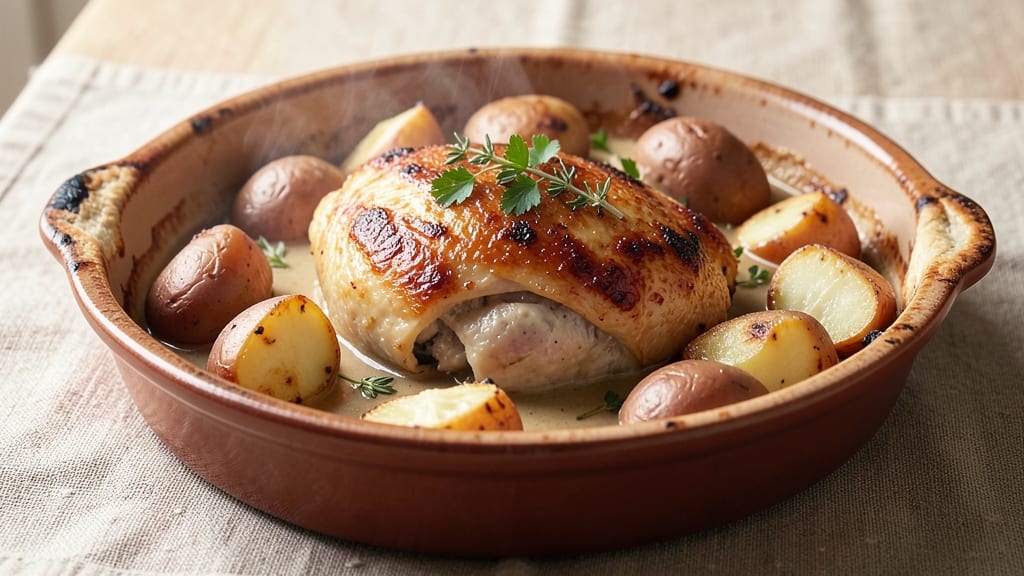
This roasted chicken pot pie recipe delivers all the comfort of a classic pot pie with restaurant-quality results in one pan. The secret starts with perfectly roasted chicken thighs—juicy, golden, and infused with garlic and herbs—that form the heart of the filling.
What sets this apart is the creamy, velvety gravy that coats every bite, made richer by the chicken's natural juices. Layering is where the magic happens: tender chicken, fluffy mashed potatoes, and a mix of seasonal vegetables create a filling that's both hearty and balanced.
The crispy top crust seals in all the flavors while adding that satisfying crunch you crave. This isn't just a pot pie—it's a one-pan wonder that transforms simple ingredients into a meal worthy of a holiday table.
What you'll end up with is a bubbling, golden pot pie with a creamy gravy that pulls apart effortlessly, revealing layers of savory chicken and tender vegetables. The crust achieves that perfect balance—crisp enough to hold its shape but tender enough to melt in your mouth.
It's the kind of dish that feels indulgent yet comes together with thoughtful techniques. Perfect for family dinners, meal prep, or serving a crowd, this recipe scales beautifully while keeping the same rich, comforting flavors. The best part? Minimal cleanup. Let's get started on creating this showstopper.
Ingredients for roasted chicken pot pie
Pantry staples meet restaurant-quality flavors in this one-pan pot pie wonder.
| Ingredient | Amount | Notes |
|---|---|---|
| Chicken Thighs 🍗 | 2 ½ lb | Bone-in, skin-on preferred |
| All-Purpose Flour 🌾 | 1 ½ cups | For crust and gravy thickening |
| Unsalted Butter 🧈 | ¾ cup | Cold, cubed for crust |
| Heavy Cream 🥛 | 1 cup | Full-fat for richness |
| Chicken Broth 💧 | 1 ½ cups | Homemade or quality store-bought |
| Russet Potatoes 🥔 | 2 lb | Yukon gold works too |
| Carrots 🥕 | 2 medium | Peeled, sliced into rounds |
| Celery Stalks 🧅 | 3 whole | Diced into small pieces |
| Yellow Onion 🧅 | 1 whole | Diced, medium size |
| Garlic Cloves 🧄 | 4 cloves | Minced for depth of flavor |
| Fresh Thyme 🌿 | 2 tbsp | Leaves only, chopped |
| Fresh Rosemary 🌿 | 1 tbsp | Chopped, about 2 sprigs |
| Salt 🧂 | 1 ½ tsp | Diamond Crystal preferred |
| Ground Black Pepper 🌶️ | ½ tsp | Freshly ground preferred |
| Milk 🥛 | ¼ cup | For mashed potatoes |
The chicken thighs are non-negotiable here—bone-in, skin-on gives you that juicy, golden crust you can't get with breasts. Trader Joe's or Costco often have great deals on them, and you'll want about 2.5 pounds total for six servings. Look for thighs with a good layer of fat—it's what makes the gravy so rich. If you're using frozen, thaw them overnight in the fridge. For the crust, King Arthur flour is my go-to because it holds up better to the moisture, but any all-purpose will work. The secret to the crispy top? Cold butter and flour mixed into the crust—don't skip chilling it between layers.
No heavy cream? Half-and-half with a splash of milk works in a pinch, though the texture won't be quite as luxurious. Short on chicken broth? Vegetable broth with an extra tablespoon of butter keeps things flavorful. Fresh herbs make all the difference—if you're using dried, cut the amount to one-third what's listed. The potatoes should be firm but tender when done—test with a fork. For extra richness, stir a tablespoon of sour cream into the gravy at the end. And if you're feeling fancy, add a sprinkle of Parmesan cheese to the crust before baking for that golden, cheesy edge.
This pot pie reheats beautifully—just cover with foil and warm in the oven for 20-25 minutes at 375°F. Keeps for 4 days in the fridge, though honestly it's best the first day. Freezes for 3 months if you wrap it tightly in foil. I always make a double batch—one for dinner, one for leftovers that become next-day lunches. The crust stays crispy when reheated, but if it gets soggy, just pop it under the broiler for a minute to revive it.
Why You'll Love This Recipe
- Weeknight-Friendly Magic: I swear by this for nights when I’d rather not stand at the stove for hours—just brown the thighs, toss them in the oven, then dump everything into one bowl. The thighs stay juicy while the cream and broth thicken into that velvety sauce. No fuss, all reward.
- Creamy Crisp Contrast: That crispy flour-butter crust on top? It’s the star. The heavy cream and broth create a luscious filling, but the golden, shatter-y top? It’s what makes this dish feel special—like a restaurant pot pie, but with ingredients I already had.
- Leftovers That Don’t Suck: Honestly, the best part might be the second day. The flavors deepen, the crust softens just enough to be perfect with a fork, and it reheats in minutes. I’ve sent this to work in thermoses, and no one’s ever complained. (They usually ask for the recipe.)
- Budget Meal for Crowds: Chicken thighs stretch further than breasts, and this recipe feeds four easily—sometimes five if we’re being honest. The butter and cream feel indulgent, but the broth and flour make it stretch without skimping on taste. My wallet and my family thank me.
Step-by-step instructions for roasted chicken pot pie
Here's how to create a golden, flaky crust with tender chicken and velvety filling—all in one pan!
Roast the Chicken to Perfection
Preheat your oven to 425°F. Pat the 2.5 lb chicken thighs dry with paper towels—this ensures crispy skin. Season generously with 1.5 tsp salt and 0.5 tsp ground black pepper, rubbing it into the skin and any exposed meat. Place the thighs skin-side up in a deep oven-safe skillet.
Roast for 25-30 minutes until the skin is deep golden brown and the internal temperature reaches 165°F. You'll know it's done when the juices run clear. Remove the chicken and let it rest on a cutting board for 10 minutes—this prevents dry meat when you slice it later.
Build the Creamy Filling
While the chicken rests, reduce the oven temperature to 375°F. In the same skillet, melt 0.75 cup unsalted butter over medium heat. Add the diced yellow onion, diced celery stalks, and sliced carrots, cooking for 5-6 minutes until softened. Stir in the minced garlic cloves and cook for 30 seconds until fragrant.
Add the 2 lb russet potatoes (cut into 1-inch chunks), 1.5 cups chicken broth, 2 tbsp fresh thyme, and 1 tbsp fresh rosemary. Bring to a simmer, then cover and cook for 10-12 minutes until the potatoes are fork-tender. Stir in the 1 cup heavy cream and simmer for another 2 minutes.
Prepare the Crust Mixture
In a medium bowl, whisk together the 1.5 cups all-purpose flour, 1.5 tsp salt, and 0.5 tsp ground black pepper. Cut in the 0.75 cup cold unsalted butter (use a fork or pastry cutter) until the mixture resembles coarse crumbs with pea-sized butter pieces. Stir in 0.25 cup milk just until combined—don't overmix.
Spoon the crust mixture over the filling in the skillet, spreading it evenly to cover completely. Use the back of a spoon to create a textured top—this helps it brown beautifully. Bake for 25-30 minutes until the crust is golden brown and the filling bubbles around the edges.
Finish and Serve
Remove the pot pie from the oven and let it rest for 10 minutes—this allows the filling to set slightly and makes slicing easier. While it rests, shred the roasted chicken using two forks and stir it into the filling. The residual heat will warm the chicken through.
Slice into wedges and serve immediately. The crust should be crispy and flaky, the filling creamy and flavorful, and the chicken tender with juicy meat. For extra richness, drizzle with any pan juices before serving!
Pro Tips For Making Roasted Chicken Pot Pie
- Brown the Thighs First: Skip the raw chicken straight into the pot pie filling—sear those thighs skin-side down in a hot pan for 5-6 minutes until golden. The crispy skin adds flavor and texture that no amount of roasting later can match. (Yes, even if you’re impatient like me.)
- Use Cold Butter for Dough: Cut that unsalted butter into the flour with your fingers or a pastry cutter until you’ve got pea-sized lumps—don’t overwork it. Cold butter makes the crust flaky, and flaky crust is the only kind worth eating. (I learned this the hard way after a greasy, sad disaster.)
- Don’t Rush the Cream: Let the heavy cream come to room temperature before adding it to the filling—cold cream makes the sauce split like a teenager at a family dinner. Warm it gently first, and you’ll get a silky, cohesive sauce every time.
- Rest the Chicken: Pull the roasted thighs out of the oven 5 minutes early and tent them loosely with foil. This lets the juices redistribute instead of pooling at the bottom of your pot pie—dry chicken is a crime, and nobody wants to be the criminal. (Your future self will thank you.)
Common mistakes when making perfect results
Overcooking the Chicken
One of the biggest mistakes is overcooking the chicken thighs, which leads to dry, stringy meat. I’ve learned the hard way—roasting beyond 165°F internal temperature turns juicy chicken into tough, flavorless scraps.
Use a meat thermometer to check, and remove it from the oven as soon as it hits that mark. Let it rest for 10 minutes before slicing, which helps retain moisture. 🌡️
Skipping the Resting Time
Rushing to slice the chicken immediately after roasting is a recipe for disaster. The juices need time to redistribute, or you’ll end up with a dry, flavorless mess. I always set a timer for 10 minutes of resting time—it’s worth the wait.
This also applies to the final pot pie: letting it rest after baking ensures clean slices and a crispy crust.
Underseasoning the Filling
The filling is where the magic happens, but many cooks hold back on seasoning. Don’t be shy with the salt and herbs—taste as you go!
I like to add an extra pinch of salt to the gravy at the end, and a splash of Worcestershire sauce (just 1 tsp) adds depth. Fresh herbs like thyme and rosemary should be chopped finely so they infuse the filling evenly.
Using Warm Butter for Crust
Cold butter is non-negotiable for a flaky crust. If you use warm butter, the crust will turn out greasy and tough. Keep your butter chilled until just before mixing, and cut it into small cubes.
I even place the butter bowl in the freezer for 10 minutes before starting to ensure it stays cold. The texture difference is night and day! ❄️
Overmixing the Crust Dough
Once you add the milk to the crust mixture, stop mixing immediately. Overworking the dough develops gluten, which makes the crust tough instead of flaky. Use a fork or your fingers to gently combine—just until the dry bits disappear.
The goal is a crumbly texture, not a smooth dough. Trust me, this small step makes a huge difference!
Baking at Too High Heat
The crust needs gentle heat to brown evenly, not a blast of hot air. Baking at 375°F gives the filling time to set while the crust crisps. If you crank the heat to 400°F or higher, the crust will burn before the filling is ready.
Watch for golden brown edges and bubbling filling—these are your cues to check for doneness. 🔥
Nutrition facts
Frequently asked questions
Can I make this pot pie ahead of time?
This pot pie reheats beautifully. Assemble it completely (including the crust), then cover tightly with foil and refrigerate for up to 2 days. Bake from cold at 375°F for 40-45 minutes until golden. For freezing, bake first, then cool completely, wrap tightly in foil, and freeze for up to 3 months. Thaw overnight in the fridge before reheating.
What if I don't have chicken thighs?
You can substitute with bone-in chicken breasts (but they'll be less juicy) or rotisserie chicken for convenience. If using breasts, roast at 375°F for 20-25 minutes until 165°F internal temp. For rotisserie chicken, shred and add it to the filling after baking. The flavor will still be delicious, though thighs give the best texture.
How do I make this gluten-free?
Replace the all-purpose flour with a 1:1 gluten-free flour blend (like Bob's Red Mill) for the crust. Use the same amount (1.5 cups) and follow the same mixing method. For the gravy, use cornstarch or arrowroot powder (1 tbsp) mixed with 2 tbsp cold water to thicken instead of flour. The texture will be slightly different but still delicious!
Can I use frozen vegetables instead of fresh?
Yes! Frozen veggies work perfectly and save time. Use 1 cup frozen peas and 1 cup frozen corn in place of fresh carrots and celery. Add them with the potatoes and cook until tender. Just be sure to drain any excess liquid from the frozen veggies before adding to avoid a watery filling.
What's the best way to reheat leftovers?
Cover the pot pie with foil and reheat in a 350°F oven for 20-25 minutes until warmed through. For extra crispiness, remove the foil for the last 5 minutes of reheating. Microwaving isn't recommended as it makes the crust soggy. If the crust loses its crispiness, pop it under the broiler for 1-2 minutes to revive it.