
Main Courses
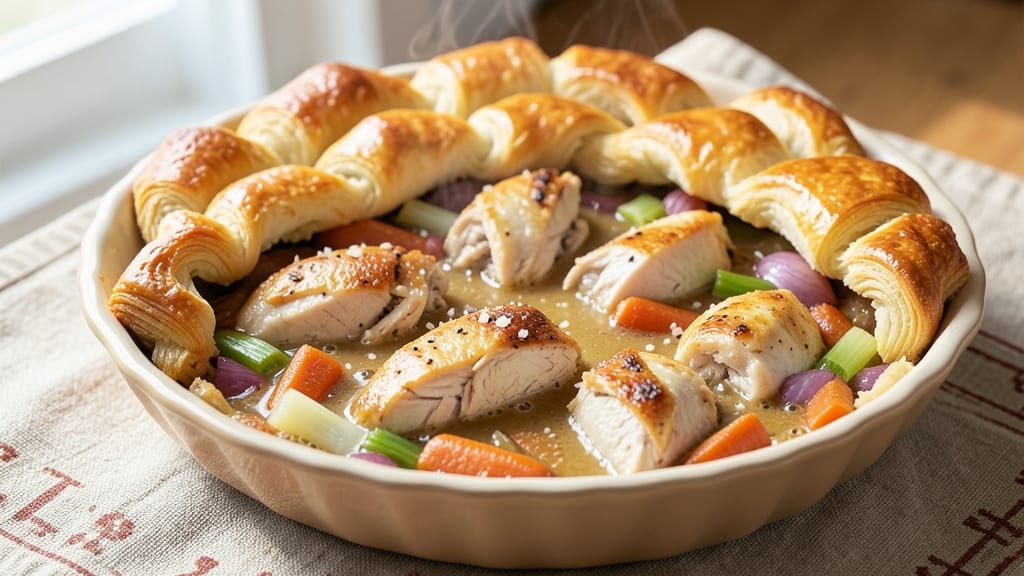
This pot pie recipe using crescent rolls transforms humble crescent rolls into a flaky, golden lattice that seals in rich gravy and tender filling. The secret lies in using store-bought dough for effortless perfection—no rolling or pie crust stress.
I developed this version after struggling with soggy tops, and the difference is night-and-day crispiness that holds up to even the heartiest fillings.
The beauty of this method is its flexibility: swap chicken and vegetables for a vegetarian version, or keep it classic with shredded rotisserie chicken and seasonal veggies. The crescent roll lattice creates pockets of crispy, buttery layers that contrast beautifully with the creamy gravy underneath.
What makes this recipe stand out is how it delivers restaurant-quality texture without requiring advanced techniques.
By the time you pull it from the oven, you'll have a pot pie with a golden, shatteringly crisp top that locks in all the savory flavors below. The filling stays moist and flavorful while the top achieves that perfect balance of flaky and slightly caramelized edges.
This is comfort food at its finest—warm, inviting, and impossible to resist.
Serve with a simple side salad or crusty bread to soak up every last bit of gravy. The best part? You'll spend more time enjoying the meal than you did making it. Let's get started on this foolproof pot pie that's sure to become a family favorite.
Ingredients for pot pie recipe using crescent rolls
Store-bought dough meets savory filling for a pot pie that's foolproof and restaurant-worthy.
| Ingredient | Amount | Notes |
|---|---|---|
| Crescent Rolls (Tube) 🥧 | 2 packages | Unrefrigerated, for lattice top |
| Rotisserie Chicken 🍗 | 2 cups | Shredded, cooked |
| Yellow Onions 🧅 | 1 medium | Diced, about 1 cup |
| Carrots 🥕 | 2 medium | Peeled, chopped, about 1 cup |
| Celery Stalk 🌿 | 2 whole | Diced, about 1/2 cup |
| Chicken Broth 💧 | 2 cups | Low-sodium preferred |
| Heavy Cream 🥛 | ½ cup | Full-fat for richness |
| All-Purpose Flour 🌾 | 1 tbsp | For thickening gravy |
| Salt 🧂 | 1 ½ tsp | Kosher or sea salt |
| Black Pepper 🌶️ | ½ tsp | Freshly ground preferred |
| Garlic Cloves 🧄 | 3 cloves | Minced, about 1 tsp |
| Fresh Thyme Leaves 🌿 | 1 tsp | Or 1/4 tsp dried thyme |
| Butter 🧈 | 2 tbsp | Unsalted, for lattice |
The crescent rolls are the star here. Unrefrigerated tubes from Pillsbury or Duncan Hines work perfectly—they're pre-rolled and save you hours of fussing. Grab the buttery flavor variety if you can find it, but regular works too. The secret to that perfect lattice is keeping the dough cold until you're ready to assemble. I always buy an extra package just in case I need to patch any tears. For the rotisserie chicken, Trader Joe's or Costco have the best prices—just shred it yourself for maximum flavor. Pre-shredded tastes like it's been sitting in a bag for weeks.
No rotisserie chicken? Poached chicken breast or even canned chicken (drained well) works in a pinch. The veggies can be swapped too—frozen mixed vegetables (thawed and drained) cut the prep time in half. For the gravy, if you don't have heavy cream, half-and-half plus extra butter gets you close. The flour is just for thickening—if you're using a roux, you can skip it entirely. Fresh thyme is ideal, but dried works at one-third the amount. The garlic? Fresh is best, but if you're in a hurry, jarred minced garlic (the kind in a tube) works fine—just use half the amount since it's more concentrated.
The dough stays fresh for 2 weeks in the fridge if you buy it early, but use it within 3 days for best results. The filling keeps for 4 days in the fridge before assembling, and the whole pie reheats beautifully—just cover it with foil for 20 minutes at 350°F to avoid burning the top. I always make a double batch and freeze one—I portion it into individual servings so I can grab and reheat whenever I need an easy dinner. The lattice keeps its crispiness even after reheating if you bake it uncovered for the last 5 minutes.
Why You'll Love This Recipe
- No Chopping Nightmare: I swear by the rotisserie chicken here—shred it, toss it in, and call it a day. Even my picky husband doesn’t complain about the soft carrots and onions simmered until they’re practically falling apart.
- Crescent Roll Magic: That flaky, buttery dough on top? It’s the star. No pie crust rolling required—just unwrap, press, and bake. The contrast of crispy edges and creamy filling? Pure satisfaction.
- Leftovers for Days: This feeds six but tastes better the next day. Honestly, I make a double batch because the flavor deepens when reheated—perfect for school lunches or lazy Sunday suppers.
- Budget-Friendly Feast: Rotisserie chicken and store-brand crescent rolls keep costs low, but it still feels like a restaurant meal. Between us, this is my go-to when I want to impress guests without breaking the bank.
Step-by-step instructions for pot pie using crescent rolls
Here's how to build a pot pie with a golden, flaky lattice top that seals in all the savory goodness.
Prepare the Filling with Rotisserie Chicken and Vegetables
In a large skillet, melt 2 tablespoons butter over medium heat. Add the 1 medium yellow onions, 2 medium carrots, and 2 whole celery stalks, all diced. Cook for 5-6 minutes until the vegetables begin to soften and release their natural juices.
Next, add the 3 minced garlic cloves and 1 teaspoon fresh thyme leaves, stirring for 30 seconds until fragrant. This step builds the flavor foundation—don't rush it. Then, add the 2 cups shredded rotisserie chicken and stir to combine. The chicken will warm through in just 2 minutes while absorbing all those delicious aromatics.
Pour in the 2 cups chicken broth and bring to a gentle simmer. Let it cook uncovered for 8-10 minutes until the liquid reduces slightly and the flavors meld together. Season with 1.5 teaspoons salt and 0.5 teaspoon black pepper—this is where you taste and adjust, so don't skip it.
Thicken the Gravy with Cream and Flour
Reduce the heat to low and sprinkle in the 1 tablespoon all-purpose flour, stirring constantly for 1 minute to cook out the raw flour taste. Then, slowly pour in the 0.5 cup heavy cream while whisking continuously to prevent curdling.
Let the mixture simmer gently for 3-4 minutes until it thickens enough to coat the back of a spoon. The gravy should be rich but still spoonable—not too thick or it'll be gluey. If it thickens too quickly, add 1-2 tablespoons water to reach your desired consistency. This step is all about balance—creamy enough to coat but still light enough to let the chicken shine.
Assemble the Pot Pie with a Flaky Lattice Top
Preheat your oven to 375°F. Transfer the filling to a 9-inch pie dish or oven-safe skillet. The dish should be large enough to accommodate the crescent roll lattice without overflowing.
Unroll both packages of crescent rolls and separate the triangles. Arrange half of the triangles in a single layer over the filling, pressing gently to create a sealed base. Then, take the remaining triangles and weave them over the top in a classic lattice pattern—this creates those beautiful windows while keeping the filling trapped inside.
Brush the lattice with a little melted butter using a pastry brush. This step is non-negotiable for achieving that signature flaky, golden-brown finish. The butter helps crisp the dough and adds extra richness to the final result.
Bake Until Golden and Bubbling
Place the assembled pot pie on a baking sheet to catch any potential drips, then bake for 25-30 minutes until the lattice is deep golden brown and the filling is bubbling around the edges. The filling should be hot enough to create steam, which helps crisp the dough.
I like to check for doneness at the 20-minute mark—if the edges are browning too quickly, tent with foil to prevent burning while the center finishes. The lattice should be crisp but not burnt, and the filling should be heated through without being dry.
Let the pot pie rest for 10 minutes before serving. This resting period allows the filling to set slightly and makes it easier to slice cleanly through the flaky lattice. Serve with a side of crusty bread to soak up every last bit of that rich gravy.
Pro Tips For Making Pot Pie Recipe Using Crescent Rolls
- Preheat Pan Until Smoking Hot: I learned this the hard way—skipping this step means soggy bottoms every time. Crank that oven to 425°F (220°C) and let the baking sheet sit for 5 minutes before adding the crescent roll dough. The extra heat helps the butter in the dough melt fast and creates that golden, crispy crust you actually want.
- Shred Chicken While Still Warm: Cold chicken shreds like cardboard, and nobody wants that in their pie. Pull the rotisserie chicken straight from the package (or reheat it briefly in the microwave) and shred it with two forks—it’ll come apart cleanly. Cold chicken also releases less flavor into the filling, so warm it up first if you’re using leftovers.
- Dice Veggies Uniformly—No Tiny Bits: Tiny onion or carrot pieces turn to mush in the filling, and nobody likes a watery pot pie. Cut all your veggies (onion, carrots, celery) into ¼-inch dice—big enough to stay intact but small enough to cook through. If you’re impatient, pulse them in a food processor for consistency, but don’t overdo it.
- Press Dough Gently, Not Hard: I used to flatten the crescent roll dough with the palm of my hand, and it always ended up dense and doughy. Instead, use the tines of a fork to gently press the dough into the pan—just enough to seal the edges without compacting it. This keeps the texture light and flaky, even if you’re not a pastry chef.
Common mistakes when making this dish
Overfilling the Dish
Don’t overstuff your pot pie—this is the #1 way to end up with a soggy top. The filling should come up to about ½ inch below the rim of your 9-inch pie dish or skillet.
Too much filling means the crescent rolls will steam instead of crisp, losing that perfect lattice texture. If your filling is extra thick, transfer it to a separate bowl before assembling the top.
I’ve learned this the hard way—once, I packed in too much and ended up with a sad, limp top that looked more like a soggy blanket than a golden lattice. Measure your filling carefully, and if you’re worried, spoon it in gradually to avoid overfilling. 🥧
Skipping the Butter Brush
The butter brush isn’t just for flavor—it’s the secret to that crisp, golden finish. If you skip brushing the lattice with melted butter, your top will turn out pale and doughy. Use a pastry brush to coat every triangle lightly before baking.
I like to melt the butter in the microwave for 10-15 seconds and then brush it on while the dough is still cold.
Pro tip: If you don’t have a pastry brush, use a clean silicone spatula or even a folded paper towel dipped in melted butter. The key is even coverage—don’t miss the edges or the lattice will brown unevenly. 🧈
Using Cold Dough Directly
Cold crescent roll dough straight from the fridge can cause uneven baking and a pale top. Let the dough sit at room temperature for 10-15 minutes before unrolling it. This allows the butter in the dough to soften slightly, ensuring a flaky, even bake.
If you’re in a hurry, you can speed this up by placing the unopened package in warm water for 2-3 minutes—just be careful not to overheat it.
I always test the dough by pressing a triangle lightly—if it springs back slowly, it’s ready. If it’s still too stiff, give it another 5 minutes. Trust me, this small step makes a huge difference in texture. ⏱️
Not Creating a Seal
A lattice top only works if it’s properly sealed to trap the steam and flavors. Press the first layer of crescent roll triangles firmly against the filling to create a tight barrier.
If gaps form, the filling will escape, and your lattice will collapse. For extra insurance, I like to pinch the edges of the dough together where they meet the pie dish.
Think of it like building a tent—the base must be secure before you add the lattice. If you’re unsure, press down gently with your fingers to check for any weak spots. A well-sealed base ensures your pot pie stays moist and flavorful while the top crisps perfectly. 🏕️
Baking at the Wrong Temperature
Crescent rolls need a consistent 375°F oven to bake evenly. Too high (400°F+), and the top burns before the filling heats through. Too low (350°F), and the lattice stays pale and doughy.
Use an oven thermometer to confirm your oven’s accuracy—many home ovens run hot or cold.
If your oven runs hot, reduce the temperature by 25°F and add 5-10 minutes to the baking time. I’ve had to adjust mine down to 350°F for this recipe, and it makes all the difference.
Keep an eye on it after 20 minutes—the lattice should be golden, not browned. 🌡️
Cutting Too Soon
Slicing into your pot pie right after it comes out of the oven is a recipe for disaster. The filling needs 10-15 minutes to set, or it’ll spill out like a messy volcano. The lattice also needs time to firm up—cutting too early makes it crumble and lose its structure.
I always set a timer and resist the urge to dig in immediately. If you’re serving a crowd, cover the pie loosely with foil and let it rest while you finish the sides. Patience here ensures clean slices and a restaurant-worthy presentation. 🍽️
Nutrition facts
Frequently asked questions
Can I make this pot pie ahead of time?
Assemble the pot pie up to 24 hours ahead and refrigerate uncovered. When ready to bake, let it sit at room temperature for 30 minutes before baking at 375°F for 30-35 minutes (5-10 minutes longer than fresh). For freezing, assemble completely (including lattice), wrap tightly in foil, and freeze for up to 3 months. Thaw overnight in the fridge before baking.
What if I don't have crescent rolls?
Use puff pastry or pie crust as alternatives. For puff pastry, cut into strips and arrange in a lattice pattern. For pie crust, cut into strips and weave over the filling, brushing with egg wash instead of butter. Both work well—just bake at 375°F for 25-30 minutes until golden.
How do I make this vegetarian?
Replace the chicken with 2 cups cooked lentils or 1 block (14 oz) firm tofu, crumbled. Use vegetable broth instead of chicken broth and add 1 cup frozen mixed vegetables to the filling. The gravy will still be rich—just ensure it's thickened properly with the flour and cream.
Can I use store-bought gravy instead of making it from scratch?
Yes! Use 1 ½ cups store-bought gravy (like Campbell's or homemade) instead of the broth/cream mixture. Simmer it with the filling for 5-7 minutes to heat through, then proceed with assembly. For extra richness, stir in 2 tablespoons butter before adding the gravy.
Why did my lattice turn out puffy instead of flat?
This happens when the dough is too warm or the oven isn't hot enough. Keep the dough cold until assembly, and ensure your oven is at 375°F. Press the triangles firmly together during lattice creation—this prevents air pockets. If it puffs during baking, the dough may have been too soft. Next time, chill the assembled pie for 15 minutes before baking.