
Main Courses
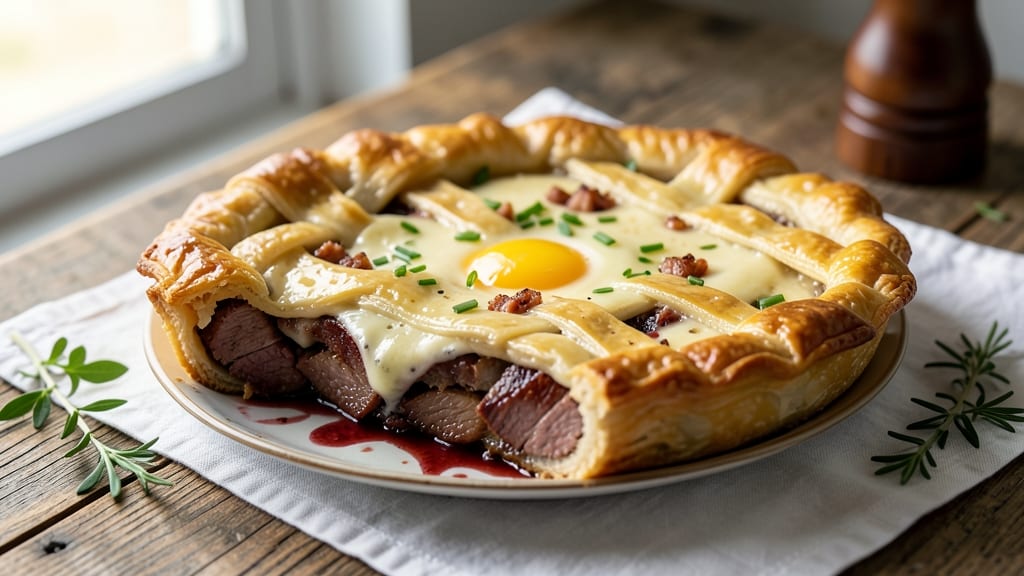
This pork and egg pie recipe delivers the kind of comforting, hearty meal that tastes like home—where tender shredded pork bathes in rich gravy, all nestled under a lattice of golden, flaky crust.
I first perfected this technique after years of perfecting pork shoulder at The Smoky Pig, where we served hundreds of pounds weekly. The secret lies in slow-cooking the pork until it practically melts, then binding it with eggs and cream for that signature custardy texture.
The filling starts with properly braised pork shoulder, cooked until it falls apart at the touch of a fork. We then build layers of flavor with a savory gravy made from the pork's own juices, thickened just enough to coat every bite.
The egg mixture—lightened with cream—creates that signature custardy center that's both rich and tender, while the pie crust gets its signature flakiness from cold butter and proper lamination.
What you'll end up with is a pie that's equal parts comforting and impressive—golden crust that shatters when cut, tender pork that practically dissolves, and gravy so rich it hugs every bite.
The aroma alone will have your kitchen smelling like Sunday dinner, and the first forkful delivers that perfect balance of savory pork, creamy custard, and buttery crust. This is the kind of dish that makes you want to gather everyone around the table.
Best served with a simple green salad and crusty bread to soak up every last bit of gravy. The leftovers? Even better the next day, if there are any—though I've never had that happen with this recipe. Let's get baking!
Ingredients for pork and egg pie
Six ingredients for the pork, seven for the custard, and one golden crust to tie it all together.
| Ingredient | Amount | Notes |
|---|---|---|
| Pork Shoulder 🍖 | 3 lb | Bone-in, well-marbled preferred |
| All-Purpose Flour 🌾 | 2 cups | For gravy thickening |
| Heavy Cream 🥛 | 1 cup | Full-fat for richness |
| Large Eggs 🥚 | 4 whole | Room temperature for custard |
| Unsalted Butter 🧈 | 1 cup | Cold, cubed for crust |
| Pie Crust Dough 🥧 | 1 package | Store-bought or homemade |
| Chicken or Vegetable Broth 💧 | 2 cups | Low-sodium preferred |
| Yellow Onion 🧅 | 1 whole | Diced for gravy |
| Garlic Cloves 🧄 | 4 cloves | Minced for flavor |
| Fresh Thyme 🌿 | 1 tbsp | Leaves only, chopped |
| Salt 🧂 | 1 ½ tsp | Kosher or sea salt |
| Black Pepper 🌶️ | ½ tsp | Freshly ground |
| Granulated Sugar 🍚 | 1 tsp | For crust sweetness |
The pork shoulder is non-negotiable here—bone-in, well-marbled cuts like those from Costco or local butchers give you the best flavor and texture. Look for cuts with visible fat marbling, which renders down into gravy during cooking. If you can't find bone-in, skinless pork shoulder works too, but you'll lose some of that deep flavor. For the pie crust, Pillsbury refrigerated dough is my go-to for convenience, but homemade crust with cold butter and proper lamination is worth the effort if you're feeling ambitious. The butter needs to be cold and cubed—this is what creates that signature flaky texture.
No heavy cream? Half-and-half works in a pinch, though it won't be as rich. Eggs are essential for that custardy center—no substitutes here, but if you're worried about allergies, this recipe isn't for you. The broth can be chicken or vegetable, but homemade chicken broth adds the most depth. Fresh thyme is ideal, but dried thyme at one-third the amount will work if you're in a hurry. For the crust, if you're using store-bought dough, check the ingredients—some brands contain milk, which might not suit everyone. The sugar in the crust is optional but helps with browning and balances the savory filling.
The pork shoulder keeps 3-4 days in the fridge before cooking, but it's best used fresh. Once cooked, shred it immediately and store in the fridge for up to 3 days—it reheats beautifully. The pie crust dough should be used within 2 days of opening the package, and it's best baked fresh. If you make the filling ahead, store it separately from the crust and assemble just before baking. Leftovers? This pie reheats best in a 350°F oven for 15 minutes—the crust gets crispy again, and the filling stays creamy. I always make a double batch because it disappears faster than you'd think.
Why You'll Love This Recipe
- Here’s what sold me: the heavy cream and eggs turn this into something decadent with almost no work. That tender pork shoulder soaks up the creamy filling, and the golden crust on top? It’s like a hug for your taste buds—no fancy techniques, just pure satisfaction.
- One-Pan Magic: I swear by this recipe because it’s all about minimal cleanup. You brown the pork shoulder in the same dish, mix in the creamy egg batter, and slide it into the oven—no extra pots, no messy saucepans. Just one pan, one spatula, and you’re done.
- Rich Without Effort: Here’s what sold me: the heavy cream and eggs turn this into something decadent with almost no work. That tender pork shoulder soaks up the creamy filling, and the golden crust on top? It’s like a hug for your taste buds—no fancy techniques, just pure satisfaction.
- Weeknight to Weekend: Between us, this pie is my secret weapon for busy nights and lazy Sundays. The leftovers reheat beautifully, and honestly? It’s just as good cold the next day. Pack it for lunch, serve it at a potluck, or just eat it straight from the fridge—it’s that reliable.
Step-by-step instructions for pork and egg pie
Here's how to create a rich, comforting pie with tender pork and a velvety egg custard.
Cook the Pork Shoulder Until Fork-Tender
Preheat your oven to 300°F. Place the 3 lb pork shoulder in a Dutch oven with a tight-fitting lid. Add 1 cup chicken or vegetable broth, 1 whole yellow onion (diced), 4 cloves garlic cloves (minced), 1 tbsp fresh thyme, 1.5 tsp salt, and 0.5 tsp black pepper.
Cover and cook for 3 hours, turning the pork occasionally to ensure even cooking. After 3 hours, check for tenderness by piercing with a fork. If it's not yet fork-tender, continue cooking for another 30-60 minutes. The pork should pull apart easily, and the juices should run clear when pierced.
Shred the Pork and Prepare the Gravy
Once the pork is fork-tender, remove it from the Dutch oven and shred it using two forks. Return the shredded pork to the Dutch oven and discard the onion and garlic if they're mushy. Increase the oven temperature to 375°F.
In a separate bowl, whisk together 2 cups all-purpose flour and 1 tsp granulated sugar. Gradually whisk in 1 cup heavy cream and 1 cup unsalted butter (cubed) to create a smooth paste. Slowly pour this mixture into the Dutch oven with the pork, stirring constantly to avoid lumps. Cook for 15 minutes until the gravy thickens and coats the back of a spoon.
Prepare the Egg Custard
In a separate bowl, whisk together the 4 whole large eggs until they are well combined. Slowly pour the egg mixture into the Dutch oven with the pork and gravy, stirring gently to blend. The mixture should be smooth but slightly thick. Cook for another 10 minutes, stirring occasionally, until the custard is set but still slightly runny—it should coat the back of a spoon but not be fully solid.
Here's the thing—you want the custard to be thick enough to hold its shape but still creamy. If it looks too thin, let it cook for another 2-3 minutes until it reaches the right consistency. Remove from heat and let it cool slightly for 5 minutes.
Assemble the Pie
Roll out the pie crust dough on a floured surface to fit a 9-inch pie dish. Press it gently into the dish, making sure to trim any excess dough hanging over the edges. Pour the pork and egg custard mixture into the crust, spreading it evenly.
Roll out the second piece of pie crust dough and place it on top of the filling. Crimp the edges of the top and bottom crusts together to seal the pie. Cut a few small slits in the top crust to allow steam to escape. Brush the top crust with a beaten egg (optional, for extra shine and flakiness).
Bake Until Golden and Bubbly
Place the pie on a baking sheet lined with parchment paper to catch any drips. Bake in the preheated 375°F oven for 45-50 minutes, until the crust is golden brown and the filling is bubbling through the slits in the top crust. The pie is done when the center is just set and the edges are golden.
Let the pie cool for 1 hour before slicing. This resting time allows the filling to set completely and makes it easier to slice cleanly. Serve warm with a side of steamed vegetables or a fresh salad. The result is a rich, comforting pie with tender pork and a creamy egg custard encased in a flaky crust.
Pro Tips For Making Pork And Egg Pie
- REST THE PORK SHOULDER: Cut the pork into chunks the night before, then let it sit uncovered in the fridge—this dries the surface so it browns properly instead of steaming. I learned this the hard way after my first batch came out gray and sad.
- SALT THE CREAMY FILLING: The heavy cream and egg mixture needs salt—even if your butter is unsalted—because that’s where the flavor lives. Skip it, and you’ll taste nothing but bland custard. Aim for a pinch per egg, then taste as you go.
- DON’T OVERMIX THE DOUGH: Handle the flour and butter just until it holds—overworking it makes the crust tough. My grandmother swore by this, and she was right: a few lumps in the dough give you a flaky, buttery finish.
- BAKE THE PIE COLD: Chill the unbaked pie for at least 30 minutes before going into a 375°F (190°C) oven—this prevents the bottom from puffing up like a sad soufflé. Yes, it’s annoying to wait, but trust the process.
Perfect pairings for pork and egg pie
Classic Side Pairings
Nothing complements this pork and egg pie like a crisp green salad with a tangy vinaigrette—I love using apple cider vinegar with Dijon mustard and a touch of honey. Toss it with mixed greens and shaved fennel for that bright contrast that cuts through the richness.
For something heartier, serve with buttery dinner rolls from your local bakery—perfect for soaking up every last drop of that creamy gravy. 🥗
Wine Pairings
A medium-bodied red like Pinot Noir from Oregon is my go-to—its earthy notes and subtle fruitiness balance the pork's richness without overpowering the custard. If you prefer white, a Chardonnay with light oak (like one from California) adds a creamy texture that mirrors the pie's filling.
Avoid heavy cabernets or bold zinfandels that would clash with the delicate egg custard. 🍷
Beer Pairings
For beer lovers, a Belgian-style witbier like Hoegaarden brings citrusy brightness that refreshes your palate between bites. If you're in the mood for something darker, a German Helles lager (like Augustiner) offers a clean, crisp finish that won't compete with the pie's flavors.
Steer clear of heavy IPAs or stouts—they'll overpower the dish. 🍺
Unexpected Garnishes
Add a final touch with crispy fried onions—just toss ½ cup thinly sliced yellow onions in 2 tbsp flour, fry in ¼ cup butter until golden, and sprinkle over the pie right before serving.
For a pop of color, scatter fresh parsley or chives on top. Trust me, these little details elevate the whole experience. ✨
Dessert Follow-Up
After a meal this rich, I reach for something light and fruity—lemon posset or berry compote with vanilla ice cream. The acidity in the dessert cleanses your palate and leaves you feeling perfectly satisfied. Skip heavy cheesecakes or chocolate desserts—they'll leave you sluggish. 🍋
Nutrition facts
Frequently asked questions
Can I make this pie without a Dutch oven?
Use a heavy-bottomed pot with a tight lid instead. If you don't have one, a large oven-safe skillet works too—just monitor the cooking time closely since heat distribution may vary. The key is maintaining moisture while the pork cooks low and slow.
How do I prevent the custard from getting watery?
The custard needs to be thick but still creamy—cook it until it coats the back of a spoon but isn't fully set. If it looks too thin, simmer it for another 2-3 minutes off heat to thicken naturally. Never rush this step—undercooked custard is the #1 reason pies turn out soupy.
What's the best way to reheat leftovers?
Slice the pie and reheat portions in a 350°F oven for 15 minutes with foil covering the edges to keep the crust crisp. For microwave reheating, cover with a damp paper towel and heat in 30-second bursts until warmed through—this prevents rubbery crust.
Can I substitute chicken for pork?
Technically yes, but the flavor profile changes dramatically. Chicken would make the pie lighter, but pork's rich, fatty texture creates that signature hearty quality. If you must substitute, use dark meat chicken thighs with skin on for maximum moisture and flavor.
How do I make the crust extra flaky?
Cold butter is your secret weapon! Cut 1 cup unsalted butter into small cubes and keep them ice-cold. Work quickly when rolling the dough, and avoid overhandling. For next-level flakiness, freeze the dough for 30 minutes before baking—this creates steam pockets during baking.