Desserts
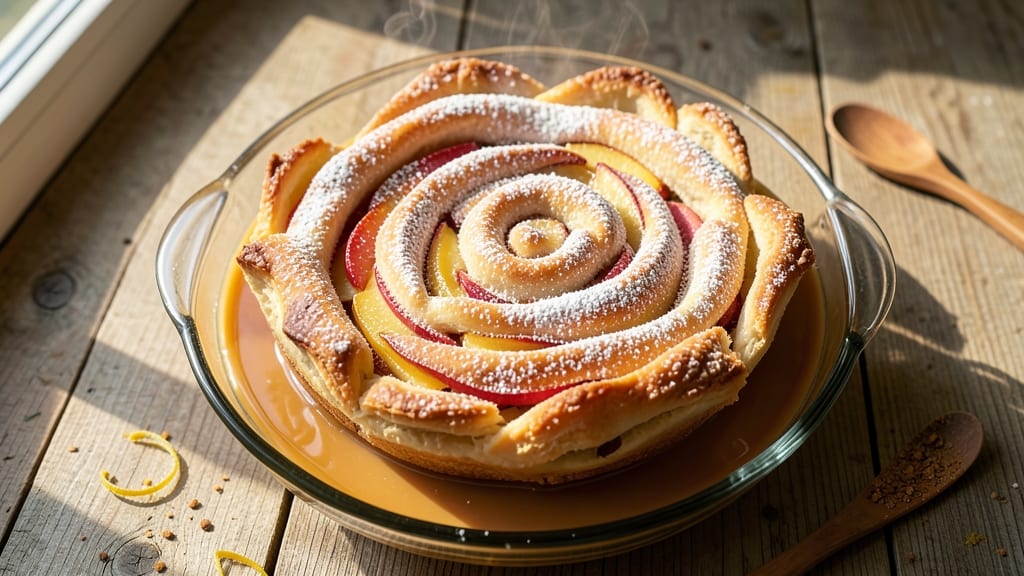
This apple pie babka recipe transforms a classic dessert into something extraordinary—swirled layers of vanilla-cinnamon dough wrapped around spiced apple filling, baked to golden perfection.
The secret lies in balancing tender, buttery dough with a filling that tastes like homemade apple pie, all wrapped in a braided shape that makes every slice feel special. I've perfected this technique over years of baking, ensuring the crust stays crisp while the filling remains perfectly moist.
The dough begins with a rich, yeast-based batter that develops deep flavor as it rises, while the filling combines tart apples, warm cinnamon, and a touch of brown sugar for caramelized sweetness.
What sets this apart is the cinnamon-sugar coating on the outside, adding a buttery crunch that contrasts beautifully with the soft interior. This isn't just dessert—it's a showstopper that tastes like autumn in every bite.
Baking creates layers of flavor: the dough's vanilla-cinnamon aroma mingles with the spiced apple filling, creating a harmonious balance that's both comforting and sophisticated. The braided shape isn't just decorative—it ensures even baking and a satisfying pull-apart texture.
Whether served warm with vanilla ice cream or at room temperature, this babka delivers restaurant-quality results at home.
Perfect for holidays, potlucks, or satisfying a sweet tooth, this recipe scales easily for gatherings or single servings. The dough can be made ahead, and the filling prepped in advance, making it ideal for busy schedules. Let's create something truly memorable—one swirl at a time.
Ingredients for apple pie babka
Swirled layers of vanilla-cinnamon dough wrapped around spiced apple filling—this is your ingredient lineup for showstopping babka.
| Ingredient | Amount | Notes |
|---|---|---|
| All-Purpose Flour 🌾 | 6 cups | Sifted for light texture |
| Unsalted Butter 🧈 | 1 ½ cups | Cold, cubed for dough |
| Granulated Sugar 🍚 | ¾ cup | For dough sweetness |
| Large Eggs 🥚 | 4 whole | Room temperature |
| Active Dry Yeast 🍞 | ¼ oz | Or 2 1/4 tsp |
| Whole Milk 🥛 | 1 cup | Warmed to 110°F |
| Vanilla Extract 🌸 | 2 tsp | Pure, high-quality |
| Ground Cinnamon 🌿 | 2 tbsp | For dough and filling |
| Fine Sea Salt 🧂 | 1 ½ tsp | Diamond Crystal preferred |
| Apples 🍎 | 4 medium | Peeled, finely diced |
| Light Brown Sugar 🍚 | ½ cup | Packed, for filling |
| Lemon Juice 🍋 | 2 tsp | Freshly squeezed |
| Turbinado Sugar 🍚 | ½ cup | For cinnamon-sugar coating |
The flour is your foundation—King Arthur or Bread Flour for that perfect chew. Cold butter is non-negotiable here; it creates those signature flaky layers. I always use Plugrá butter for its high fat content, but any good European-style brand works. The yeast should be fresh—if it smells stale, toss it. Apples are key: Honeycrisp or Granny Smith hold their shape best when diced. Pre-peel them if you're short on time, but the skin adds texture if you've got patience. Store flour in an airtight container to prevent absorption, and keep butter wrapped in parchment in the fridge until ready to use.
No vanilla extract? Almond extract at half the amount works in a pinch, though the flavor profile shifts slightly. Substituting apples? Pears or cooked rhubarb add lovely acidity, but the texture changes dramatically. For the cinnamon, Ceylon cinnamon has a milder, sweeter profile if you prefer subtlety. The brown sugar in the filling can be swapped for maple syrup (reduce by 1 tbsp) if you're watching refined sugar. Turbinado sugar for the coating? White sugar plus 1 tsp honey mimics the crunch without the color difference. Always measure spices by weight for consistency—1 tbsp ground cinnamon equals about 12g—but volume works if you're eyeballing.
Dough keeps in the fridge for up to 3 days wrapped tightly in plastic, or 3 months frozen between parchment sheets. The filling can be prepped ahead and stored separately for 2 days in the fridge. For the cinnamon-sugar coating, mix it fresh before baking—it loses its crunch if stored. Babka reheats beautifully: 350°F for 10 minutes restores that bakery-fresh warmth. Slice with a serrated knife for clean pulls, and store leftovers in an airtight container to maintain moisture. The flavor actually improves overnight as the filling soaks up the dough's aroma.
Why You'll Love This Recipe
- No Yeast Nightmares: I swear by this dough—just mix the yeast with warm water, a pinch of sugar, and let it sit while I chop apples. No waiting for it to bloom overnight; it’s ready in 10 minutes, and the flour-butter combo makes rolling it out a breeze.
- Spice-Cake Magic: That warm cinnamon-sugar crust paired with tender apple filling? It’s like biting into a hug—sweet, buttery, and just enough tang from the apples to keep it interesting. Honestly, my coffee tastes better with a slice nearby.
- Breakfast or Dessert: Serve it warm with a scoop of vanilla ice cream for a weekend treat, or slice it thin for a quick breakfast sandwich with peanut butter. (Yes, even on a Tuesday.) The yeasted dough holds up to reheating, so it’s my go-to for lazy mornings.
- Leftovers That Last: One batch feeds six, but it reheats like a dream—just wrap it in foil and pop it in the oven for 10 minutes. I’ve had it cold the next day, toasted with jam, and even packed for lunch. Budget-friendly? Absolutely. Versatile? Without a doubt.
Step-by-step instructions for apple pie babka
This method delivers the perfect balance of flaky layers and spiced apple filling—no shortcuts, just precision.
Prepare the Yeast Dough Base
In a stand mixer fitted with the dough hook attachment, combine the 6 cups all-purpose flour, 1.5 tsp fine sea salt, and 0.25 oz active dry yeast. Mix on low speed for 30 seconds to distribute evenly. In a separate bowl, whisk together the 1 cup warm whole milk (110°F), 0.75 cup granulated sugar, and 2 tsp vanilla extract until the sugar dissolves completely.
With the mixer running on low, gradually add the wet ingredients to the flour mixture. Increase speed to medium and knead for 5-7 minutes until the dough becomes smooth and elastic, pulling away from the sides of the bowl. The dough should be slightly tacky but not sticky—add 1 tablespoon flour if needed. Cover the bowl with a damp towel and let rise in a warm place for 1-2 hours, or until doubled in size. This resting period develops gluten structure and ensures tender layers later.
Create the Apple Filling
While the dough rises, prepare the filling by combining the 4 peeled, finely diced medium apples, 0.5 cup packed light brown sugar, 2 tbsp ground cinnamon, and 2 tsp freshly squeezed lemon juice in a medium bowl. Toss gently to coat evenly. The lemon juice prevents browning and enhances the apples' natural sweetness. Set aside at room temperature until ready to use.
In a small bowl, mix 0.5 cup turbinado sugar with 1 tablespoon ground cinnamon for the topping. This combination adds texture and depth of flavor to the finished babka. Keep both the filling and topping separate until you're ready to assemble the loaf.
Shape and Swirl the Dough
Once the dough has doubled, turn it out onto a lightly floured surface and divide it into three equal portions. Roll each portion into a 12x8-inch rectangle (about ¼-inch thick), keeping the edges straight. Spread one-third of the apple filling evenly over each rectangle, leaving a ½-inch border around the edges. This prevents filling from leaking during baking.
Starting with one rectangle, roll it tightly into a log, pinching the seam to seal. Repeat with the remaining two rectangles. Arrange the three logs side by side on a parchment-lined baking sheet, leaving ½-inch space between them. Gently press down to flatten slightly—this helps create those iconic swirls when sliced.
Proof and Bake to Golden Perfection
Cover the shaped babka with a damp towel and let proof for 30-45 minutes until the dough rises noticeably. Preheat your oven to 375°F while the babka proofs. This second rise ensures a light, airy texture. When ready to bake, brush the top generously with melted unsalted butter (about 2 tablespoons) for a golden finish.
Bake for 25-30 minutes until the babka is deep golden brown and sounds hollow when tapped on the bottom. Rotate the pan halfway through for even browning. The internal temperature should reach 190-200°F. Immediately after removing from the oven, sprinkle the cinnamon-sugar topping evenly over the top while still warm—this ensures it adheres beautifully.
Rest and Slice for Maximum Fluffiness
Let the babka cool on a wire rack for 10 minutes before slicing. This resting period allows the layers to set and prevents crumbling. Using a serrated knife, cut into ½-inch thick slices at a slight angle for dramatic presentation. Serve warm with a dusting of powdered sugar or a scoop of vanilla ice cream for the ultimate indulgence.
The finished babka should have flaky, buttery layers with a perfectly spiced apple filling that's neither too wet nor too dry. Each bite should deliver a balance of sweetness, cinnamon warmth, and tender texture—proof that patience in layering pays off in every forkful.
Pro Tips For Making Apple Pie Babka
- CHILL THE DOUGH: After your first fold, stick the babka dough in the fridge for at least 30 minutes—yes, even if you’re eager to keep going. I learned this the hard way when my babka turned out dense and uneven because I rushed straight to shaping. The cold firmness makes those tight folds actually hold, so your spiral stays neat when baked.
- USE COLD BUTTER: Cut that unsalted butter into tiny cubes and freeze them for 10 minutes before mixing into the dough. Warm butter makes the dough too soft, and you’ll end up with a sticky mess that’s impossible to handle. Cold butter creates those perfect flaky layers—trust me, your babka will thank you with every buttery bite.
- SKIP THE OVERMIXING: Once you add the yeast and eggs, mix just until the flour is barely combined—lumps and all. Overmixing develops gluten, and your babka will turn out tough instead of tender. Think "shaggy" dough, not a smooth, elastic ball. It’ll come together during the first rise.
- BRUSH WITH EGG WASH: After shaping, don’t just spray the babka with water for that golden crust—whisk an egg with 1 tablespoon of water and brush it on generously. The egg adds richness and a glossy finish, while the water helps the sugar caramelize. (Pro move: Do this right before baking so the wash doesn’t dry out.)
Troubleshooting perfect results
Dough Too Sticky
If your dough feels too sticky after kneading, resist the urge to add extra flour—this disrupts the gluten structure. Instead, wet your hands slightly and knead for another 1-2 minutes to strengthen the gluten. If it's still too tacky, add just 1 tablespoon flour at a time while kneading.
Over-flouring makes the babka dense. I've found that using King Arthur flour reduces stickiness naturally due to its higher protein content. 💡
Filling Leaks
Apple filling leaking during baking ruins the presentation and texture. To prevent this, leave a ½-inch border around each dough rectangle before rolling. Also, ensure your apples are finely diced (⅛-inch pieces) and not too juicy—pat them dry with a paper towel if needed.
If the filling still leaks, reduce the sugar slightly (by 1 tbsp) to minimize moisture. 🍎
Uneven Rising
If one side of your babka rises more than the other, your proofing environment isn't consistent. Use a proofing box (or a turned-off oven with a bowl of hot water) to maintain 80-85°F humidity.
Alternatively, place the dough in a large Ziploc bag in a warm spot. Avoid cold drafts—these cause uneven fermentation. Let the dough rise until it's just doubled; over-proofing leads to collapse. ✨
Dense Texture
A dense babka usually means over-kneading or insufficient proofing. Knead only until the dough is smooth (5-7 minutes)—no need to work it to exhaustion. Also, ensure the dough rises until doubled in size (about 1-2 hours).
If it's still dense after baking, your oven may be too hot—try baking at 350°F instead of 375°F for a slower rise. 🌡️
Burnt Top
If the top browns too quickly, your oven runs hot. Use an oven thermometer to verify accuracy—many ovens are 25°F hotter than set. Lower the temp to 350°F and tent the babka loosely with foil after 15 minutes to prevent over-browning.
Brush with melted butter just before baking for even color. 🔥
Filling Too Dry
If your apple filling dries out during baking, it needs more moisture. Add 1-2 tbsp apple juice or water to the filling before assembling. Alternatively, wrap the baked babka in a damp towel for 10 minutes after baking to restore moisture.
For extra richness, add 1 tbsp melted butter to the filling before assembling. 💧
Nutrition facts
Frequently asked questions
Can I make this apple babka without yeast?
This recipe relies on yeast for its signature rise and tender texture, but you can adapt it for a quick version. Replace the yeast with 1 cup self-rising flour and 1 tsp baking powder, then reduce the milk to ¾ cup. The result will be denser and less fluffy, but still delicious. For best results, stick with the yeast method for that classic babka experience.
How do I store apple babka for maximum freshness?
Keep your babka fresh by storing it in an airtight container at room temperature for up to 2 days. For longer storage, wrap individual slices in plastic wrap and freeze for up to 3 months. To reheat, warm slices in the oven at 350°F for 5-7 minutes until golden. The filling stays moist when properly wrapped.
What's the best way to slice apple babka for presentation?
Use a serrated knife and cut the babka at a slight angle into ½-inch thick slices. For extra flair, arrange slices on a platter with the braided ends facing outward. Dust with powdered sugar or serve with vanilla ice cream for a restaurant-worthy presentation. The angled cuts reveal more of the spiced filling.
Can I substitute the apples with another fruit?
Try pears (add ½ tsp ginger), rhubarb (reduce sugar by 2 tbsp), or even berries (mash lightly before adding). For tropical flavors, use mango or pineapple with ½ tsp cardamom. The key is balancing moisture—drier fruits like rhubarb need extra sugar, while juicier fruits need less.
Why does my babka collapse after baking?
Collapse usually means the dough wasn't fully proofed or the oven was too hot. Ensure the dough doubles in size before shaping, and proof again for 30-45 minutes after shaping. Bake at 350°F if your oven runs hot. Also, avoid opening the oven door during baking—temperature fluctuations cause collapse.