
Desserts
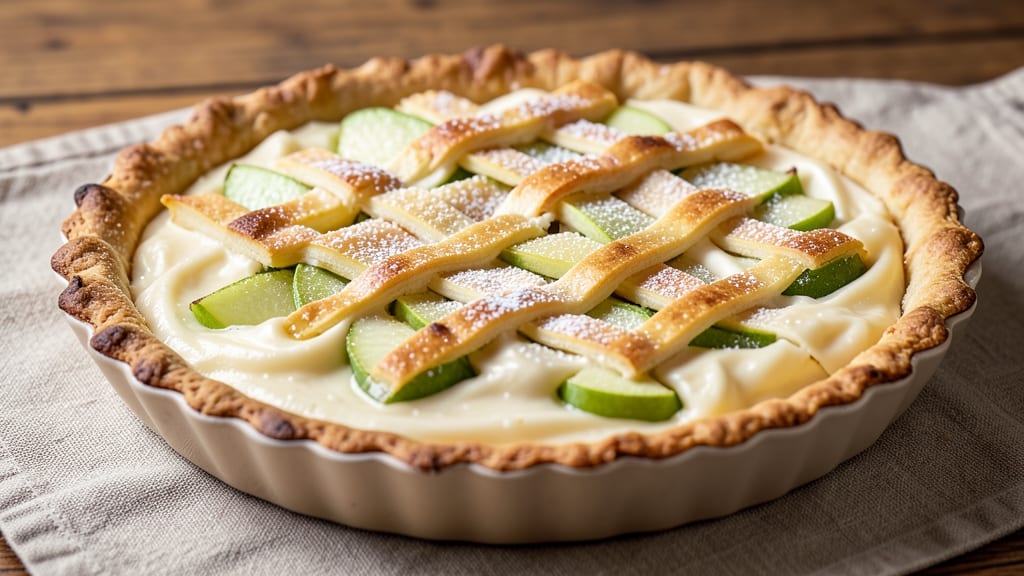
This apple and custard impossible pie delivers a perfect balance of crunchy lattice crust, spiced caramelized apples, and silky vanilla custard rivers that defy traditional pie rules. 💛 The "impossible" twist lies in baking the custard directly in the pie—no boiling required—while the lattice crust creates a golden, crispy top that contrasts beautifully with the creamy filling below.
What makes this recipe special is the harmony between textures and flavors, where each bite offers a mix of warm spiced apples, rich custard, and buttery crust.
The secret to achieving that signature impossible pie texture starts with a partially baked crust and a custard that’s thickened just enough to hold its shape while remaining velvety smooth.
I’ve perfected the technique to ensure the custard doesn’t curdle during baking, and the apples caramelize to a perfect balance of sweet and tangy. This isn’t your average apple pie—it’s a showstopper that combines the best of classic pie and modern dessert innovation.
By the time you pull this pie from the oven, you’ll have a dessert that looks like it belongs in a high-end bakery, with its golden lattice crust and glossy custard rivers peeking through.
The aroma alone will have everyone gathering around the table, and the first bite delivers that perfect contrast of textures—crispy, creamy, and perfectly spiced. This pie is ideal for holiday gatherings, family dinners, or when you want to impress without spending hours in the kitchen.
Serve it warm with a dollop of whipped cream or a drizzle of caramel for the ultimate indulgence. The best part? This recipe scales beautifully, so you can make it for a crowd or save half for later.
Let’s get started on creating this modern classic that’s sure to become a favorite.
Ingredients for apple and custard impossible pie
Golden crust meets silky custard rivers—here’s your impossible pie ingredient lineup.
| Ingredient | Amount | Notes |
|---|---|---|
| All-Purpose Flour 🌾 | 3 ½ cups | For lattice crust and filling |
| Unsalted Butter 🧈 | 1 ¼ cups | Cold, cubed for crust |
| Granulated Sugar 🍬 | 1 ½ cups | Plus 1 tbsp for sprinkling |
| Light Brown Sugar 🍯 | ½ cup | Packed, for crust |
| Large Eggs 🥚 | 1 whole | Cold, for crust |
| Granny Smith Apples 🍎 | 6 medium | Peeled, sliced 1/4-inch thick |
| Lemon Juice 🍋 | 2 tbsp | Freshly squeezed |
| Ground Cinnamon 🌿 | 1 ½ tsp | Plus extra for sprinkling |
| Ground Nutmeg 🌶️ | ½ tsp | Freshly grated preferred |
| Salt 🧂 | ½ tsp | Fine sea salt |
| Heavy Cream 🥛 | 1 ½ cups | Full-fat for richness |
| Vanilla Extract 💛 | 1 tbsp | Pure vanilla preferred |
| Cornstarch 🌾 | 2 tbsp | For custard thickening |
| Whole Milk 🥛 | ½ cup | For custard balance |
The apples are non-negotiable here—Granny Smiths for tartness, but Honeycrisp or Fuji work too. I grab mine at Whole Foods when they're in season, but any crisp variety from the grocery store works. Slice them 1/4-inch thick—thinner slices caramelize faster. The butter? Plugrá or Land O'Lakes unsalted are my go-tos, but keep it cold when mixing the crust. For the custard, heavy cream matters—don’t skimp on the full-fat version. The vanilla? Pure Madagascar bourbon if you want to splurge, but good-quality imitation works fine.
No Granny Smiths? Mix Honeycrisp and Gala for sweet-tart balance. The cornstarch can be swapped for arrowroot powder at half the amount, but it thickens differently. Running short on heavy cream? Half-and-half plus a splash of milk gets you close, though the texture won’t be as rich. For the crust, lattice strips should be 1-inch wide—cut them with a pizza cutter for clean edges. The custard mix needs to be room temperature when poured, or it’ll curdle. I always microwave the milk and cream together for 30 seconds to temper it before mixing with cornstarch.
Store the unbaked pie in the fridge for up to 24 hours—the custard thickens overnight. Baked pie keeps 3 days at room temperature, wrapped tightly. For leftovers, reheat at 350°F for 15 minutes—the custard gets even creamier. Freeze portions (without the crust) for 3 months375°F for 10 minutes if you want to revive it. And trust me—the first slice is always the best, but the second slice is worth the wait.
Why You'll Love This Recipe
- No-Roll-Crust Magic: I swear by this trick—just mix flour, butter, and ice water until it clumps. No rolling pins, no stress, and the crust still holds together like a dream. Honestly, I’ve burned more than one pie crust in my life, but this one forgives mistakes.
- Caramelized Apple Bliss: The brown sugar and butter create this insane caramelized crust on the apples—crispy edges, tender centers, and that buttery-sweet tang. Between us, the moment the custard sets into that warm, spiced apple filling? Pure satisfaction.
- Leftovers That Last: This pie actually improves the next day. The custard thickens just enough to hold its shape, and the apples stay juicy instead of soggy. I’ve packed it for lunches, reheated slices with ice cream, and even turned extra into a custard tart. Versatile like that.
- Budget-Friendly Luxury: You’re using pantry staples—flour, sugar, butter, and eggs—and it tastes like you spent hours slaving over it. I’ll be real: my grocery bill stays low, but my dinner table feels fancy. Plus, the custard’s rich without needing heavy cream. Smart, delicious, and no guilt.
Step-by-step instructions for apple and custard impossible pie
Here's how to create the perfect balance of crisp lattice crust and silky custard filling.
👨🍳 Step 1: Prepare the Lattice Crust
Cut the 1.25 cups unsalted butter into small cubes and place in the freezer for 10 minutes to firm up. In a large bowl, whisk together 3.5 cups all-purpose flour, 1.5 cups granulated sugar, 0.5 cup light brown sugar, 1.5 tsp ground cinnamon, 0.5 tsp ground nutmeg, and 0.5 tsp salt. Add the cold butter cubes and use a pastry cutter or your fingers to work the butter into the flour until the mixture resembles coarse crumbs with some pea-sized pieces remaining.
Press half of the dough into a 9-inch pie dish to form the bottom crust, using your fingers to create a slight rim. Chill in the refrigerator while you prepare the filling. For the lattice top, roll out the remaining dough to about ⅛-inch thickness. Cut 12 strips (about 3 inches wide) and 12 strips (about 1 inch wide). Arrange the wide strips horizontally across the pie, spacing them about ½ inch apart. Weave the thin strips between them to create the classic lattice pattern.
🍳 Step 2: Assemble the Apple Filling
Peel and slice the 6 medium Granny Smith apples into ¼-inch thick slices. Toss them with 2 tbsp lemon juice to prevent browning. In a small bowl, whisk together 1.5 cups heavy cream, 1 tbsp vanilla extract, 2 tbsp cornstarch, and 0.5 cup whole milk. Arrange the apple slices in a circular pattern on top of the bottom crust, slightly overlapping them.
Pour the cream mixture evenly over the apples. Sprinkle with an extra 1 tbsp granulated sugar and ½ tsp cinnamon for added flavor. This step is crucial—don't skip the sugar or your custard might taste too tart.
🔥 Step 3: Bake the Pie
Preheat your oven to 375°F. Place the assembled pie on a baking sheet to catch any drips. Bake for 45-50 minutes until the custard is set but still slightly jiggly in the center (it will firm up as it cools). The lattice crust should be golden brown and crispy.
Here's the thing—this pie needs to be fully baked but not overcooked. If the custard looks too thin after 45 minutes, tent the pie with foil and bake for another 5 minutes. The filling should be thick enough to hold its shape when served.
⏰ Step 4: Cool and Serve
Remove the pie from the oven and let it cool completely on a wire rack for at least 2 hours. This cooling time is essential—it allows the custard to set properly and develop its signature silky texture. If you can't wait, place the pie in the refrigerator for 1 hour to speed up the process.
Once cooled, slice into wedges and serve. The contrast between the crispy lattice crust and the creamy custard is what makes this pie truly special. Each bite should deliver that perfect balance of tart apples, sweet custard, and buttery crust.
Pro Tips For Making Apple And Custard Impossible Pie
- Chill the Butter First: Cold butter in the crust makes all the difference—cut it into ½-inch cubes and freeze for 10 minutes before mixing. I learned this the hard way after ending up with a greasy, crumbly mess instead of a flaky base. Trust me, your crust will thank you.
- Pre-Cook the Apples: Sauté the apples with sugar and spices until they’re tender but still hold their shape—about 8-10 minutes. This prevents a soggy bottom later. (Yes, even if you’re impatient like me, resist the urge to rush this.)
- Don’t Overmix the Filling: Stir the custard mixture just until the sugar dissolves—lumps are fine, overworking it makes the custard grainy. I used to beat it like I was making pancakes, and it always turned out weird.
- Bake Low and Slow: Start at 350°F, but after 20 minutes, drop to 325°F and bake another 40-50 minutes. This keeps the custard creamy and the crust from burning. (Your future self will thank you for not rushing this.)
Common mistakes when making this dish
Overbaking the Crust
I’ve seen this happen more times than I’d like—crust turns rock-hard while custard remains undercooked. The key is baking the lattice crust just until it’s golden brown (about 25-30 minutes at 375°F) before adding the custard mixture.
If you bake the whole pie at once, the crust will overbrown before the custard sets. Trust me, the custard needs that 45-50 minutes total to thicken properly without burning the crust. 🌟
Skipping the Chill
Never rush the 30-minute chill before baking! Cold butter in the crust prevents it from shrinking as it bakes, and a chilled custard mixture thickens more evenly. I once forgot this step and ended up with a soggy bottom crust.
The apples also release moisture during baking, so a cold start helps absorb it better. Pro tip: Place your pie dish on a baking sheet lined with parchment to catch any drips.
Underestimating the Custard Thickness
The custard should coat the back of a spoon but still be pourable when poured over the apples. If it’s too thin, it’ll run out of the pie, and if it’s too thick, it’ll crack when baked.
My trick? Whisk the cornstarch into the warm cream mixture first, then add the milk. This ensures even thickening. Also, don’t overmix—just combine until smooth. A few lumps are fine; they’ll disappear during baking.
Uneven Apple Distribution
Apples should be arranged in a single layer, slightly overlapping, to caramelize evenly. If you pile them too high, the center won’t cook through, leaving you with raw apple in the middle. I like to start with the stem side down in the center and work outward.
Tossing the slices with lemon juice prevents browning, but don’t soak them—just enough to coat. This keeps the apples crisp-tender, not mushy. 🍎
Opening the Oven Too Soon
Resist the urge to peek! Every time you open the oven, heat escapes, and the custard takes longer to set. If you’re worried, use the window test: The custard should jiggle slightly in the center but not be liquid.
If it’s still runny after 50 minutes, tent with foil and bake another 5-10 minutes. Overbaking dries out the custard, so patience is key here. The pie will continue setting as it cools.
Forgetting the Cooling Time
This is where most people mess up. The custard needs 2-4 hours to fully set at room temperature, or it’ll be too soft when sliced. I’ve had guests cut into it too soon, and the custard just oozes out.
If you’re in a hurry, refrigerate for 1 hour, but don’t skip cooling entirely. The contrast between the warm crust and cool custard is part of the magic—each bite should be perfectly balanced. ⏰
Nutrition facts
Frequently asked questions about apple and custard impossible pie
Why is this called an "impossible" pie?
The "impossible" name comes from the custard layer that bakes directly in the pie without traditional boiling. This technique creates those signature silky rivers that defy classic pie rules while staying perfectly set. The lattice crust adds another layer of complexity, making it feel like a modern twist on a classic dessert.
Can I make this pie without a lattice crust?
Yes! You can use a solid top crust or even a crumble topping if you prefer. The key is to bake the crust until golden brown (25-30 minutes) before adding the custard mixture. Just adjust baking time to 50-55 minutes total to ensure the custard sets properly. The texture will be different but still delicious.
How do I fix runny custard?
If your custard is too thin after baking, it likely didn't thicken enough. For future attempts, whisk the cornstarch into warm cream first, then add milk. Bake an extra 5-10 minutes covered with foil if needed. Never overmix the custard—just combine until smooth. A few lumps will disappear during baking.
Can I substitute the apples with another fruit?
While apples are ideal for their tartness, you can use pears or plums in a pinch. Avoid overly watery fruits like berries or stone fruits with pits. Toss the fruit with lemon juice to prevent browning, and adjust sugar to 1.5 tbsp if using sweeter varieties. The custard will still shine through!
How long can I store leftovers?
Store the baked pie at room temperature for up to 3 days in an airtight container. For longer storage, refrigerate for 5 days or freeze the filling (without crust) for 3 months. Reheat slices at 350°F for 10-12 minutes—the custard becomes even creamier when warmed gently. The crust reheats best separately.