
Desserts
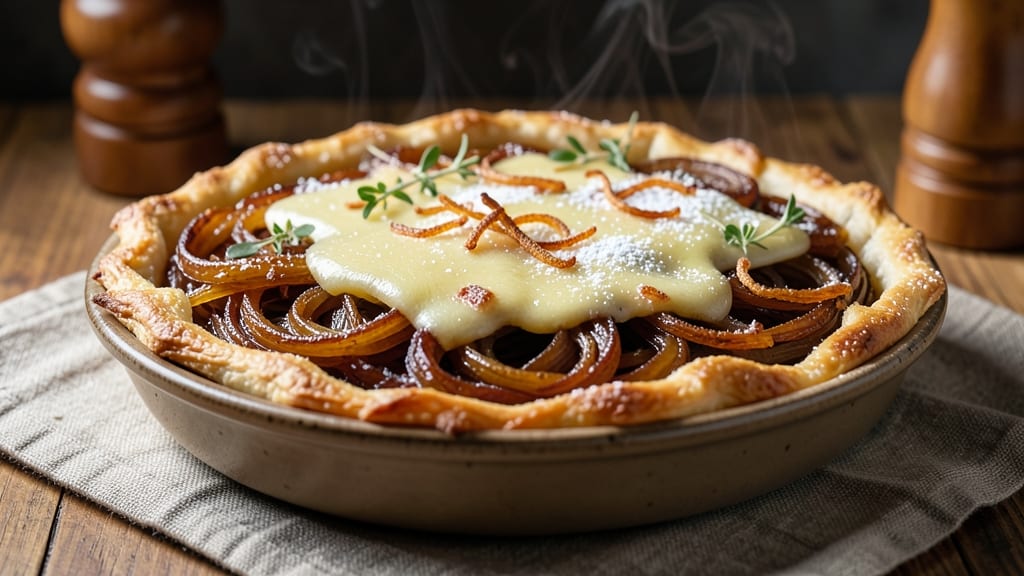
This Alsatian onion pie recipe brings the heart of France's Alsace region straight to your kitchen, where sweet caramelized onions meet tender pastry in perfect harmony. 🌟 The secret lies in slow-cooking onions until they're golden and jam-like, then layering them with a rich cream and cheese filling before baking until bubbly and golden.
This isn't just dessert—it's a taste of tradition that balances sweet and savory in every bite.
The recipe begins with a classic Alsatian tart crust, crisp yet tender, that serves as the foundation for the star of the show: layers of caramelized onions. The filling combines heavy cream, Gruyère cheese, and a touch of nutmeg, creating a velvety texture that complements the onions' deep sweetness.
What makes this dish special is how the flavors develop during baking, with the onions releasing their natural sugars while the cheese melts into a creamy blanket.
By the time you pull this pie from the oven, you'll have a golden, bubbling masterpiece with crisp edges and a soft, creamy center. The aroma alone will transport you to the vineyards of Alsace, where this dish has been a beloved tradition for generations.
Serve it warm with a simple green salad or crusty bread to soak up every last bite of that rich, caramelized goodness.
For those who love authenticity, this recipe stays true to its roots while offering flexibility—add lardons for extra savory depth or a sprinkle of Gruyère on top before baking.
The result is a pie that's both comforting and impressive, perfect for family gatherings or special occasions. Let's get started on creating this Alsatian classic in your own kitchen.
Ingredients for alsatian onion pie
Sweet caramelized onions, rich Gruyère, and a crisp tart crust—everything you need for Alsace's most comforting pie.
| Ingredient | Amount | Notes |
|---|---|---|
| Yellow Onions 🧅 | 6 large | Peeled, halved, root end down |
| Unsalted Butter 🧈 | ¾ cup | Cold, cubed for caramelizing |
| All-Purpose Flour 🌾 | 2 ½ cups | For tart crust and thickening |
| Heavy Cream 🥛 | 1 ½ cups | Full-fat for richness |
| Gruyère Cheese 🧀 | 1 ½ cups | Freshly grated, aged 12 months |
| Granulated Sugar 🍚 | 2 tbsp | For initial caramelization |
| Ground Nutmeg 🌿 | ½ tsp | Freshly grated preferred |
| Salt 🧂 | 1 ½ tsp | Kosher or sea salt |
| Black Pepper 🌶️ | ½ tsp | Freshly ground preferred |
| Ice Water 💧 | ½ cup | For pie crust dough |
| Lemon Juice 🍋 | 1 tbsp | Freshly squeezed |
| Bacon Lardons 🥓 | ½ lb | Optional, cooked crisp |
The onions are non-negotiable here. Yellow onions work best for their natural sweetness, but red onions add a subtle color if you're feeling fancy. Grab the biggest, sweetest ones you can find—Trader Joe's or Whole Foods usually have great options. For the Gruyère, look for aged 12 months or more—it melts beautifully and adds that authentic Alsatian depth. The butter should be cold when you start caramelizing (take it out of the fridge 20 minutes before using). And if you're adding bacon lardons, cook them separately first—they'll crisp up perfectly and add a smoky contrast.
No heavy cream? Half-and-half works in a pinch, but the texture won't be as rich. Short on Gruyère? Comté or Emmental can stand in, though they melt differently. The nutmeg is key—freshly grated makes all the difference, but pre-ground works if you don't have a grater. For the crust, if you're short on butter, cold vegetable shortening keeps it flaky (though it won't taste as authentic). And if you're making this ahead, caramelize the onions the day before—they taste even better after resting overnight.
The caramelized onions keep for 5 days in the fridge, covered tightly. The pie crust can be prepped a day ahead and chilled—wrap it well so it doesn't dry out. Once assembled, this pie reheats beautifully—350°F for 20-25 minutes if it's been in the fridge. For leftovers, store in an airtight container, but honestly? It rarely lasts that long. The aroma alone makes it disappear fast—portion into single servings if you're weak-willed like me.
Why You'll Love This Recipe
- One-Bowl Wonder: I swear by this recipe when I’m too tired to measure three separate things. Just melt butter, toss in onions, stir in flour—no extra bowls, no extra stress. That creamy Gruyère sauce practically mixes itself once the onions caramelize.
- Caramelized Magic: The onions? Chef’s kiss. Slow-cooked in butter until they’re golden and jammy, then folded into a rich, velvety sauce with Gruyère. It’s the kind of flavor that makes you close your eyes—sweet, savory, and just a little tangy from the cream.
- Leftovers for Days: Between us, this pie tastes better the next day. The crust softens just enough, the cheese gets even gooier, and the onions deepen in flavor. I make a double batch on Sundays so I can reheat slices all week—no sad, dry leftovers here.
- Budget-Friendly Luxury: Gruyère might sound fancy, but you only need a handful for that rich, nutty kick. Onions and butter stretch far, and the flour-and-cream filling costs pennies compared to store-bought pies. Fancy flavor without the fancy price tag.
Step-by-step instructions for Alsatian onion pie
This pie delivers deep caramelized layers and a flaky crust—let's build it right.
🍳 Step 1: Caramelize the Onions Slowly
Heat a large oven-safe skillet over medium-low heat and add the 0.75 cup unsalted butter, letting it melt completely. Add the 6 large yellow onions, cut side down, and cover with a lid. Cook for 30 minutes without stirring—this prevents browning and creates sweet caramel.
After 30 minutes, sprinkle with 2 tablespoons granulated sugar and 0.5 teaspoon salt. Stir gently and cook uncovered for another 20-25 minutes until the onions are deep golden brown and tender. You're looking for that rich, jammy texture—this is the heart of the pie's flavor. If they stick, add a splash of water and scrape up those browned bits.
👨🍳 Step 2: Build the Creamy Filling
In a separate bowl, whisk together 2.5 cups all-purpose flour, 1.5 teaspoons salt, 0.5 teaspoon black pepper, and 0.5 teaspoon ground nutmeg. Add the caramelized onions and toss to coat evenly in the flour mixture. This creates a thick, velvety base for the filling.
Pour in 1.5 cups heavy cream and stir until just combined—you'll want a thick, paste-like consistency. Fold in 1.5 cups freshly grated Gruyère cheese and 0.5 lb bacon lardons (if using). The cheese should melt slightly from the residual heat. Taste and adjust seasoning—you want the filling to be rich but not overpowering.
🥘 Step 3: Assemble the Pie in Layers
Preheat your oven to 375°F. Transfer the onion mixture to your oven-safe skillet and spread it into an even layer. For the crust, mix 1.5 cups all-purpose flour, 0.5 cup ice water, 1 tablespoon lemon juice, and a pinch of salt until a dough forms. Roll it out between two sheets of parchment paper to ⅛-inch thickness.
Place the rolled-out dough over the onion filling, tucking the edges in neatly. Brush the top crust with a beaten egg (optional for extra shine) and cut a few slits for steam to escape. Bake for 35-40 minutes until the crust is golden brown and the filling bubbles through the slits. The center should be hot but not jiggly.
⏰ Step 4: Rest and Serve Warm
Remove the pie from the oven and let it rest for 10-15 minutes before serving. This resting time allows the filling to set slightly and makes slicing easier. The crust should be crisp, the onions caramelized to perfection, and the cheese melted into a creamy blanket.
Serve with a simple green salad or crusty bread to soak up the rich, savory-sweet juices. The pie tastes best when enjoyed within 2 hours of baking—every bite should deliver that perfect balance of sweet onions, nutty Gruyère, and crisp bacon. Leftovers? Reheat in a 350°F oven for 15 minutes to restore that golden crust.
Pro Tips For Making Alsatian Onion Pie
- Caramelize Onions Slow: I learned this the hard way—rushing the onions turns them mushy instead of sweet and golden. Drop heat to medium-low after the first 5 minutes and let them cook for at least 20 minutes, stirring occasionally. You want them to turn deep amber, almost jam-like, before adding anything else.
- Grated Cheese Matters: Skip the pre-shredded Gruyère—it’s coated with anti-caking agents that make the pie gummy. Use a box grater for fresh, fine shavings, and fold them in gently at the end. More cheese than you think? Yes, but don’t overmix or you’ll get tough spots.
- Bake Until Golden: The pie’s crust might look set at 350°F, but resist pulling it out until the top is a rich, golden brown—around 375°F. If it’s pale, crank the oven to 400°F for the last 5 minutes. That extra color means better flavor, not just looks.
- Cream Should Be Warm: Cold heavy cream makes the filling clump like lumpy mashed potatoes. Warm it slightly (just until it’s lukewarm to the touch) before mixing it with the roux. This ensures a smooth, velvety texture—no one wants a pie that fights back when you cut it.
Troubleshooting perfect results
Onions Stuck to Pan
If your onions start sticking during caramelization, don't panic—this is normal! Simply add 1-2 tablespoons of water to the pan and let it simmer for 2-3 minutes to loosen the browned bits.
Scrape them up with a wooden spoon and continue cooking. Stirring occasionally after the initial 30 minutes helps prevent this, but even if they stick, the flavor won't suffer. 🌡️
Crust Too Tough
A tough crust usually means the dough was overworked or not chilled enough. For a tender result, keep your dough cold—work it on a floured surface and roll it out between parchment paper.
If the crust still turns out tough after baking, try adding 1 tablespoon of cold butter to the dough mixture. This adds fat for a lighter texture. Also, avoid overbaking—remove the pie when the edges are golden but the center still has slight give.
Filling Too Watery
If your filling ends up too runny, it's likely because the onions released too much moisture during caramelization. To fix this, cook the onions uncovered for 5-10 extra minutes to evaporate excess liquid.
Another trick is to add 1-2 tablespoons of flour directly to the onions while they're still hot, stirring well to thicken the mixture. This should give you that perfect, thick, creamy consistency. 💡
Cheese Not Melting
Gruyère should melt beautifully, but if it stays grainy, it might be too cold or not aged enough. Use cheese that's aged at least 12 months—younger cheeses don't melt as smoothly.
Warm the filling gently over low heat for 2-3 minutes before assembling the pie to help the cheese melt. If it's still not melting, try grating the cheese finer or mixing it with a splash of warm cream before adding it to the filling.
Uneven Baking
For even baking, make sure your oven is fully preheated to 375°F and place the pie on the middle rack. If the crust browns too quickly, tent it loosely with aluminum foil after 20 minutes to prevent over-browning while the center finishes cooking.
Rotate the pie halfway through baking if your oven has hot spots. A properly assembled pie should have a golden crust and a bubbly, creamy center—no need to worry if it looks uneven at first!
Pie Too Sweet
The natural sweetness of caramelized onions can sometimes overpower the savory elements. Balance the flavors by adding a pinch of salt or a few grinds of black pepper to the filling.
If it's still too sweet, try adding 1-2 tablespoons of Dijon mustard to the filling—it adds a tangy depth that cuts through the sweetness beautifully. Taste as you go and adjust gradually!
Nutrition facts
Frequently asked questions
Can I make this Alsatian onion tart ahead of time?
The caramelized onions can be made 1-2 days ahead and stored in an airtight container. For the crust, prepare it a day in advance and refrigerate it wrapped tightly in plastic. Assemble the pie just before baking—this ensures the crust stays crisp and the filling remains creamy. If you must bake ahead, cool completely, wrap tightly, and reheat at 350°F for 20 minutes before serving.
What's the best cheese substitute if I can't find Gruyère?
For authentic flavor, try Comté or Emmental—both melt well and add nutty depth. If you're in a pinch, sharp cheddar works but lacks the same creamy texture. Avoid pre-shredded cheese (it contains anti-caking agents that prevent proper melting). For a vegan option, use nutritional yeast mixed with a touch of olive oil for a cheesy flavor.
Why does my crust keep shrinking in the oven?
This happens when the dough isn't chilled enough or the oven is too hot. Keep your dough cold by working on a floured surface and rolling it between parchment paper. Preheat the oven to 375°F and place the pie on the middle rack. If it still shrinks, try a thicker crust (⅛-inch) and add 1 tablespoon of cold butter to the dough for extra stability.
Can I make this tart gluten-free?
Yes, but with adjustments! Replace all-purpose flour with a 1:1 gluten-free baking flour blend (like Bob's Red Mill) for both the crust and filling. For the crust, add ½ teaspoon xanthan gum to help bind the dough. The texture won't be identical, but it'll still be delicious. For extra richness, use coconut cream instead of heavy cream in the filling.
How do I know when the onions are perfectly caramelized?
Perfect caramelized onions should be deep golden brown with a jam-like consistency. They'll release easily from the pan when gently pressed with a wooden spoon. If they stick, they're not quite ready—keep cooking! The sugar should have dissolved completely, and you should smell a rich, sweet aroma. For extra depth, cook them 5-10 minutes longer than you think they need.